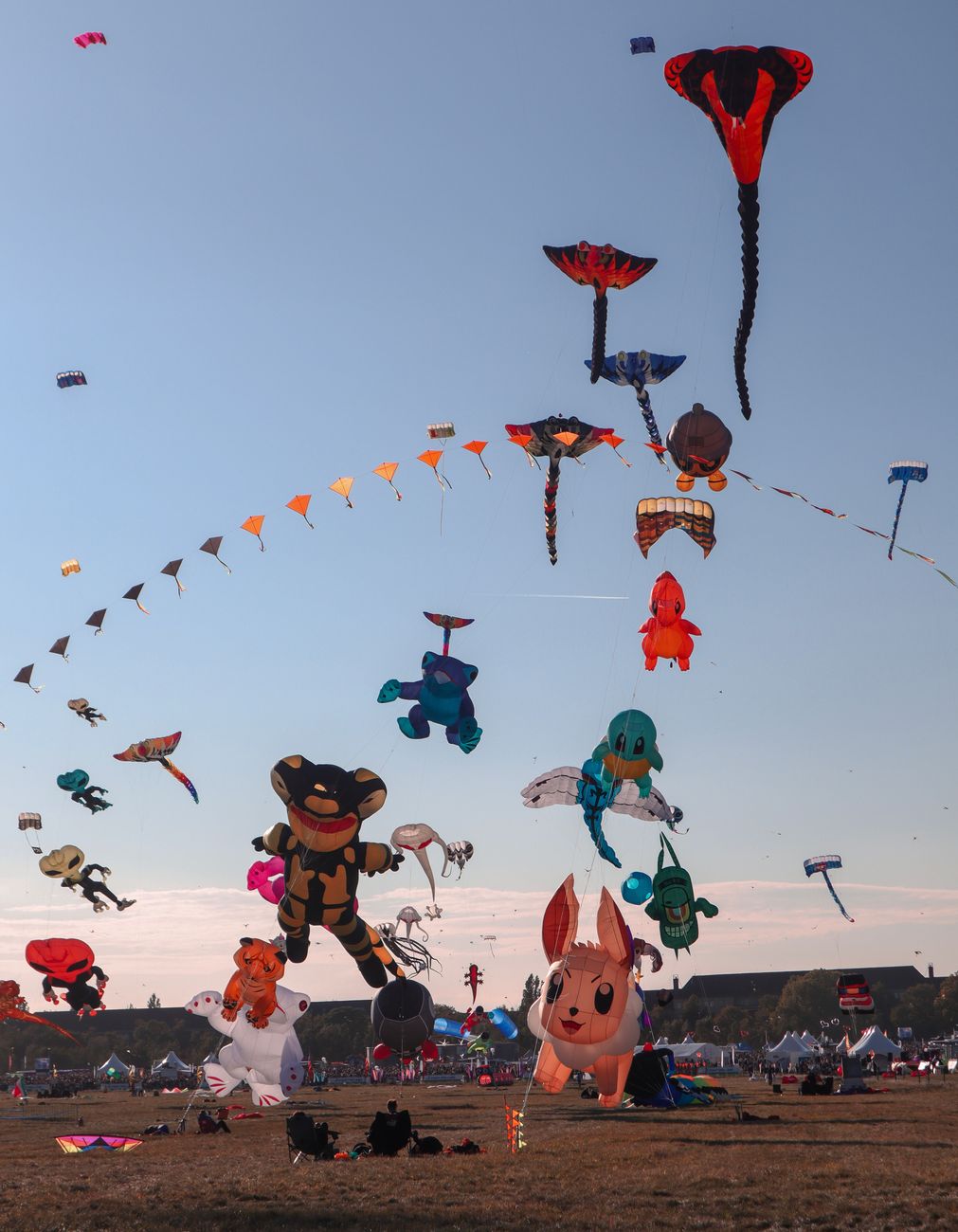
The first thing you notice isn't the kites. It's the sound — a low, constant flutter of fabric and string vibrating against the wind, like a thousand flags arguing with the air. Then you look up, and the sky is gone. Replaced by 25,000 pieces of nylon and silk, painted in every color that exists, tethered to the earth by human hands.
This is Fano, a small island off Denmark's west coast, where for one weekend every June the horizon becomes a battlefield. Not of conflict, but of joy. The International Kite Fliers Meeting has been running for decades, growing quietly until it became the largest event of its kind in Europe. This year's numbers — roughly 25,000 kites — smashed previous records. But raw numbers miss the point.
Why kites, why now?
In an age where entertainment comes pre-packaged in plastic and pixels, watching someone fly a kite feels almost anachronistic. No batteries. No screens. Just you, a spool of line, and the wind's cooperation. The Fano festival is a stubborn reminder that the simplest things still hold power. Families arrived at dawn, staking out patches of sand. By 10 a.m., the beach looked like a parking lot for airborne vehicles.
Local organizers told reporters that this year saw a surge in first-timers. Kite workshops were overbooked. A woman from Copenhagen learned to fly a delta kite in 20 minutes. “It’s harder than it looks,” she said, laughing as her kite dove into the sand. She reeled it in, adjusted the tail, and tried again. That determination — the refusal to let gravity win — is the spirit of the event.
“You can’t fake the wind. Either it’s with you, or it’s not. And when it is, you feel like you’re part of something bigger.”
The weather cooperated: steady coastal gusts between 15 and 25 knots, ideal for stunts. Experienced fliers brought out the big stuff — giant octopuses with 40-foot tentacles, phoenixes with smoking tails, even a replica of the Titanic, complete with tiny passengers dangling from strings. Yes, someone made a kite of a sinking ship. That’s the kind of weirdness this festival thrives on.
The economics of uplift
Fano’s population is about 3,000. During the festival, that number swells to over 40,000. Hotels are booked a year in advance. Campgrounds overflow. Local fishermen sell smoked mackerel from booths along the promenade. A kite festival may sound whimsical, but it’s serious business for the island. Tourism officials estimate the event pumps millions into the local economy — not bad for a weekend built around string and fabric.
But there’s an environmental shadow. Every year, a handful of kites snap free, drifting out over the North Sea. Organizers urge participants to use biodegradable string and avoid plastic frames. Most comply. But when 25,000 kites are airborne, a few lost ones are inevitable. Critics have pointed out the irony: a celebration of nature that occasionally litters it. Organizers respond that the event’s net environmental impact is minimal, and they’ve partnered with Ocean Cleanup to retrieve stray debris.
That tension — between joy and responsibility — is never fully resolved. But maybe it doesn’t need to be. Maybe a festival that brings 40,000 people to a fragile ecosystem is also a festival that reminds them why that ecosystem is worth protecting.
Kites as metaphor
I’ve covered wars and markets. I’ve watched politicians lie and economies crash. But I’ve never seen 25,000 people look up at the same time, smiling. There’s something about a kite that cuts through cynicism. It’s a piece of yourself sent into the sky, a fragile declaration of presence. For a moment, you forget the news cycle, the heat, the daily grind. You’re just a kid again, holding a string.
The festival ended Sunday with a mass fly — every kite aloft simultaneously. For ten minutes, the sun was barely visible. Then, on a signal, volunteers began cutting lines. One by one, kites drifted free, rising on thermals until they were specks, then nothing. The crowd watched in silence. Someone started clapping. Then everyone did.
This is what journalism should capture: not just facts, but the feeling of being there. The thousands of kites over Fano were more than a spectacle. They were a collective exhale. A reminder that even in a world that feels heavy, you can still lift something off the ground.
And that’s worth a story.