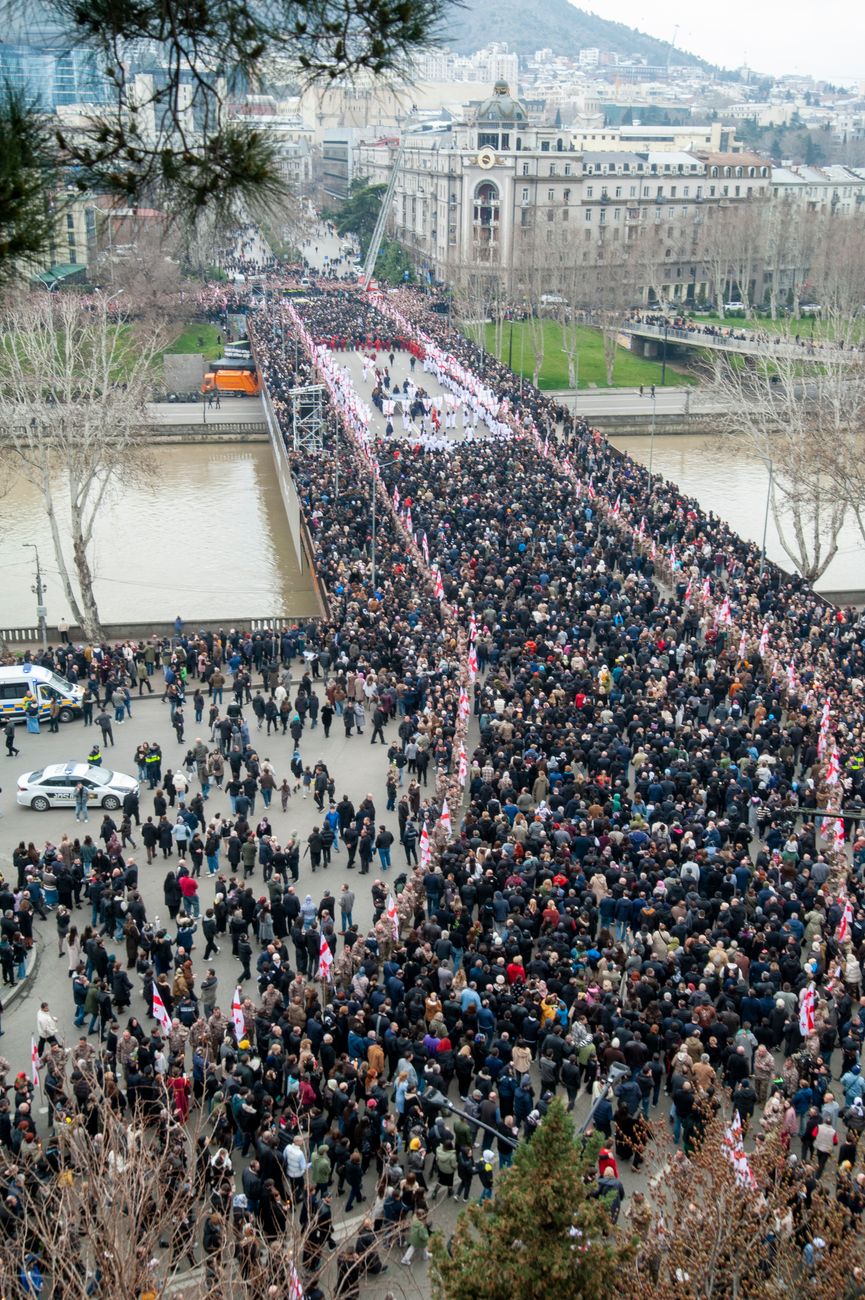
For 21 straight days, they've come. Not a few hundred disgruntled locals, but tens of thousands of Albanians—students, pensioners, fishermen, and artists—flooding the streets of Tirana and the coastal town of Himarë. Their target: a proposed luxury resort backed by Jared Kushner, Donald Trump's son-in-law and former White House advisor.
This isn't a small, NIMBY-style squabble. It's a full-blown national revolt against a project that critics say would privatize one of the last unspoiled stretches of the Ionian coast, destroy ancient olive groves, and price locals out of their own country. And it's not dying down.
The Flashpoint: A $1.4 Billion Gamble
The plan, called 'Albanian Riviera,' envisions a sprawling complex of hotels, villas, and a marina on the shores near Himarë, a town of about 2,500. Kushner's company, Affinity Partners, has reportedly invested $1.4 billion—a staggering sum for a country where the average monthly salary hovers around $600.
But local residents and environmentalists see a different price tag: the destruction of a way of life. 'This is not development, it's colonization,' said Besnik Mustafa, a 52-year-old fisherman who has joined every protest since day one. 'They build a wall, we lose the beach. They build a hotel, we lose our view. They build a marina, we lose our fish.'
'This is not development, it's colonization. They build a wall, we lose the beach.'
— Besnik Mustafa, fisherman and protester
The Albanian government, led by Prime Minister Edi Rama, has defended the project as a boon for tourism—a sector that already contributes 8.6% of the country's GDP. Rama has called the protests 'short-sighted' and accused opposition parties of hijacking genuine concerns for political gain.
A History of Broken Promises
This isn't the first time Rama has faced a backlash over land deals. In 2024, a similar plan to build a resort on the island of Sazan was scrapped after public outrage. Critics say the pattern is clear: the government offers up public land to foreign investors with little transparency, then waits for the outrage to subside.
'They think we'll get tired,' said Ana Leka, a 34-year-old teacher who has been camped outside the prime minister's office for the past week. 'But we are not going anywhere. This is our home.'
The protests have drawn support from across the political spectrum. Former president Ilir Meta, now a vocal opposition figure, addressed the crowd last Saturday, saying: 'Albania is not for sale. Not to Kushner, not to anyone.'
The Kushner Factor
Jared Kushner's involvement has added a geopolitical edge to the protests. His company, Affinity Partners, was formed after his White House tenure and has raised billions from Middle Eastern sovereign wealth funds, including Saudi Arabia's Public Investment Fund. Critics in Albania see this as part of a broader pattern of opaque deals between the Rama government and Gulf-linked investors.
'Why did Kushner choose Albania?' asked Dorian Deda, an investigative journalist who has tracked the project. 'Because our laws are weak, our oversight is weaker, and our politicians are willing to sell anything for a photo op.'
Kushner's team has remained largely silent, issuing a brief statement in April saying the project would 'create thousands of jobs and boost Albania's economy.' But protesters aren't buying it. 'Jobs? For whom?' shouted a woman in the crowd, holding a sign that read: 'Kushner: Go home.'
What Happens Next?
The protests show no signs of waning. A general strike is planned for next week, with unions threatening to shut down ports and public services. The Rama government is in a bind: capitulate and lose face, or crack down and risk further escalation.
International attention is growing. The European Union, which Albania hopes to join, has expressed 'concern' over the project's environmental impact. The US State Department, asked about Kushner's business interests abroad, declined to comment.
But for the people in the streets, this is not about geopolitics or international diplomacy. It's about a piece of land they call home. 'We don't hate America,' said Mustafa, the fisherman. 'But we love our coast. And we will fight for it.'