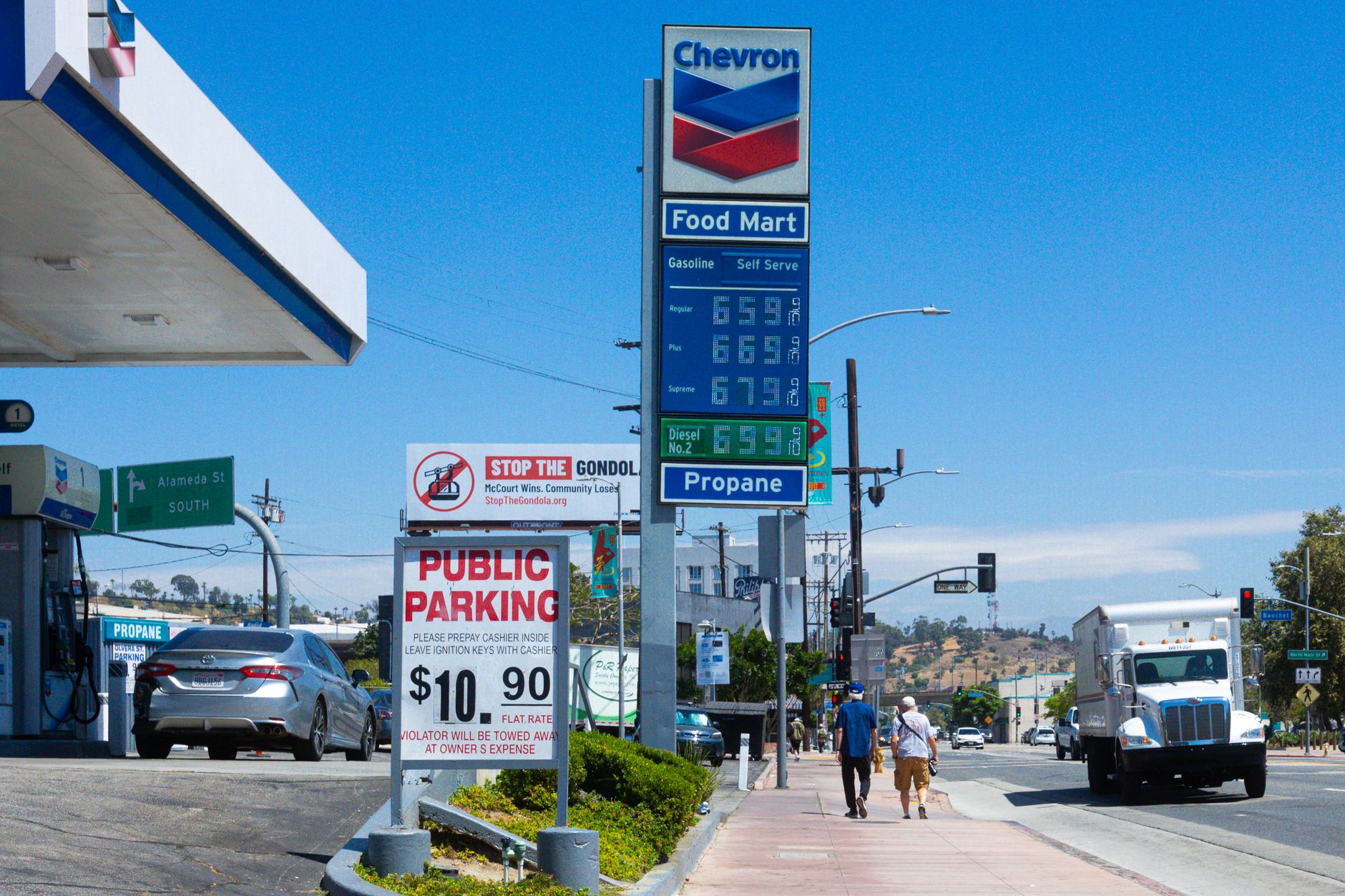
Chevron's CFO just told the world gas prices will 'normalize.' She might be right. But normal doesn't mean cheap—and with Trump threatening an investigation into price gouging, the definition of normal just got a whole lot more political.
On Thursday, Eimear Bonner, Chevron's chief financial officer, said the company expects retail gasoline prices to fall as summer demand fades and refineries return from maintenance. 'We see a normalization,' she said at a Barclays conference. That's corporate speak for: prices will stop hurting so much by autumn.
But here's the twist—her comments landed hours after President Donald Trump ordered a federal investigation into whether Big Oil has been gouging consumers. The same Big Oil that Chevron belongs to. The same Big Oil that's been raking in record profits while Americans struggle to fill their tanks.
The Numbers Don't Lie—But They Do Sting
Let's start with the math. The national average for a gallon of regular gas hit $4.92 this week. That's down from a June peak of $5.01, but still 60% higher than two years ago. Chevron alone posted $36 billion in profit last year—more than double its pre-pandemic earnings. The optics are brutal.
Bonner's 'normalization' prediction hinges on simple supply and demand: more refineries coming online, less driving after Labor Day. She's probably right about the mechanics. But mechanics don't matter when the President is calling for a probe into whether your company's pricing is 'illegal and unethical.'
'We see a normalization,' Bonner said. But Trump sees a campaign issue—and he's not wrong that voters are furious.
Trump's executive order, signed Wednesday, directs the Federal Trade Commission and the Department of Energy to investigate 'potential collusion, market manipulation, and price gouging' in the oil and gas industry. The White House press secretary called it 'a long-overdue check on corporate greed.' Chevron's stock dipped 2% on the news.
The Political Price of Profits
Here's the uncomfortable truth: Big Oil is an easy villain. Record profits at a time of consumer pain is the kind of story that writes itself. Trump, a man who spent his first term deregulating the industry and appointing oil executives to top posts, now finds it convenient to turn on them. Convenient, because it's an election year. Convenient, because the swing voters of Pennsylvania and Michigan are drowning in $5 gas.
But let's not pretend this probe is purely about consumer protection. Trump's own EPA chief, Andrew Wheeler, is a former coal lobbyist. The President's energy policy has been a giveaway to fossil fuel companies. The investigation is a political pivot, not a moral awakening.
Still, that doesn't mean the probe is toothless. The FTC has subpoena power. The DOJ can charge executives with fraud if they find evidence of coordinated price-fixing. And the mere threat of an investigation can change behavior. 'We're not doing anything wrong,' Bonner insisted. That's what every company says—until the subpoenas arrive.
The Real 'Normal' Is Painful
Bonner's 'normalization' means prices falling to maybe $4.50 by October. That's still 50% higher than the pre-pandemic average. 'Normal' in the oil industry means profits that make other sectors look like charities. Chevron spent $15 billion on stock buybacks last year—money that could have gone to expanding refinery capacity or investing in renewable energy. Instead, it went to juicing executive bonuses and shareholder returns.
The real scandal isn't whether Chevron broke a specific law. It's that the entire system is rigged. Oil companies have spent decades consolidating power, buying back stock instead of building more refineries, and using their political muscle to block competition. When supply is tight and prices are high, they rake in cash. When prices fall, they lay off workers and cut production. The cycle never ends.
Trump's investigation might uncover some smoking gun—an email chain where executives laugh about how much they can squeeze consumers. More likely, it will produce a few fines and a lot of headlines. But the deeper problem—an energy system that prioritizes shareholder returns over stability and affordability—won't be solved by a probe.
What Comes Next
For now, Bonner's prediction is the best news drivers have heard all summer. Prices will ease. The pain will become a dull ache instead of a sharp stab. But 'normalization' is not a solution. It's a ceasefire in a war that will resume the moment another hurricane hits the Gulf or a refinery goes offline.
If Trump really wants to help consumers, he needs to do more than threaten an investigation. He needs to break up the oligopoly. He needs to build a strategic petroleum reserve for gasoline, not just crude. He needs to invest in alternatives that actually lower demand for oil. But that would mean taking on his own donors—and we all know how that story ends.
So here we are: gas prices will normalize, Chevron will keep printing money, and Trump will get his headlines. The rest of us will keep paying the price.