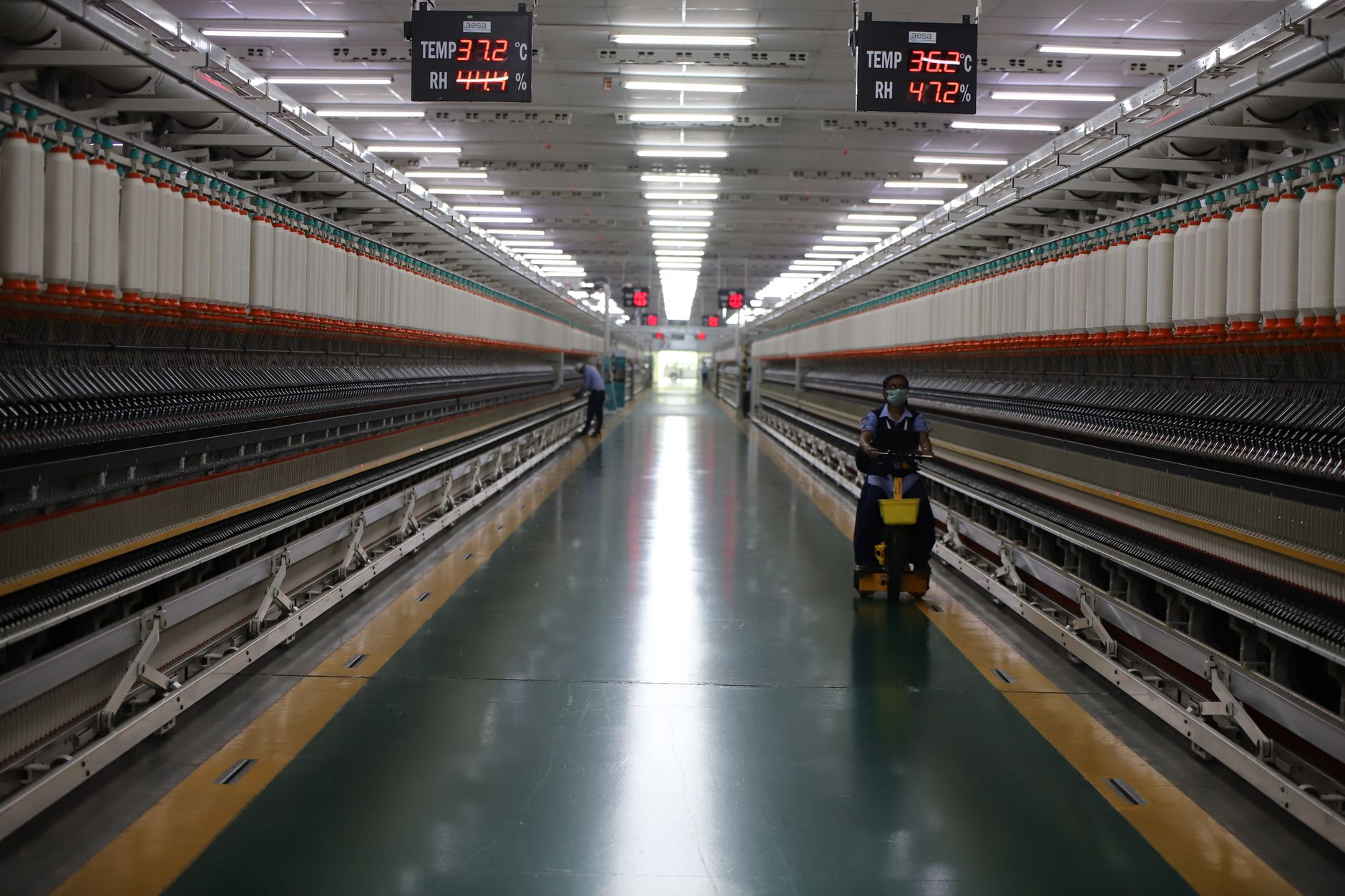
Beijing's economic engine just coughed. China's factory activity unexpectedly contracted in July, with the official manufacturing purchasing managers' index (PMI) sliding to 49.2 from June's 50.3, according to data released Friday by the National Bureau of Statistics (NBS).
That's not just a bump in the road. A reading below 50 signals contraction, and this one snapped a four-month streak of expansion that had policymakers and investors clinging to hopes of a steady post-pandemic rebound. The consensus among economists polled by Reuters was for a modest dip to 50.1. Instead, the data landed with a thud, underscoring the fragility of China's recovery as it grapples with a property slump, sluggish global demand, and wary consumers.
The Breakdown: What's Behind the Slide?
Dig into the sub-indexes, and the picture gets murkier. New orders fell to 49.3 from 50.5 in June – a sign that demand, both at home and abroad, is weakening. Export orders, a key gauge for the world's factory floor, slipped to 48.9, reflecting soft overseas appetite as the U.S. and Europe battle their own slowdowns. Employment also shrank for the fourth straight month, hitting 47.9. That's a red flag for a government that's been preaching stability and job creation as a top priority.
Even the usually resilient non-manufacturing PMI, which covers services and construction, eased to 51.5 from 52.5. Still in expansion territory, but the momentum is clearly fading. Construction, in particular, is feeling the chill from Beijing's ongoing crackdown on property developers – a sector that once powered a third of the economy.
"The recovery is losing steam, and the July PMI is the clearest warning yet that the headwinds are stronger than the tailwinds," said Zhang Wei, an economist at a Beijing-based think tank, who asked not to be named due to sensitivity.
Why It Matters: The Global Ripple Effect
China isn't an island. It's the manufacturing hub for the world, and when its factories slow, the shockwaves travel far. Supply chains that stretch from Shanghai to Shenzhen to Seattle feel the pinch. Commodity prices – from copper to crude – often wobble on Chinese data. And for multinationals that rely on Chinese consumers, this dip signals that the so-called 'revenge spending' boom many hoped for is more of a whimper.
The data also complicates the central bank's calculus. The People's Bank of China has been walking a tightrope, trying to support growth without fueling asset bubbles or capital outflows. A contractionary PMI strengthens the case for more stimulus – maybe another rate cut or a reduction in reserve requirements. But Beijing has shown a reluctance to go big, wary of the debt hangover that previous stimulus binges left behind.
The Property Albatross
You can't talk about China's economic woes without mentioning property. The sector, once the engine of growth, is now a drag. Developers like Country Garden and Evergrande are still tangled in debt restructurings. New home prices are falling in most cities. And consumer confidence, already shaky, hasn't recovered from the shock of unfinished projects and frozen deposits.
The July PMI reflects that: construction activity contracted, and the services tied to real estate – from furniture to home appliances – are feeling the heat. The government has rolled out some support measures, like easing down payment rules and mortgage rates, but they've yet to move the needle. As one property analyst put it, 'You can't fix a broken leg with a Band-Aid.'
The Policy Tightrope
So what's the play? Beijing has options. Fiscal stimulus – more infrastructure spending, tax cuts, targeted subsidies – could give a short-term jolt. The central bank could also ease monetary policy further, though it's keeping an eye on the yuan, which has been under pressure against a strengthening dollar.
But here's the rub: policymakers seem more focused on long-term transformation than short-term rescue. They're pushing 'new productive forces' – high-tech industries like EVs, solar panels, and advanced manufacturing. That's a noble goal, but it doesn't put food on the table for the millions of workers who've lost jobs in the property and construction sectors. The transition is real, but it's painful, and the PMI is a reminder that the pain isn't over.
The Bottom Line: A Wake-Up Call
Friday's PMI isn't just a number on a spreadsheet. It's a warning shot. The recovery that started in March is stalling. The question now is whether Beijing will acknowledge the severity and act decisively, or continue to tinker at the margins.
For investors, the message is clear: buckle up. Volatility is likely to continue, especially in sectors tied to Chinese demand. For ordinary Chinese citizens, the data means the job market could get tighter, and the cost of living might not ease as quickly as hoped.
And for the rest of the world? China's slowdown is everyone's problem. If the world's second-largest economy can't get its factory floors humming again, the global recovery will be slower, and the risks of a recession in other economies will only rise.
The PMI has spoken. The question is, is anyone listening?