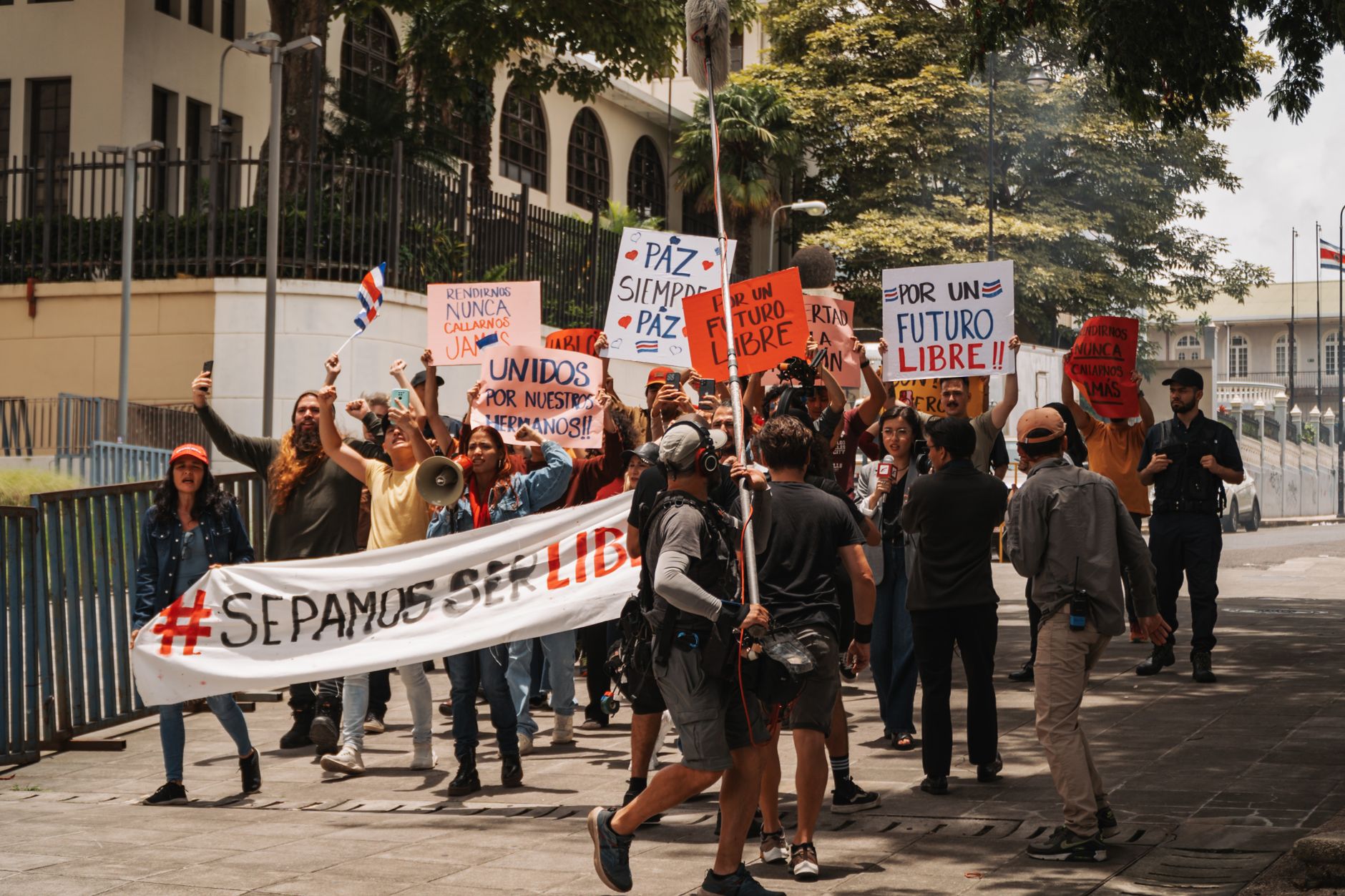
Bogotá, Colombia — Ivan Cepeda stood before a crowd of supporters in downtown Bogotá Tuesday morning, his voice hoarse but defiant. The leftist presidential candidate, who lost Sunday's runoff election by a razor-thin margin, did not offer the usual platitudes about national unity. Instead, he launched an all-out assault on the electoral process.
“We will not accept these results,” Cepeda declared, clutching a sheaf of documents he claimed contained evidence of widespread irregularities. “This election was stolen, and we will fight it in every courtroom, every tribunal, every international forum until justice is done.”
The crowd roared its approval. But across the city, in the prosperous neighborhoods of northern Bogotá, the reaction was different: anger, fear, and exhaustion from a campaign that had exposed — and deepened — Colombia’s fractures.
How We Got Here
Cepeda, a former senator and human rights lawyer, had run on a platform of radical change: land reform, higher taxes on the wealthy, and a renegotiation of the peace deal with the FARC. His opponent, conservative businessman Daniel Santrich, campaigned on law-and-order and free markets. The runoff was always going to be tight. But no one predicted this.
With 99.9% of precincts reporting, Santrich leads by just 34,000 votes out of 18 million cast. That’s a margin of 0.19% — the closest presidential election in Colombian history.
Under Colombian law, a candidate can request a recount if the margin is less than 0.5%. Cepeda’s campaign has already filed petitions in 12 of the country’s 32 departments, citing “inconsistencies in vote tallies, missing minutes, and reports of voter intimidation.”
“We have affidavits from poll watchers in Antioquia who were physically prevented from observing the count,” said Maria Fernanda Rojas, Cepeda’s campaign manager, at a press conference. “We have photos of ballot boxes left unguarded overnight. This is not democracy. This is a farce.”
“This is not democracy. This is a farce.” — Maria Fernanda Rojas, Cepeda campaign manager
Santrich's Camp: 'Accept Defeat'
Santrich’s campaign has dismissed the allegations as sour grapes. “Cepeda lost fair and square,” said spokesperson Carlos Lozano. “He needs to accept the will of the people and move on, or risk destabilizing the country.”
The international community has urged restraint. The Organization of American States (OAS), which deployed observers to Colombia, said Monday that the election was “generally free and fair,” though it noted “isolated incidents of irregularities that do not affect the overall result.”
But for Cepeda’s supporters — many of whom are young, poor, and rural — that statement rings hollow. They see a system rigged against them.
“Every time we get close to power, they change the rules,” said Lucia Gutierrez, a 24-year-old community organizer from the Chocó region, who traveled six hours by bus to attend Tuesday’s rally. “We won this election. They’re stealing it from us.”
What Comes Next
Colombia’s electoral authorities face a daunting task. The National Electoral Council (CNE) has until July 15 to certify the results. If Cepeda’s campaign provides credible evidence of fraud, the CNE could order a partial or full recount. But such a process could take weeks, even months, prolonging the uncertainty.
Meanwhile, both sides are mobilizing. Cepeda has called for “peaceful, democratic protests” across the country. Santrich’s supporters have planned counter-rallies. The police and military are on high alert.
This is not the first time Colombia has faced a contested election. In 1970, allegations of fraud against the National Front led to the rise of the M-19 guerrilla movement. In 2014, President Juan Manuel Santos faced a runoff challenge that dragged on for weeks. But the country has never seen a margin this narrow — or a political divide this deep.
“We are in uncharted territory,” said Sandra Pulido, a political analyst at the University of the Andes. “Neither candidate has the moral authority to govern without the other’s consent. We could be looking at a prolonged crisis.”
The Stakes
At stake is not just the presidency, but the direction of a nation. Colombia is still recovering from five decades of armed conflict, even as new violence flares in rural areas. The economy, battered by low oil prices and the pandemic, is struggling to regain momentum. And trust in institutions — already fragile — is cracking.
Cepeda’s challenge is a high-risk gamble. If he succeeds in overturning the result, he could become president. If he fails, he risks being branded a sore loser and alienating his base. But for many Colombians, the fight is about more than one election.
“This is a battle between two visions of Colombia,” said Cepeda in his speech. “One that serves the few, and one that serves the many. We will not rest until the true will of the people is heard.”
Outside the rally, a young man named Andres held a sign that read: “The votes are sacred.” He told me he had been up all night checking the official count on his phone. “I can’t believe it’s this close,” he said. “I can’t believe they might cheat us out of this.”
The sun was high now, and the crowd was beginning to disperse. But the fight was just beginning.