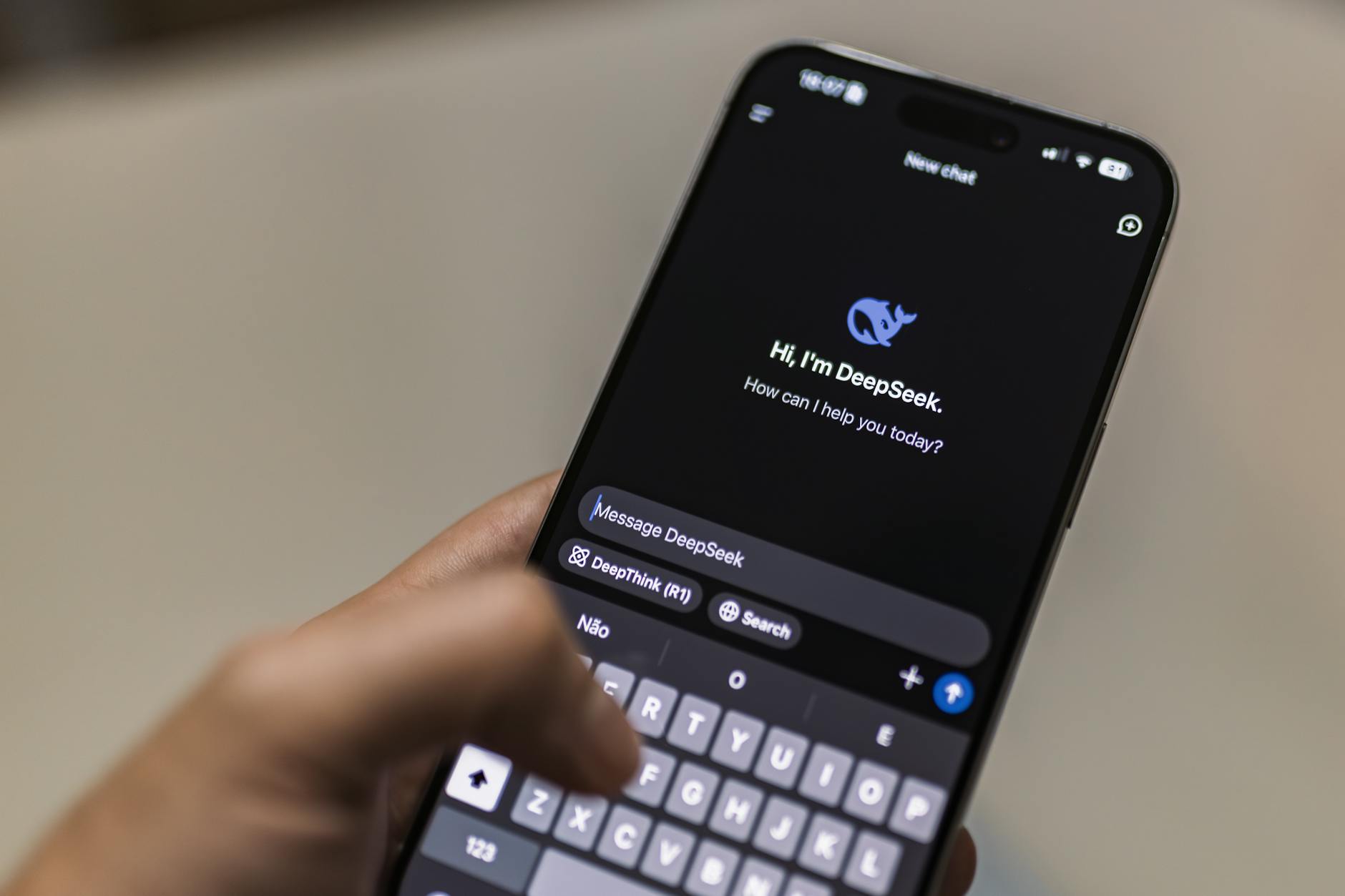
DeepSeek, the AI lab that's been quietly outmaneuvering Silicon Valley giants, just released a bombshell: open-source inference optimizations that can speed up text generation by 60 to 85 percent. And they did it in a PDF — not a press release, not a blog post, but a 40-page paper on GitHub. That's how serious teams talk.
The paper, titled "DSpark: High-Performance Inference for Large Language Models," details a suite of techniques that reduce latency and memory bandwidth for models like DeepSeek's own V3 and R1. Early users report generating responses nearly twice as fast on a single NVIDIA RTX 4090. If those numbers hold, this could be the most significant open-source AI release of the year.
What DeepSeek Actually Did
In essence, DeepSeek solved two bottlenecks: memory access and attention computation. Their key innovations include:
Speculative decoding on steroids. Standard speculative decoding uses a small draft model to predict tokens, which a large model then verifies. DeepSeek's version — called "Draft-Speculation" — extends this with a custom CUDA kernel that overlaps draft and verification phases. The result: nearly zero idle time for the GPU.
Fused attention layers. Instead of computing attention in discrete steps, DSpark fuses the key-query product, softmax, and value product into one operation. Combined with KV-cache compression via 4-bit quantization, memory bandwidth drops by half. For a 70B model, that's the difference between needing 4 GPUs and 2.
Asynchronous data pipeline. While the GPU runs inference, a separate CPU thread preprocesses input tokens and prefetches embeddings. Latency hiding, they call it. The result: first-token latency cut by 40%.
"We open-source these optimizations to accelerate the entire ecosystem," the authors write. "Our kernels outperform vLLM by up to 2.1x in throughput at batch size 1."
Why This Matters
Let's be blunt: AI inference is still absurdly expensive. OpenAI charges $15 per million tokens for GPT-4o. DeepSeek's API costs a fraction of that, and their latest work suggests they aren't slowing down. Every 10% improvement in inference speed translates to 10% less compute spend — or 10% more users served.
This is especially critical for edge deployment. If a 70B model runs at 50 tokens per second on a single 4090, you can host it on a desktop rig. No cloud credits. No GPU cluster. Just a machine under your desk. DeepSeek's optimizations push that boundary further.
How It Compares
vLLM, the current gold standard for open-source inference, supports PagedAttention and continuous batching. DeepSeek's DSpark includes those, but adds fused attention and speculative decoding. Benchmarks in the paper show DSpark achieves 85% faster generation for a single request on a 13B model, and 60% for a 70B model at batch size 8.
But here's the catch: DSpark is optimized primarily for DeepSeek's own architectures. Adapting it to Llama, Mistral, or Qwen requires work. The paper includes integration guidelines, but there's no one-click package. Yet.
The Open-Source Playbook
DeepSeek has released the code under a permissive MIT license. That means companies can embed these kernels into their own products without legal headaches. Expect to see DSpark appear in Ollama, LM Studio, and Text Generation WebUI within weeks.
This is the third major open-source release from DeepSeek this year: first the V3 model, then the R1 reasoning architecture, and now inference optimizations. Each release chips away at the moat commercial AI labs try to build. OpenAI, Google, and Anthropic all keep their inference stacks proprietary. DeepSeek gives them away.
What's Next
The immediate impact: cheaper Cloudflare Workers apps, faster local chatbots, and maybe even real-time voice models that don't cost a fortune. Longer term, this pattern — open-source models + open-source inference + fast hardware — could make the entire AI industry more competitive.
If you're building on LLMs, try DSpark. It's on GitHub now. If you're not building on LLMs, this is what competition looks like. It's not a press release. It's a PDF with code that works.
DeepSeek just made inference faster and cheaper. The question is: will the big guys even try to keep up?