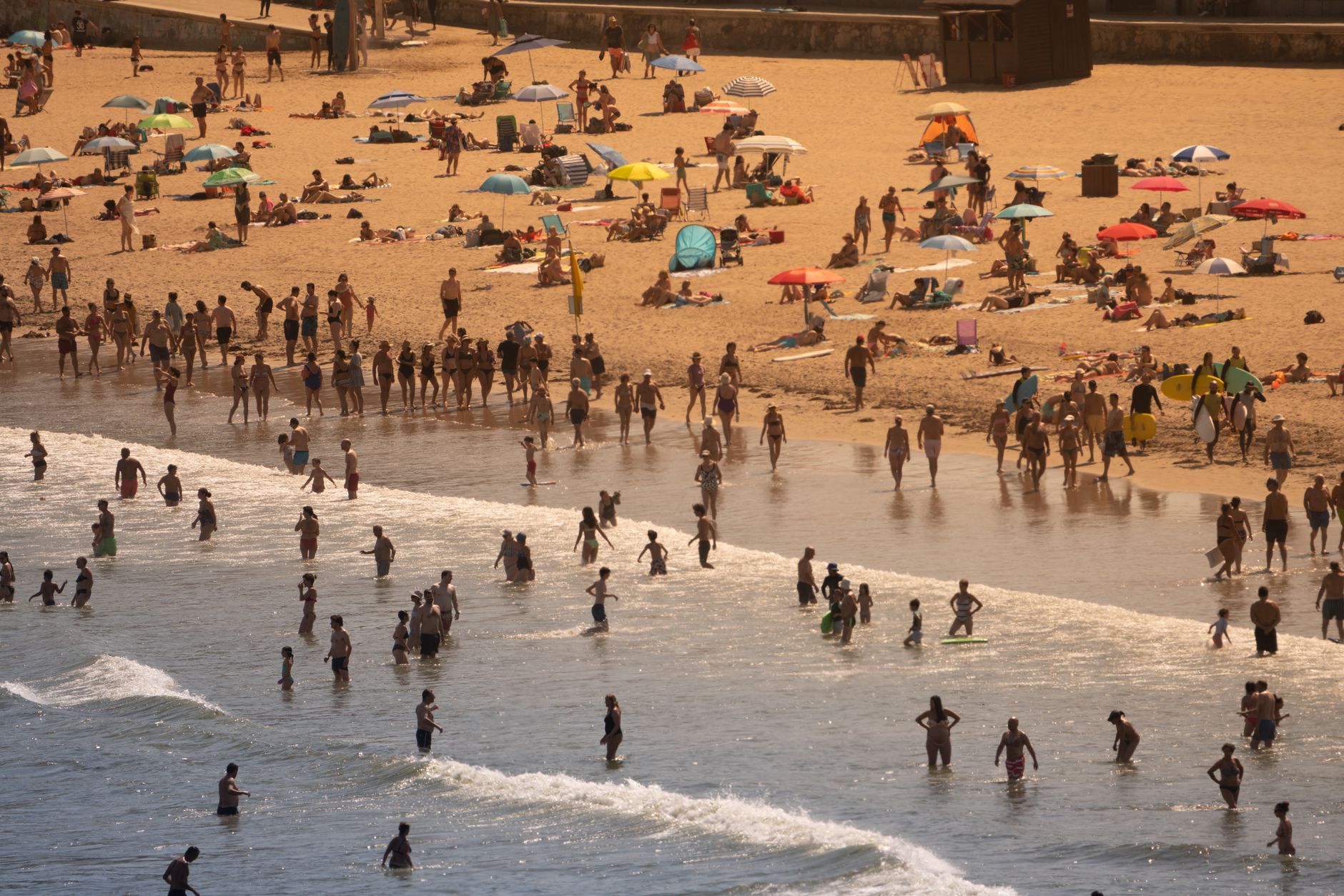
France just pulled the trigger on its highest heat health alert. The reason? Young people are dying.
On Thursday, as the mercury climbed past 40C in parts of central France, authorities confirmed that fatalities linked to the scorching weather were no longer limited to the elderly. The grim milestone coincided with a shift in the heatwave's center of mass — eastward, into Germany and Poland.
Let's be blunt: this is not your grandfather's summer heat. The death toll is climbing among the very people who thought they were safe.
The east now cooks
Germany's weather service is forecasting 40C in some western and southern areas by Friday. That's not a beach day. That's a shutdown day. Schools in Berlin are already dismissing students early. Construction sites are halting work by noon. Even the autobahn is seeing speed restrictions because asphalt is buckling.
The German government — still scarred by the 2003 heatwave that killed an estimated 7,000 people — has activated regional crisis centers. But here's the punchline: many of those centers were designed for floods and terror attacks, not for weather. The bureaucracy is scrambling.
France's ugly numbers
France's health minister dropped a bombshell in a midday press briefing: "We are now seeing heat-related deaths among people in their 30s and 40s." The statement hung in the air like a wet blanket.
The official death toll since Monday stands at 14, but emergency services in Paris and Lyon report that heatstroke cases have tripled from the same period last year. Most victims were outdoor workers: delivery riders, road crews, farmers. One man, a 34-year-old roofer, collapsed and died on a rooftop in Marseille. He had been drinking water. It wasn't enough.
"We are now seeing heat-related deaths among people in their 30s and 40s."
The government has declared the highest level of the "alerte canicule" system — level four, red. That's supposed to be reserved for exceptional, once-in-a-decade events. We're seeing it for the second time in four years.
Why this feels different
Every heatwave brings warnings. But something shifted in 2026. The intensity is higher. The duration longer. And the geographic spread is wider.
In Austria, the Danube is running at record low levels for June — exposing sunken World War II ships, unexploded bombs, and, bizarrely, a lost village that was flooded decades ago. That's not just a curiosity. It's a sign that the continent's water table is gasping.
In Poland, authorities are considering emergency coal imports because the low river levels are disrupting coal barge deliveries — the same coal that was supposed to keep Poles warm next winter. The irony writes itself.
Young bodies, old rules
The real story here is the death of the myth that only the elderly and infirm die in heatwaves. Young, healthy people are falling. Why?
Because the heat is arriving in bursts of extreme humidity. The "wet-bulb" temperature — a measure of heat plus humidity that determines whether a human body can cool itself by sweating — has exceeded 35°C in parts of southern France. That's the theoretical limit of human survivability. For anyone. At any age.
Doctors in Montpellier told me they treated a 27-year-old triathlete with a core temperature of 40.5°C. He nearly died. The emergency physician said, "I've never seen a young athlete like this — not in 25 years."
The infrastructure gap
Europe was built for cold winters and mild summers. Paris's famous zinc roofs? They absorb heat like a frying pan. London's Tube system? The platforms regularly hit 35°C during heatwaves. These are not trivial problems.
Germany's railways are already warning of delays because overhead cables sag in the heat. In France, nuclear power plants — which rely on river water for cooling — have reduced output at five reactors because the water is too warm. That's electricity production down while demand for air conditioning skyrockets. A perfect storm.
What happens next
The heat is forecast to peak in Germany and Poland on Saturday before a cooler Atlantic front pushes in. But "cooler" is relative. We're talking high 20s — not a return to spring.
And after that? The models show another ridge rebuilding over the Balkans by mid-week. This heatwave might be a prelude to a longer, hotter summer. The UK Met Office is already whispering about a potential "heat dome" over central Europe in July. If that materializes, we'll be writing different headlines.
A verdict
Here's the thing that keeps me up: we treat heatwaves as natural disasters — like earthquakes or tsunamis. They are not. They are the direct result of a climate system we have destabilized. Every degree of warming comes from our choices.
And yet, European governments still spend more on snowplows than on heat shelters. Still design cities like they're in Stockholm, not Seville. Still let landlords install dark roofs because they're cheaper. The gap between what we know and what we do is measured in dead bodies.
This heatwave will break. The bodies will be counted. The headlines will fade. But the next one is already forming over the Sahara. And it will be worse.
Ask yourself: what are you doing about it?