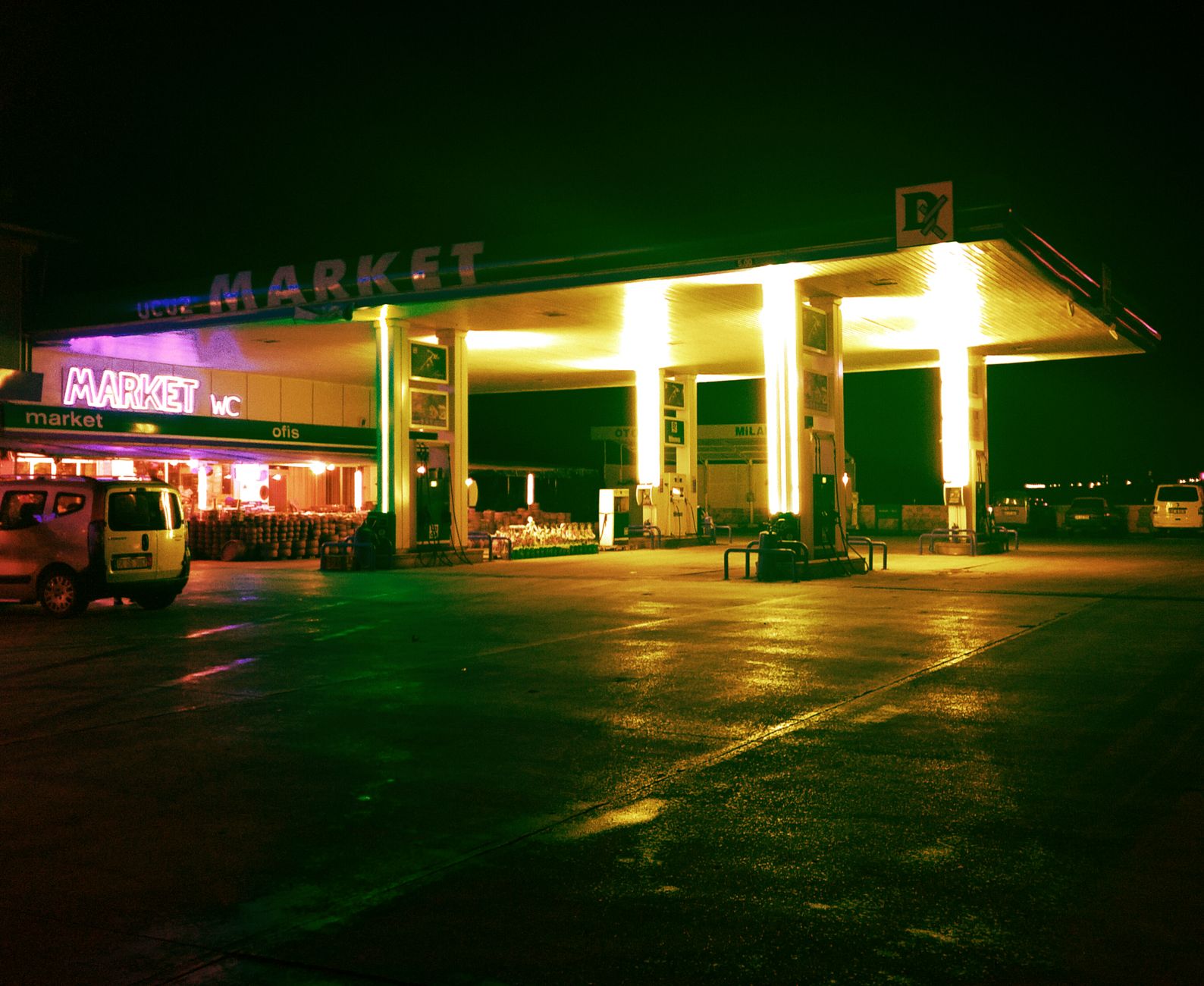
CRIMEA — The gas stations are locked. No queues. No haggling. Just empty forecourts and the faint smell of diesel from a generator somewhere down the street.
Fuel sales have ground to a halt across occupied Crimea after Ukraine stepped up its campaign against Russian supply lines. The Kremlin’s occupation administration had already imposed rationing — limiting drivers to 20 liters per visit — but now even that’s gone. The taps are dry.
This is what happens when you fight a war on someone else’s gas tank.
The Art of the Cut: Why Ukraine Targets Fuel
For months, Ukrainian forces have been methodically dismantling the logistics that keep Russia’s military machine running. Not just ammo dumps and command posts — but the mundane stuff. The fuel depots. The rail lines. The tanker trucks that crawl along highways like veins feeding a monster.
In Crimea, that monster is now starving.
“They’ve hit every major distribution point on the mainland,” a Ukrainian military analyst told me off the record. “The Russians have been forced to reroute through smaller, slower paths. It’s death by a thousand cuts.”
Ukraine doesn't need to destroy every barrel of fuel. It just needs to make the cost of delivering that barrel higher than what Russia is willing to pay. And right now, Moscow is paying in humiliation.
“The Russians have been forced to reroute through smaller, slower paths. It’s death by a thousand cuts.”
Crimea has always been a logistical nightmare for Russia. The Kerch Bridge — that $3.7 billion vanity project — is a sitting duck. Ukraine has hit it more than once. But the bridge is just one link in a chain that now dangles by a thread.
Life Under the Siege Within a Siege
For the locals — the ones who didn’t flee, or couldn’t — the fuel freeze is a quiet catastrophe. No gas means no trips to the market. No trips to the market means empty shelves. Empty shelves mean hunger.
“We used to joke that the Russians brought us ‘stability,’” a Crimean resident told me via encrypted message. “Now they can’t even keep the pumps running. What’s the point of occupation if you can’t drive to work?”
The black market, of course, has sprung up. A liter of smuggled gasoline now costs the equivalent of $5 — triple the pre-war price. And that’s if you can find it. Mostly, people are hoarding what they have, trading favors, and praying for winter not to come.
But winter always comes. And without fuel for heating, Crimea will become a frozen monument to Russian incompetence.
What This Means for the War
Don’t mistake this for a knockout blow. Russia still has fuel — it’s just not where it needs to be. The Kremlin can airlift supplies if it has to, but that’s a Band-Aid on a bullet wound.
The real story here is attrition. Ukraine is playing the long game. Every day that Crimea’s economy sputters is a day that Russia has to spend more to keep its occupation alive. And Moscow’s wallet isn’t bottomless.
“The Russians are learning that you can’t run a modern war on Soviet-era logistics,” said a retired U.S. Army logistics officer who advised Ukraine early in the war. “You need a just-in-time supply chain. Ukraine is making sure the ‘just in time’ never arrives.”
It’s a strategy that doesn’t make headlines like a tank battle does. But it’s winning the war.
The Human Cost of a Drying Pipeline
Let’s not pretend this is clean. The fuel shortages hurt everyone — Russian soldiers and Crimean grandmothers alike. But war is not a surgical instrument. It’s a hammer. And Ukraine is swinging it at the most vulnerable part of Russia’s machine: its fuel.
I’ve seen this before. In Iraq, the insurgency targeted fuel convoys. In Afghanistan, the Taliban hit supply depots. It’s ugly, it’s effective, and it’s the only option a weaker force has against a larger one.
Ukraine doesn’t have a navy that can blockade Crimea. It doesn’t have air superiority. But it has drones, missiles, and a willingness to hit the things that keep Russia’s war machine moving.
The result? A peninsula that was supposed to be a Russian fortress is now a prison. And the jailers are running out of gas.
Why This Matters More Than You Think
If you’re watching this from a comfortable distance, it’s easy to dismiss as a footnote. But this is the shape of the war to come. Ukraine is proving that you don’t need to win every battle to win the war. You just need to make the enemy’s life hell.
Russia can’t hold Crimea without fuel. And it can’t deliver fuel without Ukraine letting it. So either Moscow negotiates a settlement that gives Ukraine something — or it watches its prized possession rot from the inside.
Ukraine is proving that you don’t need to win every battle to win the war. You just need to make the enemy’s life hell.
The next few months will tell us which path Russia chooses. But one thing is certain: the days of cheap gas in Crimea are over. And they’re not coming back.
So here’s the question that lingers: When the pumps run dry, and the tanks sit empty, and the people start to shiver — what’s left of the Russian dream of Crimea?