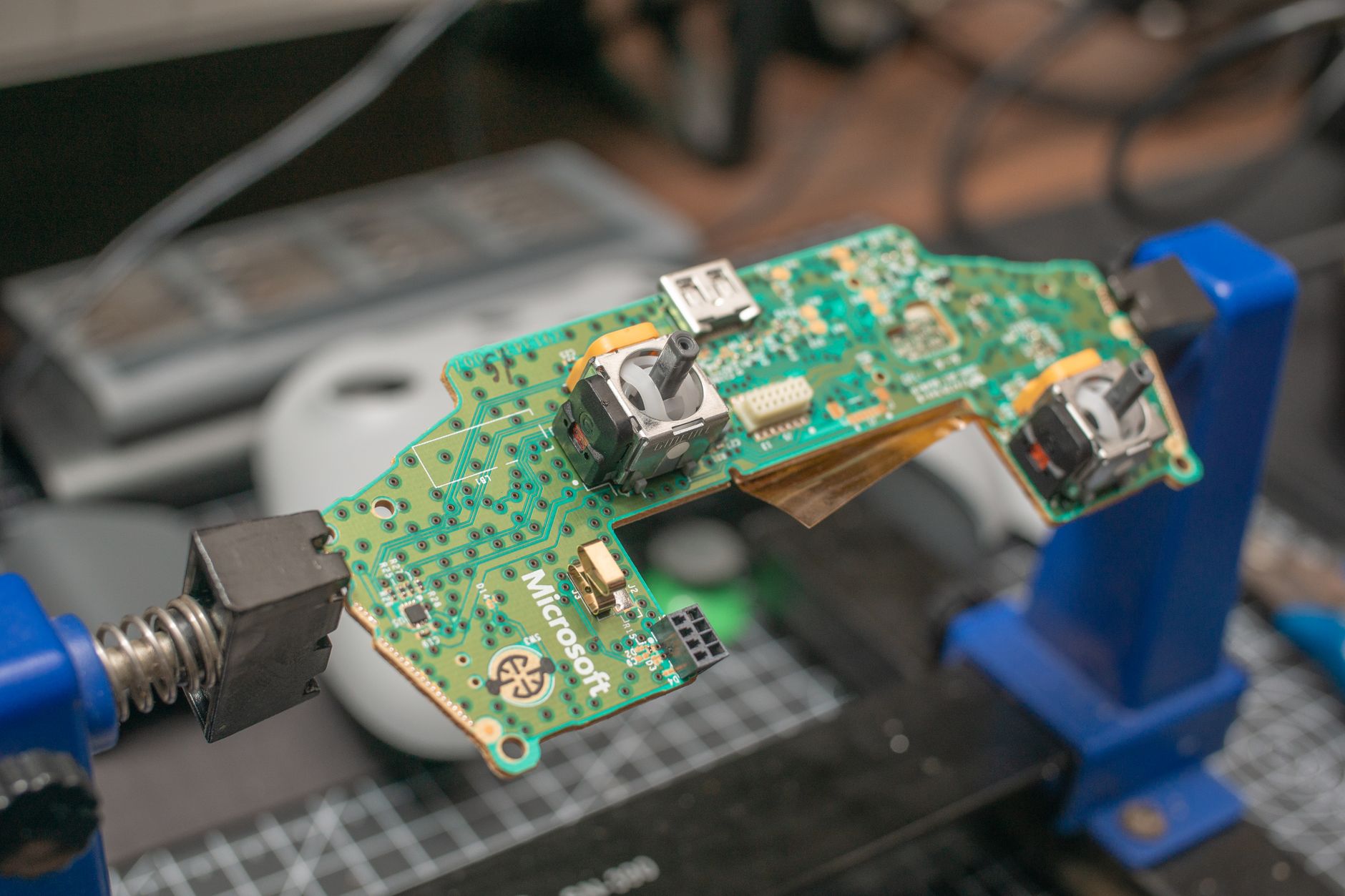
I spent my childhood saving the galaxy in Star Fox Adventures. Twenty years later, I spent my nights pulling it apart line by line — not in assembly, but in clean, readable C. And I had never done it before.
That's the thing about decompilation: it sounds like black magic reserved for graybeards with soldering irons. But a growing community of hobbyists is proving otherwise. They're taking beloved GameCube classics — Super Mario Sunshine, The Legend of Zelda: The Wind Waker, Metroid Prime — and producing matching C code that compiles into byte-for-byte identical binaries. It's digital archaeology meets open source, and it's more accessible than you think.
Zero to decomp in three months
I started with no real C experience. I knew Python and JavaScript. I could read a for loop. But pointers? Structs? Memory alignment? I had the theoretical understanding of someone who skimmed a Wikipedia article and nodded confidently.
Assembly was worse. I'd written maybe ten lines of x86 in college. PowerPC — the chip inside the GameCube — was a foreign language. Registers like r3, r4. Instructions like lwz and stwu. I felt like I'd shown up to a chess tournament having only played checkers.
But decompilation communities are structured like apprenticeships. You start with rodata — read-only data. You match strings and constants. Then you move to small functions — ten instructions, maybe twenty. You match them against the original binary. When your C compiles to the exact same bytes, you get that dopamine hit. Then you move to bigger ones.
"I matched my first function — 17 instructions for a simple math routine — and I screamed. My roommate thought I'd broken something."
Three months later, I had matched over 300 functions. Star Fox Adventures' codebase is enormous — we're talking hundreds of thousands of functions — but I wasn't alone. The decompilation project for that game has dozens of contributors, all working in parallel, each claiming their little piece.
Why anyone would do this
The obvious question: Why? The original game works. You can play it on original hardware or via emulation. Why spend hundreds of hours producing source code for a game that already exists?
The answer is threefold.
First: preservation. GameCube discs rot. Optical drives fail. When the last working console dies, the only thing left will be the code. You can't fix a binary that's been scrambled by a scratched disc. But source code? That's immortal. You can compile it for any platform. You can port it to PC, to Switch, to a toaster if someone writes a PowerPC emulator for it.
Second: understanding. Decompiling teaches you how great games were built. You see the design patterns, the hacks, the trade-offs. You learn why certain levels lag, why certain glitches exist. It's like reading the director's commentary for a movie — except the director is dead and the commentary is in assembly.
Third: the challenge. There is something deeply satisfying about making a black box transparent. Every matched function is a small victory against entropy. The community is supportive and obsessive in equal measure. They celebrate your first match like a graduation. They review your code like a PhD defense.
The tools of the trade
Decompilation isn't guesswork. The toolchain is surprisingly mature.
You start with a disassembler — Ghidra or IDA Pro are the heavy hitters. You load the GameCube binary, tell it the base address, and let it generate a skeleton of functions and data references. It's not perfect. It misses jump tables, misidentifies data as code, and struggles with inline functions. But it gives you a map.
Then you use m2c (a decompiler that produces C from assembly) or decomp.me — a web-based platform where you can write C, compile it with the official GameCube SDK, and compare the output to the original binary. The platform shows you exactly which bytes differ. It's like a linter for correctness.
You write your C. You compile. You check. You fix. You repeat. Each iteration brings you closer.
The matching requirements are brutal. Your C must produce identical assembly — line for line, register for register. If the original uses lwz r3, 0(r4) and your compiler emits lwz r3, 0(r5), you fail. You have to understand not just what the code does, but how the compiler thinks. You learn optimization flags, scheduling quirks, and the eccentricities of the Metrowerks compiler that Nintendo used.
What's at stake
The decompilation community has already produced full matching source for Super Mario 64 and Ocarina of Time. Those projects enabled PC ports, 60fPS mods, and widescreen hacks that were impossible before. For GameCube games, the stakes are higher because the hardware is more complex and the documentation is sparser.
But progress is real. The Wind Waker decompilation is approaching 100% matching. Metroid Prime is closing in. Star Fox Adventures — my game — is maybe 30% done, but the momentum is building. Every month, more contributors join. The hardest functions — the ones that require understanding the entire rendering pipeline — are being tackled by veterans who have been at this for years.
I can't promise that every GameCube game will be decompiled in our lifetimes. Some are too large, too obscure, or too reliant on custom microcode. But the ones that matter — the ones people love — they're getting done.
You can do this too
If you have even a passing interest in how games work, try it. Go to decomp.me. Pick a game you love. Claim a function. You'll fail at first. That's fine. The community will tell you what you missed. You'll learn more in an afternoon of decompiling than in a month of reading textbooks.
And when you match your first function — when your C produces those exact bytes — you'll understand why we do this.
The GameCube isn't dead. It's just waiting to be understood.