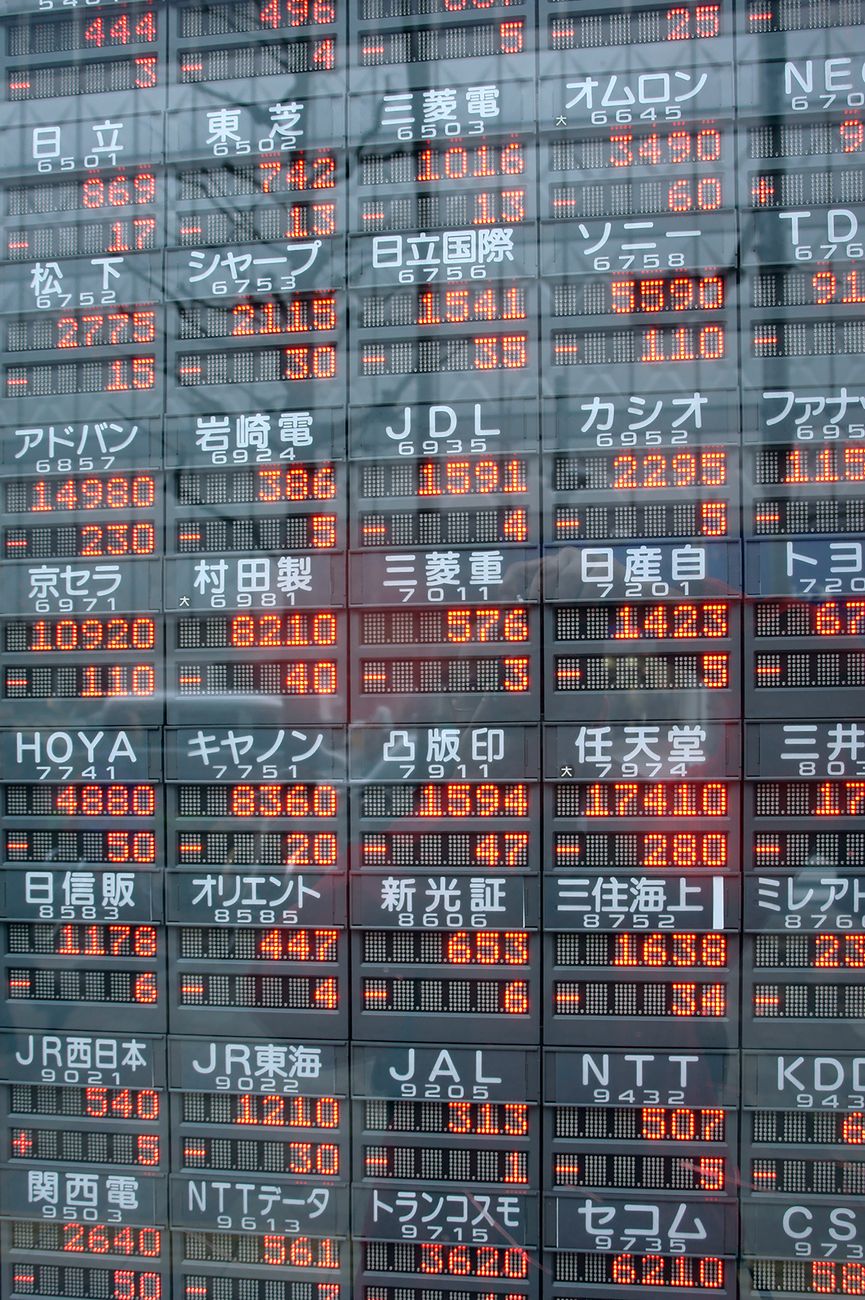
Japanese stocks haven't seen a streak this hot since 1989. The Nikkei 225 just hit its third all-time high in as many weeks, leaving traders scrambling for explanations. But the story isn't complicated—it's a trifecta of cheap money, corporate reform, and a weak yen that's turned Tokyo into the world's most unexpected bull market.
BOJ stays ultra-loose while others tighten
While the Fed and ECB wage war on inflation, the Bank of Japan remains the last dove standing. Negative interest rates and yield curve control keep borrowing costs near zero, pushing domestic investors out of bonds and into equities. Foreign money follows—$45 billion poured into Japanese stocks in Q2 alone, according to exchange data.
“The BOJ is essentially printing money while everyone else is mopping it up,” said Kenjiro Suzuki, a portfolio manager at Daiwa Asset Management. “That's a powerful tailwind.”
The policy divergence shows no sign of narrowing. Governor Ueda reaffirmed this week that normalization remains “distant,” even as inflation ticks above 2%. For now, the liquidity spigot stays open.
Corporate Japan finally plays ball
It's not just macro. Tokyo Stock Exchange reforms are forcing companies to care about share prices. New rules require firms with price-to-book ratios below 1 to explain how they'll improve. The result? A wave of buybacks, dividend hikes, and spin-offs.
Over 200 companies announced buybacks in May alone, a record. Toyota, Sony, and Hitachi all unveiled plans to return capital to shareholders. The change is cultural—a break from decades of hoarding cash.
“Japan Inc. is finally listening to investors,” said Rachel Kim, an analyst at Morgan Stanley MUFG. “The 'Japan discount' is closing, and fast.”
The Nikkei's price-to-book ratio, long stuck below 1, now sits at 1.3—still cheap by global standards, but moving in the right direction.
Weak yen turbocharges exports
The yen hit 160 to the dollar this week, its weakest since 1990. For exporters like Toyota, Sony, and Nintendo, that's manna from heaven. Every yen of depreciation adds billions to overseas profits when repatriated.
Earnings estimates for the fiscal year have been revised up 12% since April, driven largely by currency gains. The trade-off: importers and consumers are squeezed, but the market doesn't care. Export-heavy indices like the Nikkei and Topix are riding the wave.
“The weaker yen is a double-edged sword, but for the stock market, it's a blunt instrument,” said Michael Harris, a strategist at Goldman Sachs. “Until the BOJ changes course, this trade works.”
But risks are mounting
This rally has legs, but it's not without cracks. The first is sustainability. Valuations are stretched—the Nikkei's forward P/E is 18, above its 10-year average of 15. Corporate reforms take time, and buybacks can only prop up prices so long.
Second, the yen poses a policy gamble. If the BOJ ever blinks and raises rates, the carry trade unwinds fast. That could trigger a 20% correction, as it did in August 2024 when the BOJ's tiny hike sent markets into a tailspin.
Third, global demand is wobbling. China's slowdown and European weakness could dent export orders. Japan's economy is heavily dependent on external demand, and a synchronized global downturn would hit hard.
Political risk also lurks. Prime Minister Kishida's approval ratings are below 30%, and speculation of a snap election is rising. A change in leadership could bring policy uncertainty.
Yet for now, the bulls rule. The Nikkei is up 28% year-to-date, outpacing the S&P 500's 14% gain. Japanese equities account for nearly 7% of the global stock market capitalization, up from 6% a year ago.
The question isn't whether the rally can continue—it's who will be left holding the bag when it turns. History says buy when there's blood in the streets. But 2026 Japan is a market giddy on cheap money and reform hope. That combination rarely ends gracefully.
The verdict
This is a momentum trade with a fundamental backbone. The BOJ's liquidity, corporate reforms, and a weak yen form a strong foundation, but the building is getting tall. For investors, the play is to ride it with tight stops. For Japan, the real test comes when the punch bowl is taken away.
Until then, the land of the rising sun is the land of rising stocks. Enjoy it while the champagne flows—the hangover is never far behind.