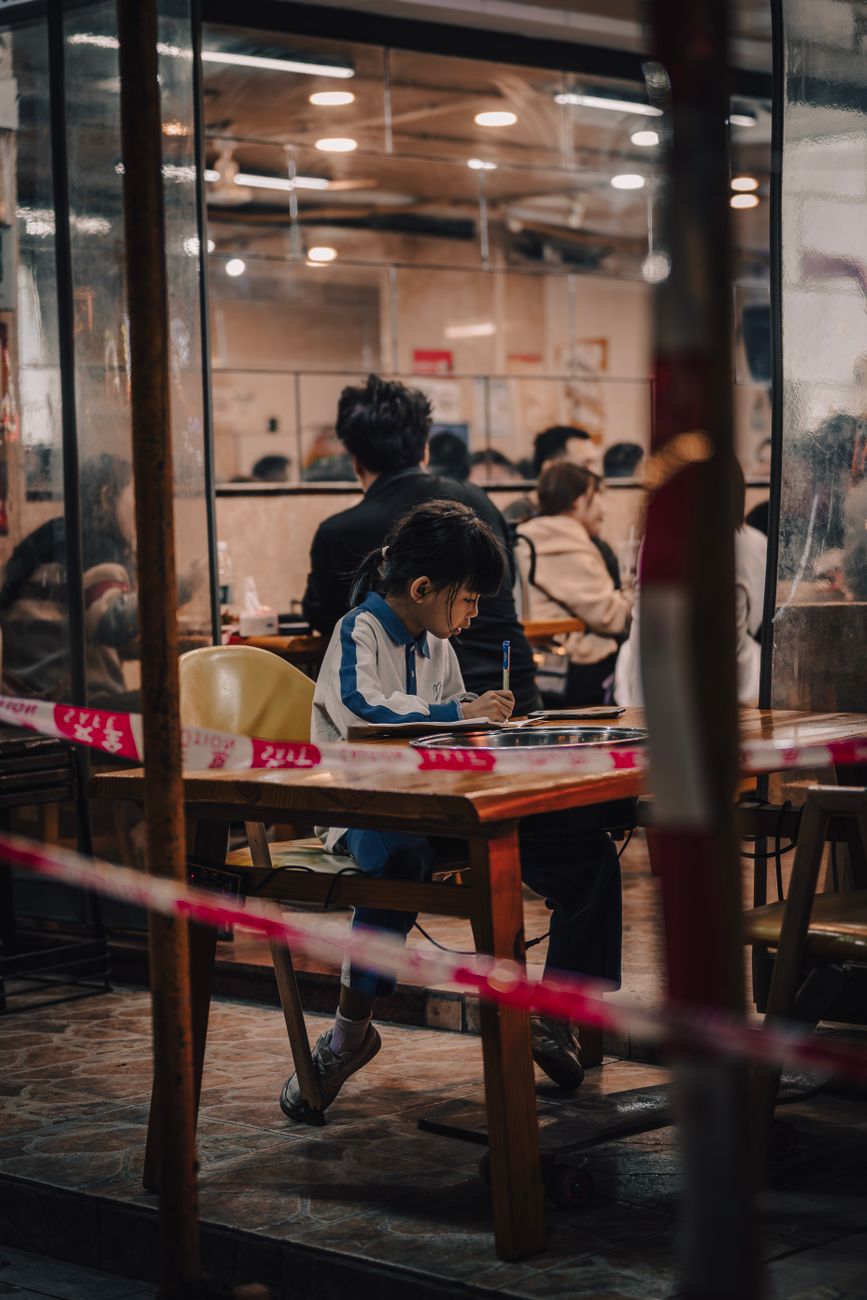
NAIROBI — The first time Grace Wanjiku raised her hand to answer in class, the words died in her throat. The question was simple — what is the capital of Kenya? — but the language wasn't. English, the official medium of instruction in Kenyan schools, felt like a straightjacket. Her mind raced in Kikuyu, the language she spoke at home, but the answer had to come out in English. It came out as a mumbled mess.
That was seven years ago. Today, Wanjiku is a university student, fluent in English, but she hasn't forgotten the struggle. And she's not alone. Across Kenya, a quiet rebellion is brewing. Students, teachers, and even parents are asking a question that strikes at the heart of the country's identity: why are we learning in a language that isn't ours?
Policy says mother tongue, reality says English
Kenya's education policy actually mandates mother-tongue instruction for the first three years of primary school. That's what the 2017 curriculum says. But in practice, it's a dead letter. Most schools — especially in cities and towns — jump straight into English from day one. Why? Because parents demand it. Because exams are in English. Because English is the key to a decent job.
“The policy is there, but implementation is zero,” says Dr. Peter Ochieng, a linguist at the University of Nairobi. “Schools are afraid that if they teach in mother tongue, students will fail the national exams. And they're not wrong — the exams are in English.”
The result is a generation of Kenyan students who are caught between two worlds. They learn in English, but they think in their mother tongue. They can parrot back facts, but they struggle to think critically. They can write, but they can't express themselves fluently.
What students actually want
Last year, a survey of 1,500 students in Nairobi and rural areas found something striking. Nearly 70% said they learned better when concepts were explained in their mother tongue first, then translated into English. Students in science classes especially struggled — abstract terms like “photosynthesis” or “gravity” made no sense until a teacher explained in Swahili or Gikuyu.
“When we learn in English, we memorize. When we learn in mother tongue, we understand,” says Wanjiku, now a third-year education student. “It's that simple.”
But simple doesn't mean easy. Kenya has at least 40 different mother tongues. A single classroom can have students speaking four or five different languages. Teachers would need to be polyglots or the system would need to sort students by language — which is politically and logistically messy.
Critics also point out that mother-tongue instruction could deepen ethnic divisions. Kenya's history is scarred by ethnic violence, and any policy that reinforces tribal lines makes people nervous.
The economic reality: English pays
Here's the hard truth that no policy can dance around: English is the language of opportunity in Kenya. The best universities teach in English. All government documents are in English. The courts, the parliament, the corporate boardrooms — English rules.
A 2023 study by the Kenya Institute for Public Policy Research and Analysis showed that Kenyans who are fluent in English earn on average 40% more than those who are not. That's a wage gap that no amount of pedagogical nostalgia can erase.
“If we teach our children in mother tongue, we are closing doors on them,” says James Kamau, a father of two in Nairobi. “I want my children to be able to compete with anyone in the world. English is the language of the world.”
Kamau is not wrong. But the cost is high. Students who are forced to learn in English from the start often fall behind. Dropout rates are higher in the early years, and many students never develop true proficiency in either English or their mother tongue. They end up semi-literate in both.
Other countries have done it
Kenya is not the first country to face this dilemma. Across Africa, the debate rages. South Africa has 11 official languages, and its education system is a patchwork of English, Afrikaans, and indigenous languages. Tanzania made Swahili the primary language of instruction, and its literacy rates improved. But Tanzania also has the advantage of a single dominant mother tongue — Swahili is spoken by nearly everyone. Kenya doesn't have that.
Nigeria, with over 200 languages, has tried a three-language model: mother tongue for early years, then English and a major local language. Results have been mixed, but studies show that students who start in mother tongue perform better in the long run, even on English-language exams.
“The evidence is overwhelming. Children learn to read faster in their first language. They learn concepts faster. They are more confident. But the political will is missing.” — Dr. Peter Ochieng, linguist
The path forward? Bilingual, not either-or
No one is suggesting Kenya dump English entirely. That would be economic suicide. But the all-or-nothing approach is failing. What researchers and many teachers advocate is a genuine bilingual model: mother tongue for explanation and conceptual understanding, English for reading, writing, and formal assessment.
That would mean training teachers to code-switch effectively, creating mother-tongue teaching materials, and, crucially, making exams bilingual for the early years. It's not a radical idea — it's how the best private schools often work.
But it costs money. And it requires political courage. The Kenyan government has been debating this issue for over a decade. Every few years, a commission recommends action, and then nothing happens. Meanwhile, another generation of students sits in classrooms, mouths full of words they can't say.
Grace Wanjiku is now training to be a teacher herself. She says she will use mother tongue in her classroom, policy be damned. “I know what it feels like to be silenced by a language. I won't let my students feel that.”
She may be the future of Kenyan education — if the system doesn't break her first.