Javier Tebas doesn't do diplomacy. The LaLiga president has spent a decade as football's most abrasive power broker, and on Sunday he went nuclear. In a blistering broadside aimed at Zurich, Tebas declared Gianni Infantino's reign at FIFA effectively finished — and accused the most powerful man in world football of "destroying the very essence" of the game.
"The Infantino era is over," Tebas told reporters. "FIFA has become a commercial machine that treats clubs and players as pawns. The soul of football is being sold to the highest bidder, and Gianni Infantino is the auctioneer."
Strong words. But they land at a moment when the sport's tectonic plates are shifting. The 2026 World Cup, co-hosted by the United States, Canada, and Mexico, has ballooned to 48 teams. The Club World Cup, revamped under Infantino, now stretches across a month and promises to swallow the summer of 2027. And FIFA's push for a biennial World Cup — shelved for now but never dead — still haunts the international calendar.
Tebas has been the loudest voice in the room against all of it. But this isn't just about scheduling. It's about power. And Tebas is convinced Infantino has too much of it.
The Expansion That Broke Football
Let's be clear: the 48-team World Cup is a mess. More games, more travel, more fatigue, and more meaningless group-stage matches where teams play for a draw that sends both through. The tournament's competitive integrity has been diluted to the point where a group-stage exit is now an achievement for half the field.
Tebas calls it "a festival of mediocrity." Harsh? Maybe. Wrong? Not by much. The old 32-team format wasn't perfect, but it had a ruthless purity. Every match mattered. Now, with eight groups of six — or whatever the final format ends up being — you're going to see teams mathematically eliminated by the second game and others just happy to be there. FIFA will tell you the expansion grows the game globally. That's PR nonsense. It grows FIFA's revenue. And Infantino, a Swiss-Italian lawyer who once ran UEFA's legal department, knows exactly how to count.
"They talk about growing the game," Tebas said. "But what they're really growing is their own bank accounts. The clubs — the ones who pay the players and build the stadiums — are the ones who suffer."
Money vs. Soul: The Real Battle
Tebas isn't some romantic purist. He runs LaLiga, a league that has embraced private equity, global marketing, and the relentless pursuit of commercial revenue. He's pushed for financial fair play rules that punish clubs for over-spending, and he's fought tooth and nail to keep the Super League — the breakaway project backed by Real Madrid and Barcelona — from ever seeing the light of day.
So when Tebas talks about "the essence" of football, he's not channeling some Luddite. He's making a strategic point. The essence of football is competition. It's meritocracy. It's the idea that the best team wins on the pitch, not the one with the biggest sponsorship deal or the most favorable fixture list.
"FIFA's model is based on the belief that more is better," Tebas argued. "More teams, more matches, more money. But that's not how sport works. Sport is about excellence, about earning your place. When you let everyone in, you dilute the achievement of those who truly deserve it."
He's not wrong. The 2026 World Cup will be the biggest in history, but it will also be the flattest. The group stage will be a slog. The knockout rounds will be decided on penalty shootouts more often than not. And the eventual champion will have played eight or nine matches, some against teams ranked 80th in the world. Try telling that to a fan who remembers when the World Cup was a sprint, not a marathon.
Infantino's Response? Nothing.
Here's the thing: Infantino doesn't need to respond. He's in the catbird seat. FIFA's coffers are overflowing. The World Cup is a money-printing machine. And the national federations that vote for him are the ones who benefit from the expanded format — they get more slots, more revenue, and more relevance.
Tebas knows this. He's not an idiot. So why is he speaking out? Because he's fighting for the other side of the ledger. LaLiga clubs — Real Madrid, Barcelona, Atlético — are the ones supplying the star power for this global spectacle. They're the ones paying the salaries, the transfer fees, the taxes. And they get nothing from FIFA but a pat on the head.
"FIFA has become a commercial machine that treats clubs and players as pawns."
This is the crux of the tension. FIFA runs the World Cup. The clubs run the game. And the gap between those two realities has never been wider. Infantino's vision is a world where FIFA is the sun and everything else orbits around it. Tebas's vision is a world where the clubs are the anchors and international football is a complement, not a master.
The Super League was supposed to be the clubs' answer. It failed — spectacularly, thanks in no small part to Tebas's guerrilla campaign against it. But the underlying grievance never went away. The clubs are tired of being squeezed. They're tired of losing players to international duty in November. They're tired of the chaos.
What Happens When Infantino Leaves?
Tebas's claim that "the Infantino era is over" is as much a wish as a prophecy. Infantino has been in power since 2016, and he's shown no signs of stepping down. He won re-election in 2023 unopposed. His term runs through 2027. And he's got a World Cup to preside over in 2026 — one that will be, by any measure, a commercial triumph.
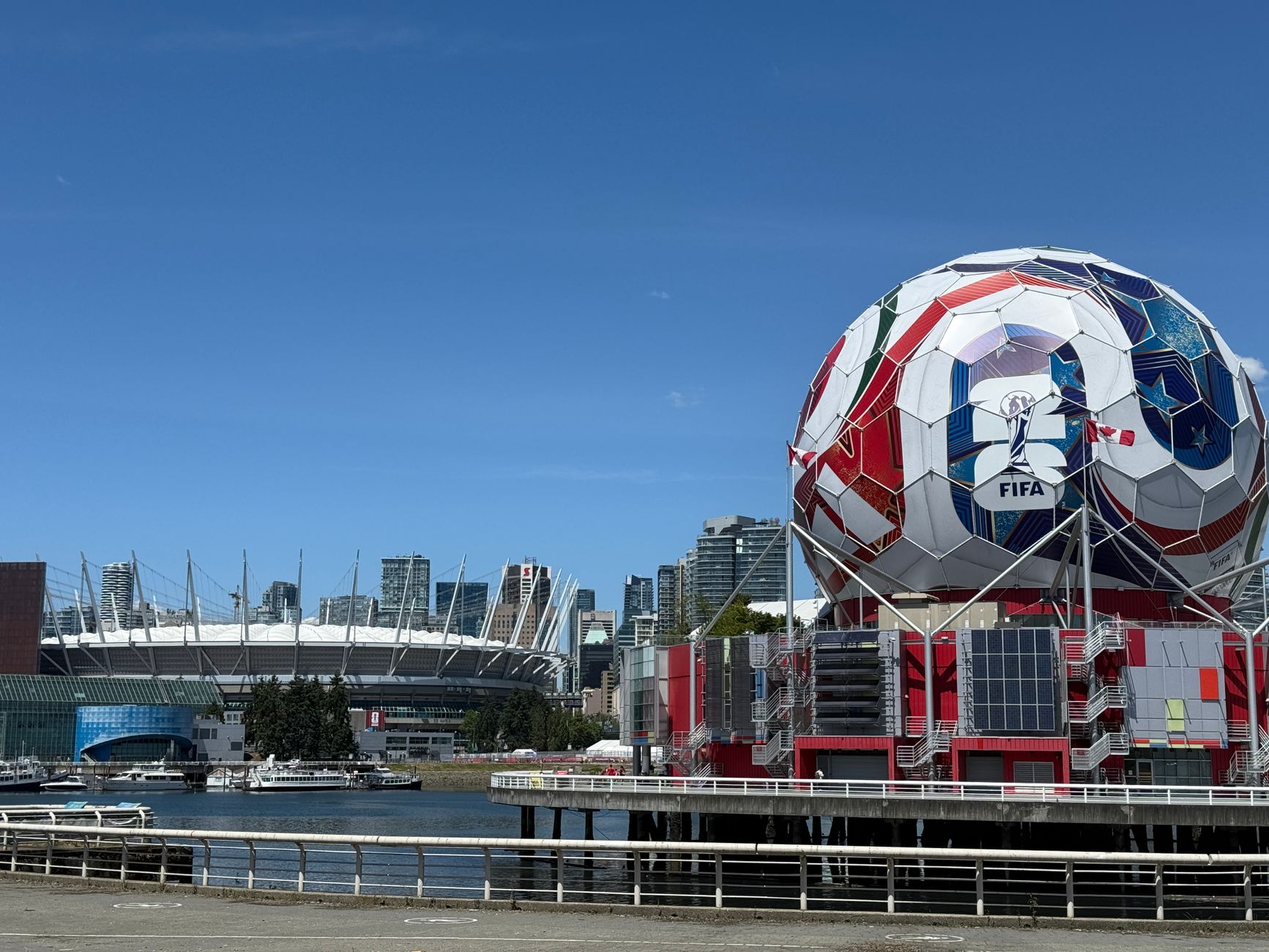
But eras end. Even Vladimir Putin thought he'd be in power forever. Infantino could face a reckoning if the 2026 World Cup turns out to be a logistical nightmare — and there are plenty of warning signs. A 48-team tournament across three countries, with venues spread from Vancouver to Mexico City, is a logistical fever dream. If it goes sideways, the blame will land squarely on Infantino's desk.
And then there's the corruption question. FIFA has never fully shed its tarnished image. Infantino has kept the scandals at bay — no arrests, no indictments — but the stench lingers. The Qatar World Cup in 2022 was supposed to be his vindication. Instead, it was a human rights disaster and a PR nightmare. The 2026 World Cup is his chance to write a different story. But if he stumbles, Tebas will be waiting with a knife.
The Bottom Line
Tebas is playing a long game. He knows he can't outmuscle FIFA directly. But he can chip away at Infantino's legitimacy. He can rally the clubs. He can make the case to the public that FIFA is a bloated, out-of-touch bureaucracy that cares more about spreadsheets than football.
And honestly? He's got a point. The World Cup expansion, the Club World Cup overhaul, the biennial World Cup flirtation — these are all moves that prioritize revenue over sport. Infantino has mastered the art of saying the right things while doing the opposite. He talks about "growing the game" while squeezing the clubs that actually grow it. He talks about "inclusion" while excluding the players who risk injury and burnout.
Is the Infantino era really over? Not yet. But the cracks are showing. And every time Tebas opens his mouth, the cracks get a little wider. The next two years will determine whether Tebas is just a loudmouth or a prophet. My money's on the loudmouth — but I've been wrong before.