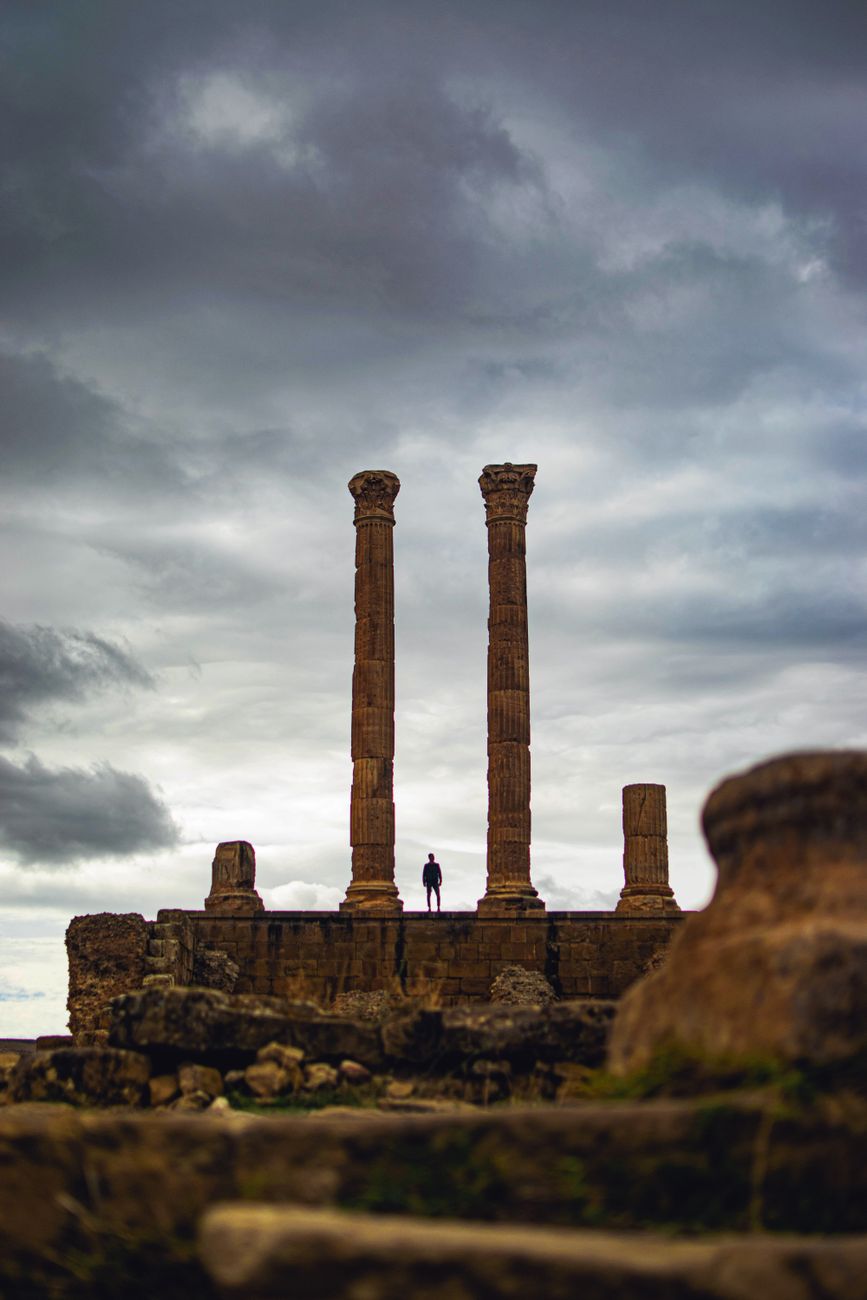
Baalbek's Roman temples have stood for 2,000 years. They've survived earthquakes, Crusaders, and the chaos of civil war. But a guided missile doesn't care about history.
In the past month, Israeli warplanes have struck within kilometers of Lebanon's five UNESCO World Heritage sites. The message is clear: no place is sacred when the guns are hot.
The Temple That Became a Target
On May 14, an Israeli airstrike hit a Hezbollah position just 1.2 kilometers from the Temple of Bacchus in Baalbek. The blast shattered windows in nearby homes and sent tourists scrambling. No damage to the temple itself. This time.
But ask anyone in Baalbek and they'll tell you it's only a matter of time. The city sits in the Bekaa Valley, a Hezbollah stronghold and a prime target for Israeli forces. The ancient ruins are surrounded by residential neighborhoods and, according to local reports, underground bunkers. That makes them impossible to isolate.
“We are sitting on a powder keg,” says Rami Khoury, a Lebanese archaeologist who has worked at the site for 20 years. “If a missile goes astray—and they often do—we lose something that can never be replaced.”
Five Sites, One War
Lebanon's UNESCO sites are a diverse lot: Baalbek, Tyre, Anjar, Byblos, and the Qadisha Valley. Each has a different vulnerability. Tyre's ancient hippodrome sits near the southern border, within range of Israeli artillery. Byblos, north of Beirut, is relatively safe for now but lies near a major highway used by Hezbollah convoys.
The Qadisha Valley, home to ancient Christian monasteries, is the most fragile. Carved into cliffs, the monasteries are accessible only by foot. An airstrike could trigger a rockslide that buries centuries of religious art.
Israeli officials insist they take precautions. “We do not target cultural heritage,” a military spokesperson told local media. “But we cannot allow Hezbollah to use these areas as shields.”
The problem is that Hezbollah doesn't ask permission. In 2006, the group stored weapons in a building adjacent to the Tyre ruins. Israeli forces bombed the building, causing cracks in the Roman columns. This time, the stakes are higher. Israeli intelligence claims Hezbollah has hidden rocket launchers in the caves of the Qadisha Valley. If true, the monasteries are doomed.
History as a Casualty of War
International law is clear. The 1954 Hague Convention prohibits attacking cultural property during armed conflict. But enforcement is weak. The International Criminal Court has never prosecuted a case for destroying cultural heritage. The message to aggressors: you can bomb the past and get away with it.
Lebanon has ratified the convention, but it lacks the resources to protect its sites. The country is bankrupt, its army stretched thin. The Ministry of Culture has a budget of less than $10 million. It can't afford sandbags, let alone anti-missile systems.
Meanwhile, the sites themselves are crumbling. At Baalbek, the Temple of Jupiter has been closed for years due to structural instability. The irony is bitter: the site might collapse on its own before an Israeli bomb does the job.
The Ghosts of Byblos
Byblos is the oldest continuously inhabited city in the world. Its port has seen Phoenicians, Romans, and Crusaders. Today, it's a tourist hub, its narrow streets lined with seafood restaurants and souvenir shops.
On a recent Friday, the city was packed with Lebanese families escaping the heat of Beirut. Few seemed worried about the war. “We live for today,” said Samira, a schoolteacher from Tripoli. “Tomorrow, who knows?”
But the threat is real. Just 10 kilometers south, the Israeli navy patrols the coast. A stray missile from a naval vessel could hit the port. The city's medieval castle, built by the Crusaders, is a stone's throw from the water.
Mayor Hadi Khoury has appealed to UNESCO for help. “We need satellite monitoring, we need emergency plans. We are a city of 8,000 years. We cannot be the ones to lose it.”
What Can Be Saved?
The short answer: not much. Lebanon's cultural heritage is a victim of geography and politics. The sites are scattered across a small country, and Hezbollah's presence makes them targets. No amount of international pressure will change that.
What can be done is documentation. The Lebanese government, with help from UNESCO, has begun 3D scanning the most vulnerable structures. If they are destroyed, at least there will be a digital record. It's cold comfort.
There is also the option of deconfliction. Israel and Hezbollah have a hotline to avoid accidental escalation. Could it be used to spare the ruins? Possibly. But the hotline is for military matters, not heritage. And in the heat of battle, no one stops to check if the target is a UNESCO site.
The real solution is political. As long as Hezbollah operates in civilian areas, the ruins will be at risk. As long as Israel strikes with impunity, the ruins will be at risk. And as long as the world watches without acting, the ruins will be lost.
“We are the custodians of human history,” says archaeologist Khoury. “But we are failing.”
Baalbek's stones have seen empires rise and fall. They will outlast this war, or they won't. The choice is not theirs. It's ours.