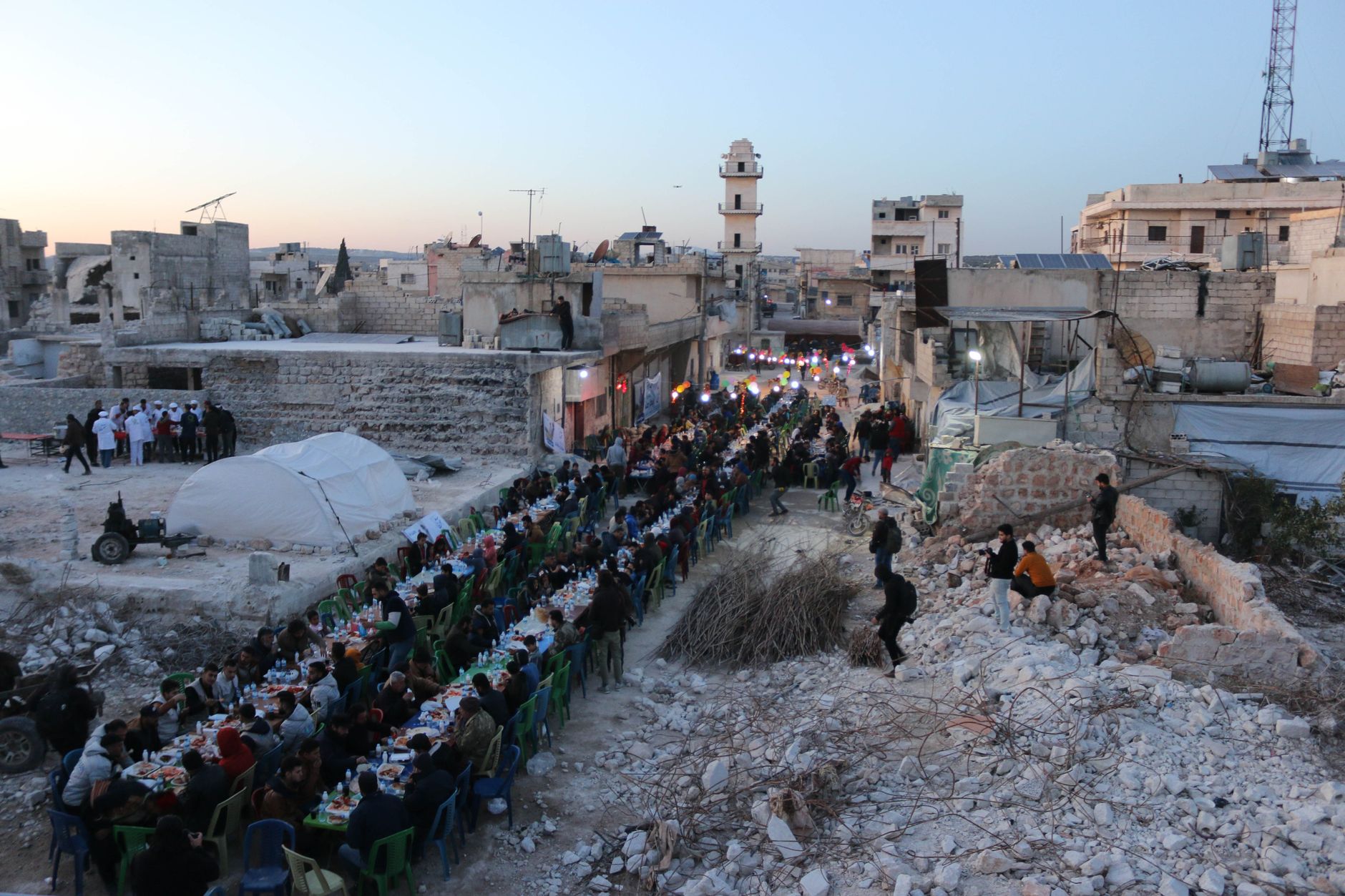
The church bells of Gaza City fell silent months ago. Now, the priests are gone too. The handful of Palestinian Christians who once prayed in the Holy Family Church have scattered, joining a mass exodus that is draining the Holy Land of its oldest living faith communities. It's not just war. It's a slow, brutal erasure — and it's happening right now, in Gaza, Jerusalem, and the occupied West Bank.
Ask anyone who's left why. They'll tell you the same thing: violence, fear, and a quiet desperation that the world can't see because it's too busy watching the bombs fall. But make no mistake — this isn't a footnote to the conflict. It's a catastrophe with a body count, a casualty list, and a tombstone that reads 'two thousand years of Christian presence.'
The Numbers Don't Lie, But Nobody's Counting
Exact figures are hard to pin down, because no one wants to be a statistic. But the trend is unmistakable. In 1948, Christians made up roughly 15% of Palestine's population. Today? Less than 2%. In Gaza, the community has shrunk from about 3,000 souls a decade ago to a few hundred. Each new round of violence — 2014, 2021, and the current horror of the war — pushes more families to the breaking point.
One local aid worker, who asked not to be named for fear of retaliation, put it bluntly over the phone: “We're not being killed by the thousands like in the old days. It's worse. We're being squeezed out, one family at a time. The young people don't see a future. The old people are dying. And the middle — they're packing suitcases.”
He's not exaggerating. In the occupied West Bank, settler violence against Christian villages like Ain Karem and Beit Sahour has escalated sharply. Olive trees — centuries-old, passed down through generations — are being burned. Gravestones are being vandalized. And the Israeli military? Often, they look the other way.
Gaza's Christians Caught Between Hamas and Iron Bombs
In Gaza, the situation is apocalyptic. The few remaining Christians are trapped between Hamas's rule and Israel's relentless bombardment. The Church of Saint Porphyrius, one of the world's oldest active churches, has been damaged. The Latin Patriarchate school was turned into a shelter — then it was shelled. Christians are not being targeted by name, but they're being wiped out by circumstance.
Take the story of a family I heard about from a priest who escaped through the Rafah crossing last month. They were a family of seven — parents, four kids, and a grandmother. Their home in the Zeitoun neighborhood was flattened in an airstrike. No warning. No secondary target. Just a pile of rubble where their life used to be. The grandmother was buried under the debris. They left her there. They had no time to grieve.
The family now sits in a cramped apartment in Cairo, wondering what's next. The father, a former pharmacist, says he'll never go back. “Gaza is not my home anymore. It's a graveyard. My God, my church, my family — all of it is dust.”
“We're not being killed by the thousands like in the old days. It's worse. We're being squeezed out, one family at a time.”
Jerusalem: The Heart of the Faith, Bleeding Out
Jerusalem is the spiritual core of Christianity — the site of the Resurrection, the birthplace of the Church itself. But even there, the faithful are fleeing. The Old City's Christian Quarter, once home to vibrant communities of Greek Orthodox, Armenians, and Catholics, is becoming a ghost town. Property prices are crashing. Shops that sold icons and rosaries now sit shuttered, their owners gone to Chile, the United States, or Europe.
The causes are layered like the city's ancient stones. Jewish extremists — the ones who chant “Death to Christians” during their marches — have grown bolder. They spit at priests, deface crosses, and burn churches with impunity. The Israeli police? Sometimes they arrest the extremists. More often, they blame the victims for provoking them.
There's also the economic stranglehold. The separation barrier has cut Bethlehem off from Jerusalem, strangling tourism — the lifeblood of Palestinian Christians. The occupation makes it near impossible to build, expand, or even maintain churches. And the Israeli government continues to strip Jerusalem residency from anyone who can't prove continuous presence — meaning anyone who leaves for work or school risks losing the right to come back.
One Jesuit priest, who has spent 20 years in Jerusalem, told me: “The Israelis want us gone. They don't say it, but their policies say it. They're making it impossible for us to live. And the international community — the great protectors of Christian heritage — they're silent. They'd rather fund a museum about the Holocaust than save a living Christian community.”
Not a Religious War — A Political One
Let's be clear about something. This is not a war between Muslims and Christians. In fact, many Christian families have found refuge in Muslim neighborhoods of Jerusalem, and Muslim neighbors have often risked their own safety to protect Christian homes during riots. The violence comes from a different direction: the Israeli state and its settler movement.
The Israeli government talks about preserving religious freedom, but its actions tell a different story. It allows settler outposts to be built on church land. It taxes Christian institutions at exorbitant rates, driving them to bankruptcy. It denies visas for clergy from abroad, meaning that as old priests die, there's no one to replace them.
This is ethnic cleansing by attrition. Slow, bureaucratic, and lethal. And it's working.
The Empty Pews of Bethlehem
Bethlehem — the city of Jesus's birth — has seen some of the most dramatic declines. In 1947, Christians were about 85% of the population. Today? Less than 15%. The famous Christmas Eve mass at the Church of the Nativity, once a packed affair, now draws a fraction of the faithful, many of them tourists.
Local Christian leaders speak of a “silent intifada” — not of stones, but of exit stamps. Young people, educated and ambitious, don't want to stay in a place where they can't get a job, can't travel, can't marry without fear. They're leaving for anywhere that will take them. Australia. Sweden. Canada.
And when they leave, they sell their properties — often to Muslims, sometimes to Jewish settlers. The land changes hands. The churches become museums. And the living faith, the one that has survived Romans, Crusaders, and Ottomans, is being snuffed out by a modern state that claims to protect it.
The World's Silence Is a Choice
The international community can't claim ignorance. Human rights groups — Amnesty, Human Rights Watch — have documented the abuses for years. The US Congress held hearings about the plight of Christians in the Middle East, but those hearings focused on Iraq and Syria. Palestine was an afterthought.
Part of the reason is that “Palestinian Christians” complicate the narrative. They're victims of Israel, but they're also Arabs. They don't fit the “persecuted minority” stereotype that Western donors like to fund. So they're ignored. Treated as collateral damage in a larger political game.
Until that changes, the exodus will continue. And one day, not too distant, Christians will be a relic in the Holy Land — a footnote of history, a curiosity for archaeologists, but no longer a living presence.
An Open Wound That Can Still Heal
Let me be direct: this is a tragedy that can still be reversed. But it requires an end to the occupation, a genuine commitment to equal rights for all Palestinians, and an international community that actually practices what it preaches about religious freedom.
If the violence stops, some families might come back. But every month of conflict makes it less likely. Children are growing up in exile, speaking Portuguese or Spanish instead of Arabic. They see the Holy Land as a war zone, not a homeland. The connection is being severed.
So the next time you hear about “preserving Christian heritage” in the Middle East, look at the reality. Look at the empty pews, the burned olive trees, the fleeing families. Heritage isn't just stones and manuscripts. It's people. And the people are leaving.
The church bells of Gaza are silent. Unless the world acts, they will never ring again.