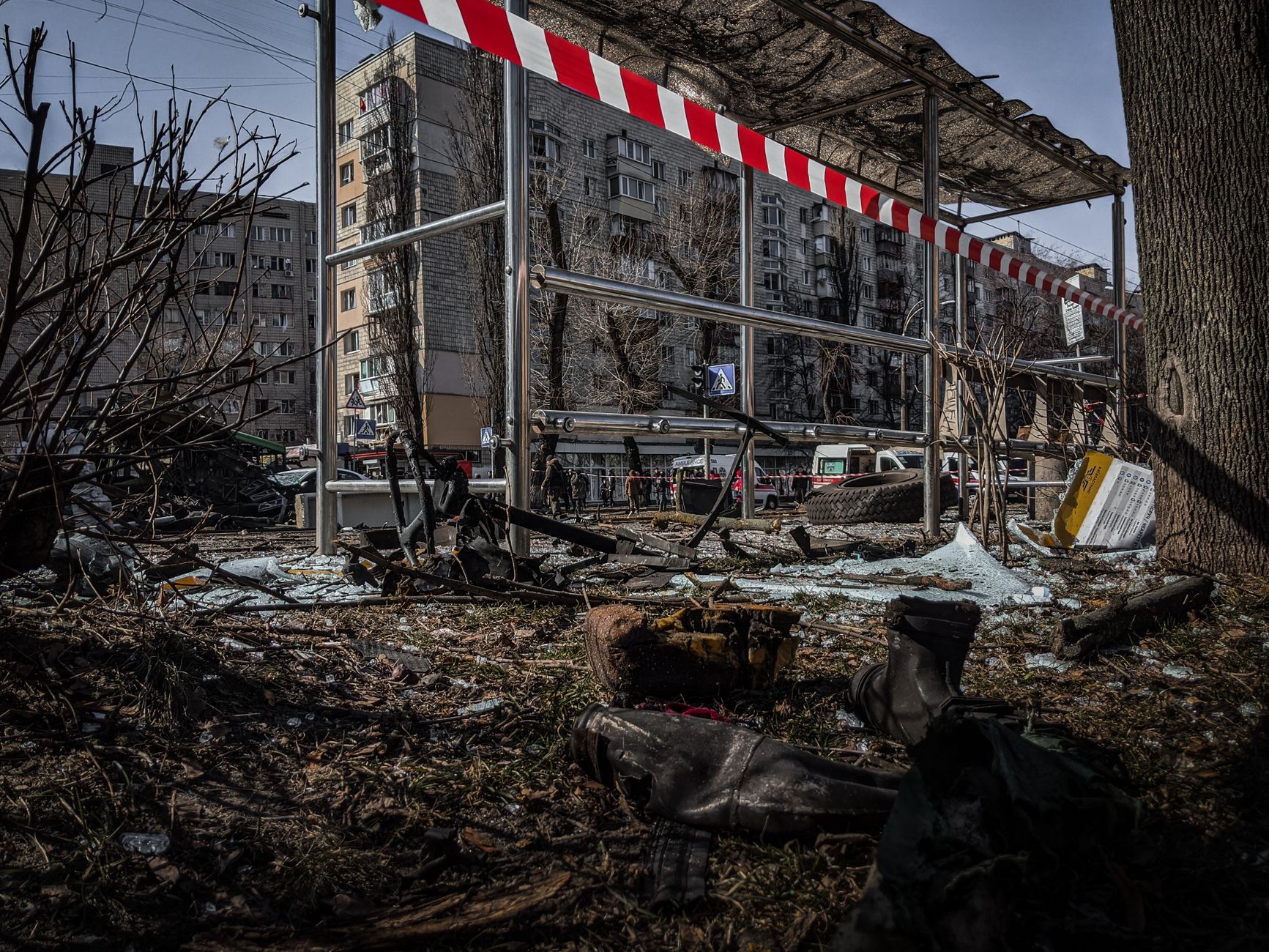
A Russian missile strike killed three civilians in eastern Ukraine Tuesday, just hours after new data showed Moscow's war economy is starting to crack under the weight of Western sanctions. The attack hit a residential neighborhood in Kramatorsk, leaving a crater 20 feet wide and shattering windows for blocks.
Kyiv immediately accused Russia of using cluster munitions — weapons that scatter bomblets over a wide area, often leaving unexploded ordnance that kills long after the strike. "This is a war crime," said Ukrainian presidential advisor Mykhailo Podolyak. "They are targeting civilians because they can't win on the battlefield."
Cluster Bombs and Civilian Casualties
Cluster munitions are banned by more than 120 countries under the 2008 Convention on Cluster Munitions. Neither Russia nor Ukraine signed that treaty. In Kramatorsk, rescue teams found unexploded submunitions in the rubble of a destroyed apartment block. Police cordoned off the area and warned residents not to approach.
The attack came as Ukrainian forces reported gains in the Zaporizhzhia region, pushing Russian troops back from the outskirts of Melitopol. But the human cost keeps mounting. Tuesday's deaths bring the civilian toll in Donetsk province to over 4,200 since the full-scale invasion began.
Russia's Economy Feels the Squeeze
Meanwhile, the Russian ruble fell to a 14-month low against the dollar after the Finance Ministry revealed that oil and gas revenues dropped 23% in May compared to the same month last year. The price cap imposed by the G7 on Russian crude — set at $60 per barrel — has slashed Moscow's primary source of foreign cash.
"Russia is running out of money," said economist Elena Rybakova of the Institute for International Finance. "They've burned through their rainy-day fund. Inflation is eating into household budgets. Soldiers aren't getting paid on time. This isn't sustainable."
The Kremlin denies any economic trouble. Spokesman Dmitry Peskov called the ruble slide "temporary" and blamed "speculative attacks." But independent data tells a different story. The Russian central bank has raised interest rates to 18% — the highest since 2003 — to try to tame inflation running at 9.5%.
Weapons Production Hits a Ceiling
Russia has ramped up domestic weapons production, converting factories to churn out shells and drones. But the effort has limits. Sanctions block imports of microchips and precision tools needed for modern munitions. A leaked Russian military document from April, obtained by Western intelligence, warned that missile stockpiles could run dry by late 2026.
"They're firing old Soviet-era missiles that are inaccurate and often fail," said retired US Army General Mark Kimmitt. "The new stuff — the Kalibrs and Iskanders — those are harder to make. Every time they launch one, they deplete a finite reserve."
Ukraine, by contrast, has seen a steady flow of Western arms. The latest US aid package, approved by Congress last month, includes long-range ATACMS missiles and cluster munitions for Ukrainian artillery. Kyiv has promised to use those weapons only against military targets, not civilians.
War Fatigue Grows on Both Sides
In Russia, the war's cost is becoming personal. Recruiters are scouring rural villages and offering cash bonuses of up to 500,000 rubles (about $5,500) to sign up. One conscript, speaking on condition of anonymity, told an independent Russian news outlet: "They promised me I'd be in logistics. Now I'm digging trenches near Bakhmut. My family is scared. I'm scared."
Ukraine faces its own morale problems. Troops have been on the front lines for months without rotation. Casualties are high. A survey published last week by the Kyiv International Institute of Sociology found that 38% of Ukrainians believe the war will last more than a year — up from 19% in January.
President Volodymyr Zelenskyy acknowledged the strain in a late-night address Tuesday. "Every day, our soldiers defend freedom," he said. "But freedom isn't free. We need more weapons, more support, more unity. The enemy is tired too. We must outlast them."
The International Response
The EU on Tuesday announced a new round of sanctions targeting Russian energy exports, including a ban on buying Russian liquefied natural gas. The move is largely symbolic — EU countries have already cut LNG imports by 70% — but it sends a message. "We will not relent," said European Commission President Ursula von der Leyen. "Russia's aggression must fail."
China, meanwhile, has called for a ceasefire and peace talks. But Beijing continues to buy Russian oil and gas, providing a crucial financial lifeline. Western officials say Chinese companies are also shipping dual-use technology — microchips, drone parts — to Russia, though Beijing denies it.
"China is the key variable," said Rybakova. "If China fully enforces sanctions, Russia's economy collapses within six months. If not, the war drags on for years."
What Comes Next?
The missile strike in Kramatorsk is a grim reminder that this war is far from over. Russia still has the capacity to kill, even if its economy bleeds. Ukraine has the will to fight, but needs the means. The equation is brutal: more weapons, more death, more waiting.
One thing is certain. Every missile Russia fires into a civilian neighborhood not only kills — it also depletes the dwindling stockpile that Moscow hopes will outlast Ukraine's resolve. The clock is ticking. Who runs out first?