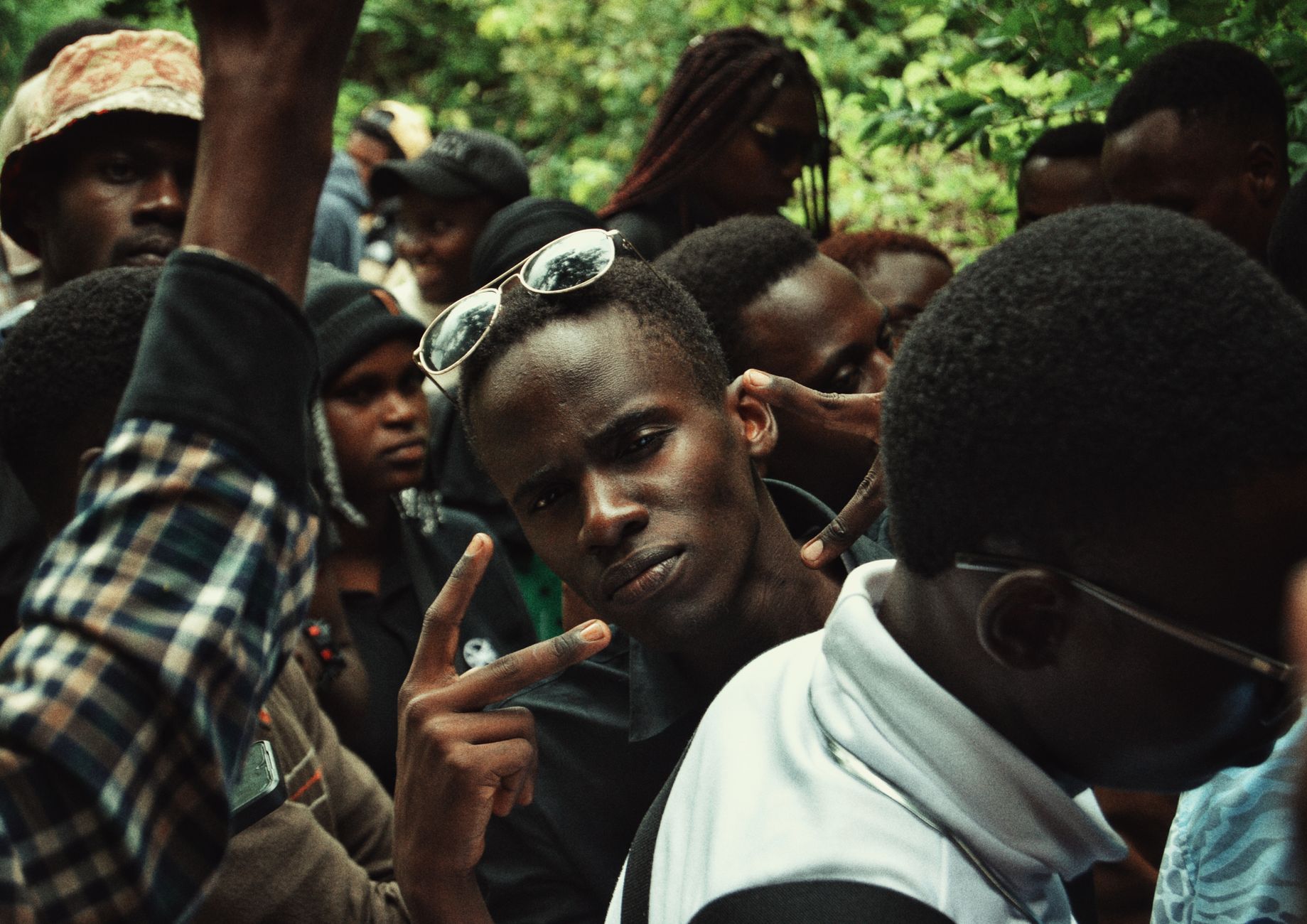
MADRID — The boy's hands move faster than his feet. Seventeen-year-old Youssef El Amrani signs his name to the air, a nervous habit that's taken over in these final days before the flight. In a few hours, he'll board a plane to Casablanca and see his mother for the first time in six years.
She won't hear him call her. He's never heard her voice, not once. But tonight, the silence they've shared across borders finally breaks.
Youssef is deaf. He arrived in Spain alone at age eleven, an unaccompanied minor who made the crossing from Morocco by sea. Now, after years in Spanish care, he's heading home for a visit — a quiet victory in a system that usually swallows kids like him whole.
Six Years Without a Voice
The story starts in a small town near Tangier. Youssef's father died when he was nine. His mother, a cleaner, worked twelve-hour days to keep rice on the table. With no schools for deaf children nearby, Youssef stayed home, learning to read lips and gestures, but little else.
One afternoon, a cousin whispered about boats "to the other side." Youssef didn't need to hear the word "opportunity" — he saw it in the way the cousin's eyes lit up.
So he left. A smuggler took his mother's life savings, a few hundred euros, and packed him into a rubber boat with two dozen strangers. The crossing was rough. Water sloshed in, and kids cried. Youssef didn't cry; he just gripped the side and watched the lights of Tarifa grow closer.
Spanish coast guards pulled him from the water near Algeciras. He had no papers, no phone, no way to tell anyone who he was. For weeks, social workers thought he was mute. Then someone noticed how intently he watched their hands.
"The moment we realized he was deaf, everything changed," says María López, a social worker in Madrid. "He wasn't broken. He was just waiting for someone to understand him."
The System That Didn't Fail This Time
Spain's system for unaccompanied migrant minors is a lottery. Some kids get legal support, education, and a path to residency. Others age out at eighteen and end up on the streets. Youssef got lucky — a court ruling in Andalusia granted him a residence permit, and a charity placed him in a specialized center for deaf youth.
There, he learned Spanish sign language. He learned to write. He learned, at last, to communicate.
"He absorbed everything like a sponge," says Carlos Ruiz, his sign language instructor. "Within two years, he was translating for other kids. He had this hunger, this need to be heard."
The center taught him a trade, too: welding. "I like the sparks," Youssef signs, grinning. "They're like stars that don't need sound."
His progress was remarkable, but the loneliness never fully faded. He sent letters to his mother through a charity — short, slow sentences in French, which she couldn't read. A neighbor read them aloud to her. She sent back voice recordings, which Youssef couldn't hear. So they settled on letters, written by Youssef, read by her neighbor, and responses written back in halting Spanish.
It worked, but it was slow. Too slow for a boy who just wanted to say "I'm okay" and hear it back.
The Ticket Home
Last month, a Spanish NGO announced it would fund reunion trips for migrant minors. Youssef's case was picked almost immediately. "He's one of our success stories," says Elena García, the NGO's coordinator. "But this isn't just about his success. It's about his mother's too."
Her name is Fatima. She's 41, with eyes that crinkle when she smiles. She's been saving for this visit — buying new clothes, cleaning the small apartment, cooking his favorite dishes. None of it can be communicated in advance. The only contact they've had is through intermediaries.
"She doesn't even know what he looks like now," García says. "The last photo she had was of a boy. He's a man now."
"Imagine not hearing your child's voice for six years," García adds. "Imagine not knowing if he's okay. That's been her life."
Deafness and the Border
Youssef's story highlights a double barrier: deaf migrants face isolation even within migrant communities. In many ways, his silence before coming to Spain was the loudest thing about him.
Advocates say deaf migrants are often misdiagnosed, wrongly labeled as mentally ill, or simply overlooked. A 2023 report by the European Union Agency for Fundamental Rights found that deaf asylum seekers were twice as likely to be denied services due to communication barriers.
"Youssef got lucky," says Ruiz. "Most don't."
But luck, in his case, was built on a foundation of stubborn hope. He learned sign language with the intensity of a soldier learning to disarm a bomb. He practiced in front of mirrors, his hands moving like pistons. He wrote letters to his mother even when he couldn't read her replies.
"I knew she was alive," he signs. "That was enough."
What Happens Next?
Youssef's trip is temporary — a two-week visit. He plans to return to Spain, where he has a job offer at a welding shop and a community that understands him.
"I want to bring my mother here someday," he signs, his face serious. "But only if I can. She deserves to see where I live. She deserves to see me use my hands."
The flight leaves at 6:40 AM. Youssef packed a small bag with gifts: a solar charger, a Spanish dictionary, and a photo album of his life in Madrid. He doesn't sleep the night before. Neither does Fatima, halfway across the sea.
When he lands, there will be a crowd at the airport. His mother will be in the front, her hands clasped, her eyes searching. He'll find her by the way she doesn't move, the way she just stares at the gate.
They won't speak. They'll embrace. And then, slowly, they'll start to talk — with hands, with tears, with the kind of language that needs no sound.
Six years of silence, broken by two weeks of words that neither can hear but both will understand.
That's not a happy ending. It's a beginning. And for a deaf kid from Tangier, that's everything.