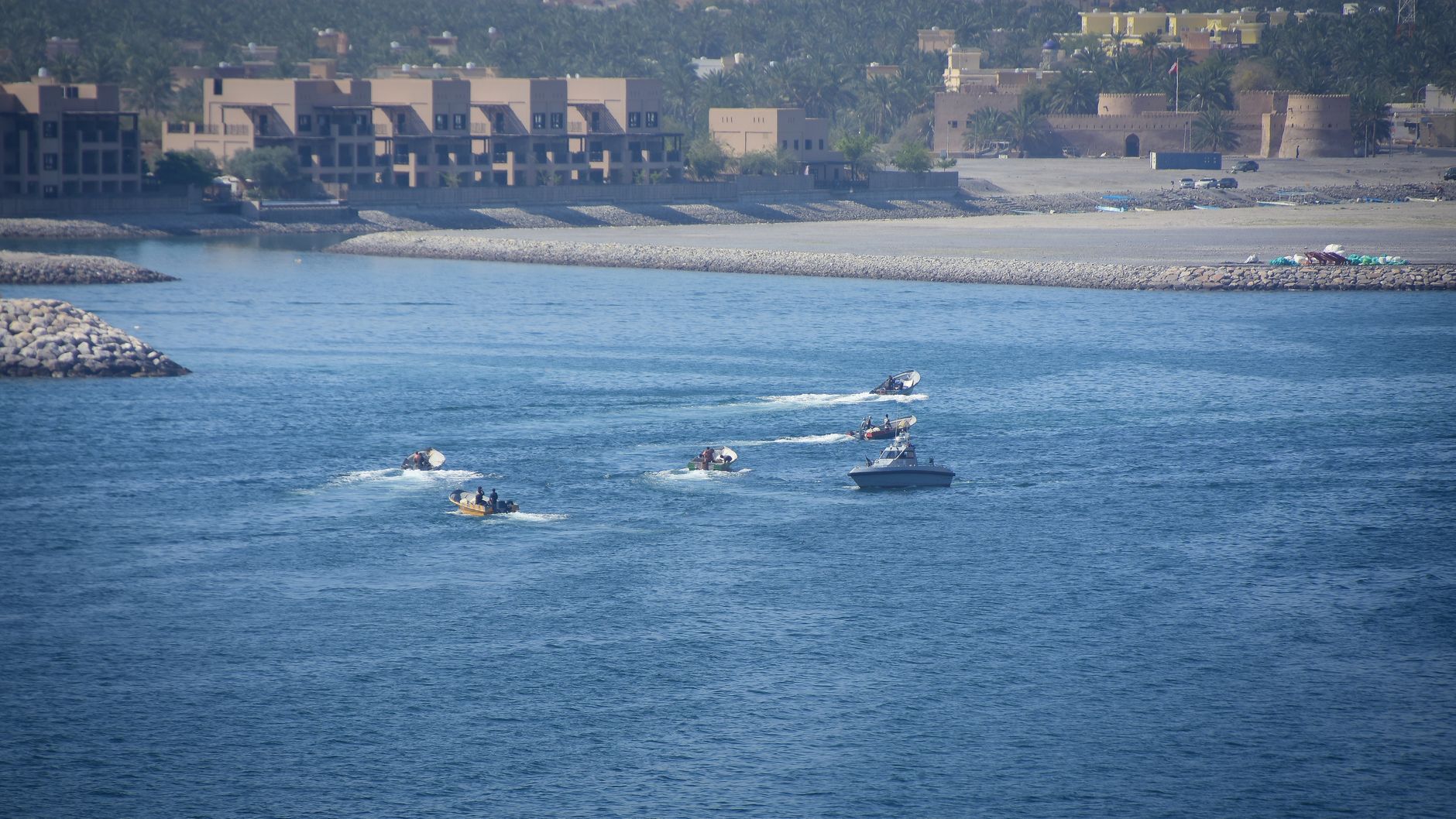
For weeks, the world’s most critical oil chokepoint has been a maritime parking lot. Now, more than 11,000 seafarers stranded aboard vessels in the Persian Gulf will finally get a path out — but the evacuation plan through the Strait of Hormuz is anything but routine. It’s a rare, fragile pact between Iran and the United States, brokered not by diplomats but by the grim arithmetic of a humanitarian crisis.
The international maritime organization coordinating the effort confirmed Tuesday that the first wave of crew members will begin transiting the strait within 48 hours. The operation, described as the largest commercial evacuation in decades, aims to clear a backlog of some 400 vessels that have been trapped since late May, when a series of tit-for-tat maritime seizures escalated into an unofficial blockade.
“We’re looking at a floating city of the stranded,” said Rear Admiral Hassan Rezaei of the Iranian Ports and Maritime Organization, speaking to reporters in Bandar Abbas. “Food, water, and medicine are running low. This is no longer a political issue — it’s a humanitarian imperative.”
The logistics are staggering. The plan calls for a phased evacuation using designated lanes, with Iranian and U.S. naval vessels providing deconfliction oversight. Each ship will be cleared in batches, with priority given to vessels carrying perishable cargo and those with crew members reporting medical emergencies.
How We Got Here: A Blockade Born of Escalation
The crisis began six weeks ago when Iran seized three commercial tankers near the Strait of Hormuz, accusing them of violating environmental regulations. The U.S. Fifth Fleet responded by escorting British-flagged vessels through the strait, triggering a series of retaliatory detentions. Within days, insurers refused to cover transits, and the strait effectively closed to commercial shipping.
“It started as a pressure tactic, but it spiraled,” said Captain James Holloway, a retired U.S. Navy officer and maritime security analyst. “No one expected the logjam to grow this fast. The Persian Gulf is not designed to hold hundreds of stationary ships — the heat, the lack of fresh water, the sanitation issues — it’s a powder keg.”
By mid-June, the Gulf resembled a ghost fleet. Satellite images showed vessels clustered in haphazard formations, their hulls baking under 120-degree sun. Crews reported dwindling supplies, with some ships reduced to rationing freshwater. The International Transport Workers’ Federation (ITF) declared a “Level 1 emergency” — its highest alert — and began pressuring governments to act.
“We’re looking at a floating city of the stranded. Food, water, and medicine are running low. This is no longer a political issue — it’s a humanitarian imperative.” — Rear Admiral Hassan Rezaei
The Deal: Mutual Self-Interest
What broke the impasse was a backchannel agreement between Iranian and American officials, negotiated through Oman and Qatar. The terms remain confidential, but sources familiar with the talks say both sides conceded on key points: Iran agreed to release all detained vessels, while the U.S. pledged to lift certain sanctions on Iranian shipping for the duration of the evacuation. Neither side publicly acknowledges the deal, but the operation speaks for itself.
“You don’t get 11,000 people moving without some form of off-the-record cooperation,” said Dr. Laleh Sharifi, a geopolitical risk analyst. “Both Tehran and Washington needed an exit ramp. The crews were becoming a propaganda liability for Iran, and the U.S. couldn’t afford a humanitarian catastrophe on its watch.”
The evacuation will proceed in four stages. Stage One: medical evacuations and critical supply replenishment. Stage Two: cargo vessels carrying perishable or dangerous goods. Stage Three: tankers and bulk carriers. Stage Four: support vessels and remaining crew. Each stage is expected to take three to five days, with the entire operation spanning nearly three weeks.
On the Ground: A Race Against Heat and Time
For the seafarers themselves, the announcement brings a glimmer of relief — but also anxiety. Many have been without reliable communication for weeks, their families unaware of their fate.
“I haven’t spoken to my wife in 19 days,” said Kumar Singh, a 34-year-old engineer from India stranded on a bulk carrier 40 nautical miles off the Iranian coast. “We have enough food for maybe another week. The water is brackish. Every day we pray for a ship to come.”
Singh is one of an estimated 4,000 Indian nationals among the stranded. The Indian government has been negotiating for priority evacuation, but the multinational nature of the crews complicates matters. Sailors from the Philippines, Sri Lanka, Egypt, and Ukraine are all waiting in the same sweltering holds.
The maritime organization coordinating the operation has set up a communications center in Dubai, where family members can call for updates. A dedicated website lists vessel names and their status — cleared, pending, or critical. The site crashed twice on Tuesday under traffic.
The Risks: What Could Go Wrong
While the plan is ambitious, experts caution that the execution is fraught with peril. The Strait of Hormuz is only 21 miles wide at its narrowest point, and moving hundreds of ships through that bottleneck while maintaining safe distances requires precision navigation. One mechanical failure — or one miscalculation — could result in a collision and environmental disaster.
“The biggest concern is a grounding or an oil spill in the middle of the evacuation,” said Holloway. “If a tanker goes down in the strait, you’re not just blocking the evacuation route — you’re shutting down global oil transit for months.”
Weather adds another variable. The Persian Gulf summer is unforgiving: air temperatures hover above 110°F, and the water is warm enough to accelerate corrosion on idle ships. Engines that have been stationary for weeks may fail to restart. Tugboats are positioned at intervals to assist, but there are only a dozen or so available in the region.
“If a tanker goes down in the strait, you’re not just blocking the evacuation route — you’re shutting down global oil transit for months.” — Captain James Holloway
The political stakes are equally high. Hardliners in both Iran and the U.S. have criticized the deal as a concession. Iranian state media initially ignored the evacuation announcement, then ran a brief wire report without editorial comment. In Washington, a group of Republican senators demanded the Biden administration disclose the terms of the backchannel agreement.
The Bigger Picture: A Warning for Global Shipping
This crisis is not an aberration — it’s a preview. The Strait of Hormuz remains the world’s most strategic maritime chokepoint, carrying about 20% of global oil consumption. And as geopolitical tensions in the region show no sign of easing, the risk of future blockades — whether intentional or accidental — is rising.
“The evacuation is a Band-Aid,” said Sharifi. “What the industry needs is a new framework for deconfliction and emergency response. No one wants a repeat of this — but no one is preparing to prevent it, either.”
For now, the focus is on getting 11,000 people home. The first vessels are expected to reach international waters by late Thursday. If the operation succeeds, it will be remembered as a rare moment of cooperation in a divided region. If it fails, the world will see what happens when a chokepoint chokes back.