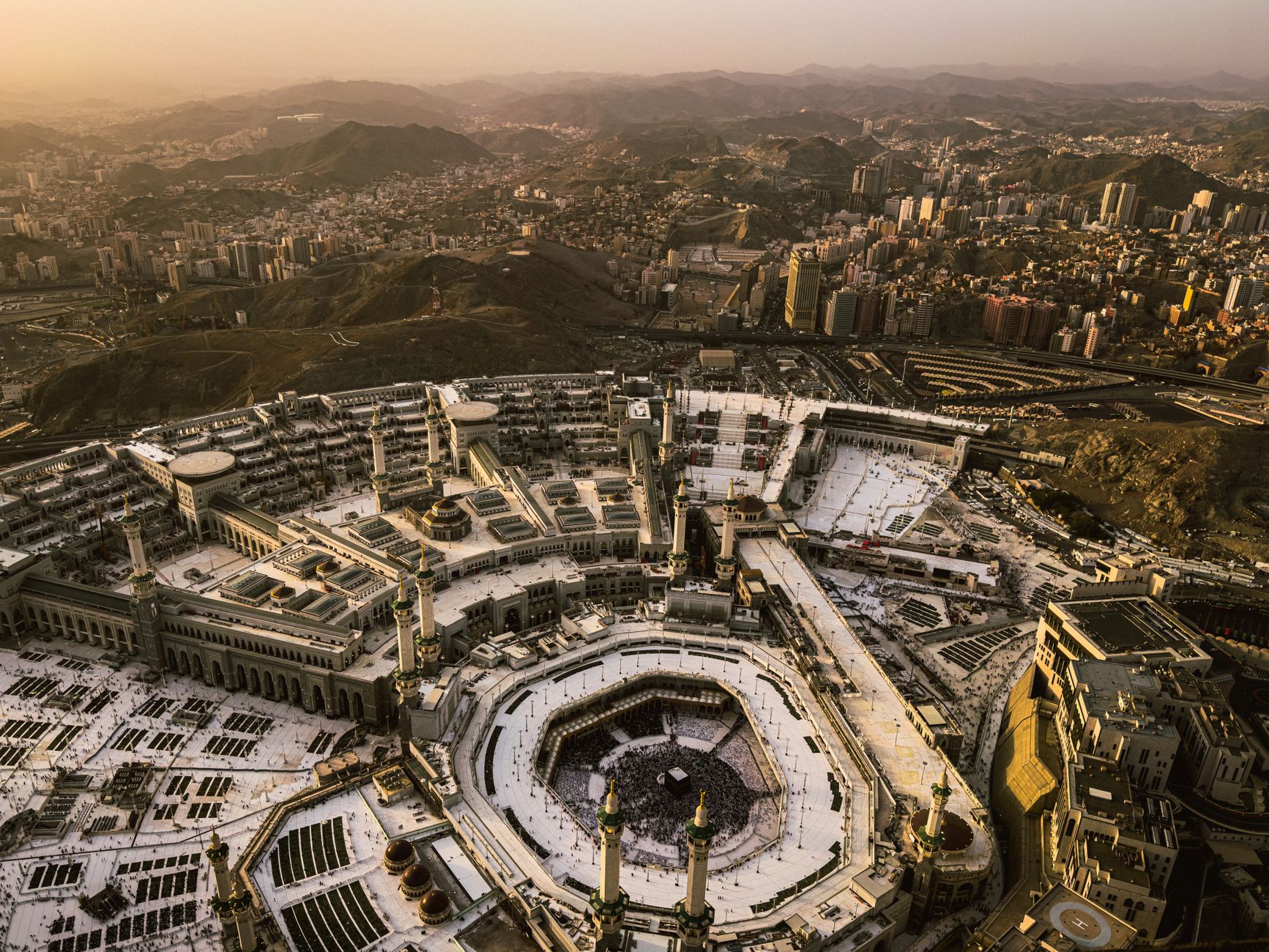
In the shadow of the Kaaba, three unlikely allies just rewrote the map of the Middle East. Saudi Arabia, Turkiye and Pakistan signed a trilateral defence pact in Mecca on Friday, a move that has diplomats scrambling and Tehran's generals reaching for their maps.
Don't call it an alliance. Not yet. But this is the closest thing to a military bloc the region has seen in decades. And it's aimed squarely at Iran — even if no one dared say the name out loud.
Three Capitals, One Threat
Here's what we know: the pact commits the three nations to "deterring aggression" and coordinating on defence. Vague, yes. But in the language of statecraft, vagueness is a weapon. The subtext is impossible to miss.
Saudi Arabia holds the purse strings. Pakistan brings nukes — an Islamic bomb, if you will. And Turkiye? Turkiye brings drones that have already humiliated Russian and Iranian proxies on battlefields from Libya to the Caucasus.
Together, they form a triangle that Iran's leadership will find deeply uncomfortable. Think about it: Saudi Arabia has the money and religious legitimacy. Pakistan has the military muscle and a nuclear arsenal. Turkiye has the tech and the strategic reach. Add them up, and you get something Iran cannot match — a bloc that can strike anywhere, anytime.
The Nuclear Elephant in the Room
Let's talk about the elephant. Pakistan is the only Muslim-majority nuclear power. Its missiles can reach Tehran in minutes. And while Islamabad has historically been a fence-sitter between Riyadh and Tehran, this pact signals a shift.
For Iran, this is a nightmare scenario. A Sunni-led alliance, armed to the teeth, sitting on its doorstep — and one of its members has nuclear weapons. The Islamic Republic's own nuclear program suddenly looks less like a deterrent and more like a trigger.
"This is not a defensive pact. This is a message: you move against us, and we will respond with everything we have."
An Iranian military analyst, speaking on condition of anonymity, told me the pact "changes the calculus of any confrontation." Iran has spent years building proxies — Hezbollah, the Houthis, Shia militias in Iraq and Syria. But proxies don't stop ballistic missiles. They don't stop F-16s. And they certainly don't stop a nuclear-armed Pakistan if things go hot.
Turkey's Tightrope Act
Turkiye's involvement is the twist that makes this story worth watching. Ankara has walked a fine line with Tehran for years, cooperating in some theaters and confronting in others. Now it's chosen a side.
President Recep Tayyip Erdogan is playing a long game. He wants to position Turkiye as the undisputed Sunni power — the voice of the Muslim world. To do that, he needs to match Iran's influence, and he can't do it alone. Enter Saudi money and Pakistani muscle.
But there's a catch: Turkiye and Iran have significant economic ties. They share a border. They have overlapping interests in the Caucasus and Central Asia. This pact doesn't erase those realities. It just complicates them.
Erdogan is betting that the benefits of aligning with Riyadh and Islamabad outweigh the risks of provoking Tehran. That's a risky bet. Iran has a long memory and a longer reach.
What Happens Next?
The immediate question is: how will Iran respond? Don't expect a declaration of war. That's not Iran's style. Instead, expect proxies to test the new alliance's resolve. A drone attack on a Saudi oil facility. A missile strike on a Turkish outpost in Iraq. A flare-up along the Pakistan-Iran border.
And watch for a Russian angle. Moscow has been Iran's backer through thick and thin. A new anti-Iran bloc might push Putin to deepen his embrace of Tehran, adding another layer to an already volatile region.
But here's the thing about pacts: they're only as strong as the trust behind them. Saudi Arabia and Turkiye have had their differences — remember the Khashoggi affair and the regional rivalries that followed? And Pakistan's relationship with Tehran has always been pragmatic, even friendly at times. This pact could unravel if the pressure gets real.
An Unprecedented Step
Yet I can't shake the feeling that this is more than just posturing. The fact that they chose Mecca as the venue is deliberate. This is a religious statement as much as a military one. It's a message to the Islamic world: we are the defenders of the faith.
And it's a message to Iran: your revolution doesn't define the Muslim world anymore. We do.
As the sun set over Mecca on Friday, the three leaders shook hands, and the Middle East took another step toward the abyss — or toward a new order. Only time will tell which.