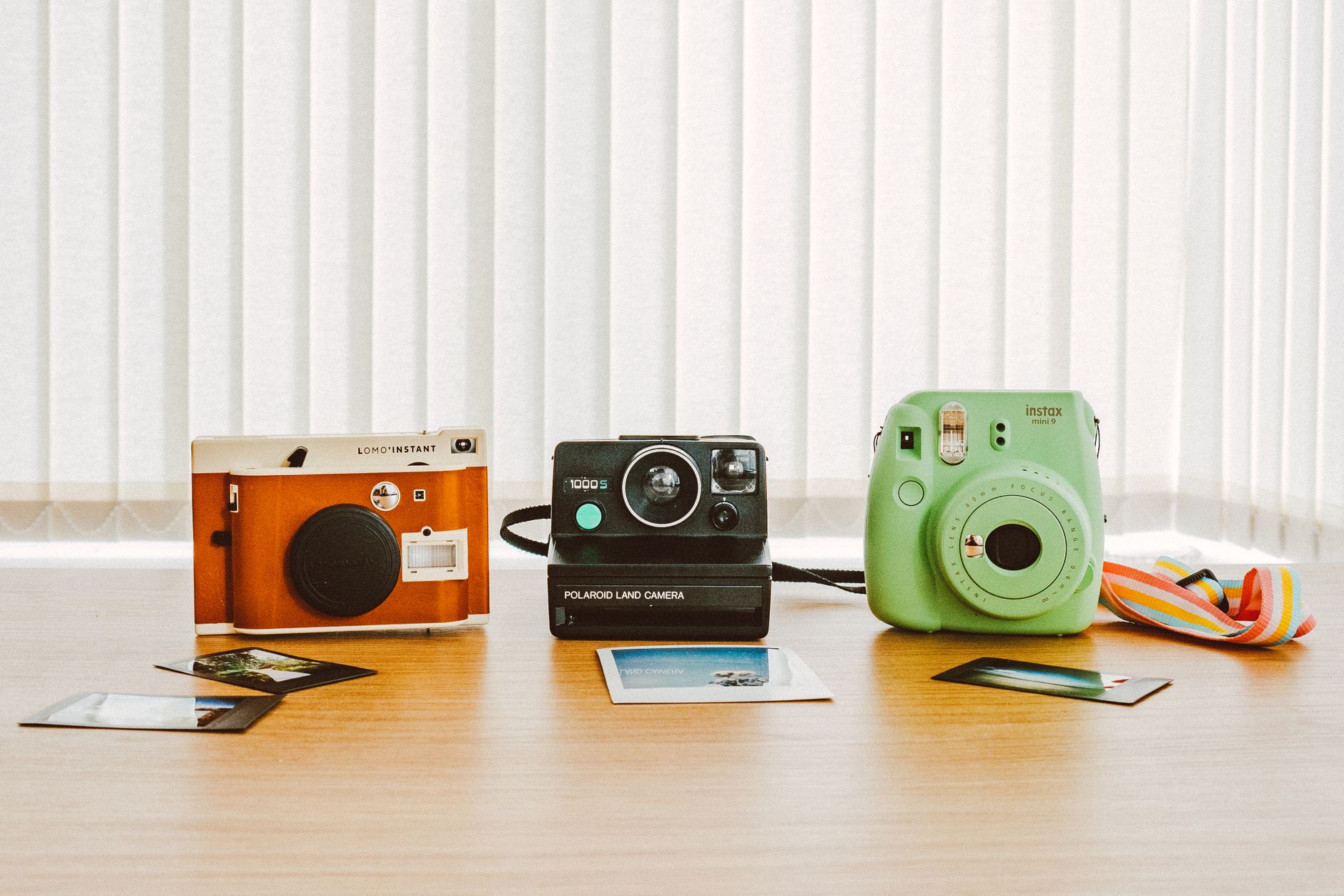
There's a moment, right after the shutter clicks, when the camera whirs and spits out a blank white rectangle. For a few agonizing seconds, you stare at nothing. Then, like a Polaroid ghost materializing from the ether, your face — or your dog, or your half-eaten burrito — fades into view. It's magic. Pure, dumb, chemical magic that your smartphone's HDR-overprocessed, cloud-synced perfection will never replicate.
But here's the dirty secret of instant photography: most of these cameras are trash. They're plastic toys with fixed-focus lenses that can't nail a subject five feet away, let alone capture a mood. They eat expensive film like a hungover college student eats greasy pizza. And they produce images that look less like art and more like a smudged watercolor painted by a toddler with a head cold.
So I did what any sane journalist would do. I bought every popular instant camera I could find, burned through 500 shots of film (my wallet is still weeping), and subjected them to real-world torture: dim concerts, harsh midday sun, birthday parties with crying kids, and a suspiciously photogenic cat named Walter. Here's what I learned, and the only cameras you should actually consider.
Why Your Phone Isn't Enough
Let's get the obvious out of the way. Your iPhone takes better photos. Sharper, more accurate colors, better low-light performance. But it can't do this: hand someone a physical photo, still warm from the chemical reaction, and watch their face light up. That's the real product. Not the image — the moment.
Instant cameras are about ritual and tangible memory. They're about the white border that begs for a sharpie caption. They're about the imperfect, one-of-a-kind print that can't be duplicated or deleted. And that's worth something, even if the sharpness of a $5 disposable.
“A photo you can hold is a memory you can't delete. That's the whole damn point.”
The Contenders: From Bottom of the Barrel to Top of the Heap
I tested six cameras across three brands — Fujifilm's Instax lineup, Polaroid's modern resurrection, and a few off-brand interlopers I'd rather not remember. I shot in good light, bad light, and "please don't look at me" light. I used the included film, the expensive film, and the slightly less expensive film. Here's the breakdown.
The Ugly Stepchild: Polaroid Now+. Polaroid is the OG, but the novelty has worn off. The Now+ is a brick that feels like it was designed in 2008 and Not updated since. It has a so-called "app mode" that adds Bluetooth and a few filter options, but the image quality is, to be blunt, muddy. Colors are the wild, saturated mess that vintage Polaroid lovers claim to adore, but honestly? Half my shots came out looking like an Instagram filter from 2011 that nobody asked for. The film is also the most expensive of the bunch — about $2 per shot. For that price, I expect a photo that doesn't look like it was shot through a jelly jar.
The Cheap Thrill: Fujifilm Instax Mini 11. This is the camera your little sister got for Christmas. It's plastic, it's light, and it takes passable shots in decent light. But the Mini 11 has a fatal flaw: its minimum focusing distance is about 50 centimeters. So any close-up of your friend's face? Out of focus. Any attempt at a selfie? You end up with a blurry forehead. The exposure is also a crapshoot — under bright sun, everything blows out to white; in shade, it's grainy and dark. But at $70 (and $0.75 per shot), it's the gateway drug for a reason. If you're just playing around, it's fine. If you want something you'll actually use in five years, keep reading.
The Dark Horse: Fujifilm Instax Mini Evo. This hybrid camera takes digital photos and prints them onto Instax Mini film. It's got a million filters and lens effects to play with, which is great for tinkerers. But is it an instant camera? Not really. You're basically taking a digital photo and then choosing to print it. The charm of instant photography is the unpredictability — the surprise. With the Evo, you can cherry-pick your perfect shot and print it. That's less magical and more like a tiny printer. Still, if you're a control freak, this is your camera. The image quality is decent, and you can store your favorites digitally. But it loses the soul.
The Winner: Fujifilm Instax Wide 400
Here's where I get fired up. The Instax Wide 400 isn't perfect. It's bulky, it has a fixed focus that requires you to roughly estimate distance, and it only has two exposure settings (light and dark). But here's the thing: it produces the largest, most satisfying prints of any Instax camera. The film is 62mm x 99mm — about 1.5 times the size of Mini film. And those prints? They have a depth and presence that Mini shots lack.
In my tests, the Wide 400 nailed colors better than any of its siblings. Skin tones were warm and natural; landscapes popped with vibrancy. The flash is decent for indoor shots, and the lens is sharp enough for a casual snapshot. Yes, it's a fixed focal length, so you can't zoom, but that's the point. You move your feet. You think about the composition.
“I've shot 500 frames across six cameras. If I had to keep just one, it'd be the Wide 400 — warts and all.”
And at $150 with film at $1.50 per shot, it's a reasonable investment for a hobby that'll actually stick. The only real downside? The camera is ugly as sin. It looks like a toy from the 90s, with a weird blue and white clamshell design. But honestly, that's part of its charm. You're not buying this for aesthetic.
What About the Film? It's a Losing Game
Here's a hard truth: instant film is a money pit. At $1 to $2 per shot, you'll think twice before firing off a burst. And that's actually good. It forces you to be deliberate. You can't take 40 photos of your cat and pick the best one. You get one shot, and you better make it count.
But there's a darker side: the film is finicky. It hates extreme heat and cold. It fades over time. And the chemical packs can go bad if you don't use them within a year. I lost a 10-pack of Polaroid film to a hot car trunk, and I'm still bitter. So treat your film like eggs — keep it cool, keep it fresh, and use it before it expires.
The Verdict: Buy the Wide 400, Skip the Rest
Look, I'm not going to pretend instant photography is a rational hobby. It's expensive, the quality is objectively worse than digital, and you'll discard more shots than you keep. But if you're in the market, don't waste your money on the Polaroid Now+ or the Mini 11. They'll disappoint you.
Spend the extra $80 on the Instax Wide 400. It's the only camera in this test that made me say "wow" when the print developed. It's the only one that made me want to shoot more, not less. And it's the only one I'd trust to document a road trip or a wedding without wanting to throw it in a river.
So get one. Shoot some friends. Laugh at the blurry ones. Frame the good ones. And remember: the best camera is the one you actually carry — and the one that makes you feel something when the image appears. The Wide 400 does that. The rest are just plastic.