You've heard the story a thousand times. A colossal volcano blows its top 74,000 years ago, plunges the world into a volcanic winter, and humanity clings to survival by a thread — battered down to a few thousand scrappy ancestors who somehow pulled us through. It's a great story. It's also, according to a growing pile of evidence, a steaming pile of nonsense.
New research from an international team of scientists is taking a sledgehammer to one of paleoanthropology's most beloved catastrophe narratives. The Toba eruption — the biggest bang in the last two million years — didn't cause a near-extinction event. It barely caused a hiccup.
"The eruption had a minimal impact on the climate," says Dr. Lotta Carlsson, a geochemist at Stockholm University who led the study. "We're talking about a short-term cooling, but not the decades-long deep freeze everyone's been imagining."
The findings, published this week in Geophysical Research Letters, are the latest in a decade-long reassessment of Toba's fallout. And they're forcing us to rewrite the story of human survival.
The big bang theory's bad hangover
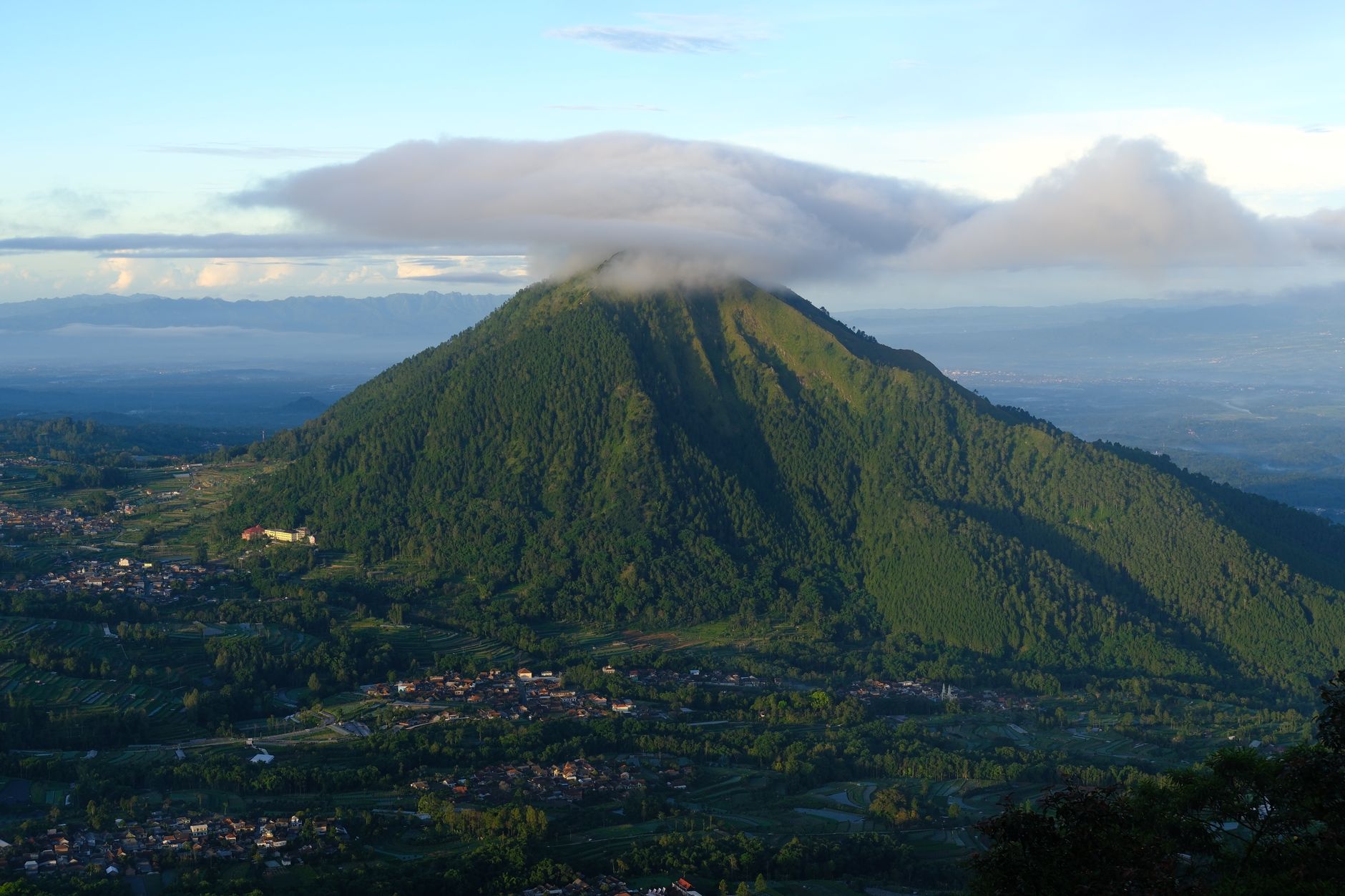
Here's the classic tale: Toba erupts on the island of Sumatra, spewing an estimated 2,500 cubic kilometers of volcanic debris into the atmosphere. It's a monster — a mega-colossal eruption that makes anything in recorded history look like a firecracker.
The old hypothesis, first proposed in the 1990s by anthropologist Stanley Ambrose, was that the resulting volcanic winter — with global temperatures dropping by as much as 10 degrees Celsius in some places — created a planet-wide bottleneck for early humans, leaving a mere few thousand breeding pairs alive.
That theory has been taught in classrooms and repeated in documentaries for decades. But the evidence never really backed it up. Genetic studies have hinted that human populations did go through a bottleneck around that time, but linking it directly to Toba has always been shaky. And now, the climate data is pulling the rug out from under the whole narrative.
"The original hypothesis was based on some pretty crude climate models," says Dr. Marcus Reeves, a paleoclimatologist at the University of Cambridge who wasn't involved in the study. "When you actually look at ice cores and other proxies, the signal just isn't there."
Six degrees of separation
The team's analysis used state-of-the-art climate models, incorporating updated estimates of the eruption's sulfur output — a key player in cooling. They ran hundreds of simulations, varying the amount of sulfur dioxide injected into the stratosphere. The result? Even in the worst-case scenarios, the global average temperature drop was a modest 2-3 degrees Celsius, and it rebounded within a decade.
"A 2-3 degree dip is significant, sure," Carlsson explains. "But it's not the 10-degree plunge that some have suggested. And crucially, this kind of cooling would have been survivable for humans who were already adapted to fluctuating climates."
The team also compared Toba's climate fingerprint with other known volcanic events, like the 1815 eruption of Mount Tambora, which caused the "Year Without a Summer" — a nasty little period that led to crop failures and famine in Europe and North America. Tambora was puny compared to Toba, but its climate impact was arguably more pronounced.
"What we're seeing is that the relationship between eruption size and climate impact is not linear," says Reeves. "Bigger doesn't always mean worse. Other factors — like the latitude of the eruption, the season, and the specific sulfates — play a huge role."
The archaeology shrugs
If Toba's climate was so unremarkable, what about the human story? Archaeological evidence from the period is beginning to paint a very different picture from the "near-extinction" narrative.
Excavations at archaeological sites in India and Africa — right in the path of Toba's ashfall — show that human populations in these regions were doing just fine, thank you very much. Stone tools and other artifacts found above and below the ash layers suggest continuous occupation, no dramatic gaps.
"The idea that humans were nearly wiped out is pure fiction," argues Dr. Anika Sharma, an archaeologist at the Max Planck Institute for the Science of Human History. "The evidence on the ground shows that humans were resilient, adaptable, and actually thrived in the aftermath."
In fact, some researchers now speculate that Toba's ash dump might have been a boon for early humans. The volcanic ash could have created fertile soils, refreshed ecosystems, and opened up new migration corridors.
"The idea that humans were nearly wiped out is pure fiction. The evidence on the ground shows that humans were resilient, adaptable, and actually thrived in the aftermath."
So why did the myth persist?
It's a seductive story, isn't it? The idea that we're all descendants of a small band of survivors — it's the ultimate underdog tale. It feeds into our sense of destiny and resilience. And it makes for a great documentary.
But science is supposed to be about following the evidence, not the narrative. And the evidence has been pointing away from the Toba bottleneck theory for years. This study is just the final nail in the coffin.
"We're not trying to be sensationalist," Carlsson says. "But we have a responsibility to correct the record. The Toba eruption was a massive geological event, but it didn't nearly kill our species. We're not that fragile."
What really shaped our species?
If not a super-volcano, what did shape the trajectory of early human evolution? The answer, as always, is probably a complex mix of factors — climate fluctuations, changing ecosystems, competition with other hominins, and plain old chance.
The period around Toba's eruption did see significant climate shifts, but these were part of a larger pattern of glacial-interglacial cycles, not the result of a single volcanic blast. Human populations were already adapting to these swings long before Toba.
"Humans have always been a species of survivors," Sharma points out. "We've dealt with ice ages, droughts, floods, and disease. To think that one volcano — even the biggest in history — could have brought us to the brink is to underestimate our ancestors."
Time to rewrite the textbooks
The Toba catastrophe theory has been a staple in textbooks for decades. But if this study holds up to scrutiny, it's time for a rewrite. The next edition should read: "The Toba eruption was a major geological event with minor climate consequences, and human populations continued to flourish."
It's not as dramatic. It doesn't make for a catchy headline. But it's the truth. And in journalism, as in science, the truth has to win.
So here's to the ancestors who didn't nearly die out. They were tougher than we give them credit for. And there were a lot more of them than we thought.
But don't worry — the doom-and-gloom crowd will find something else to panic about.