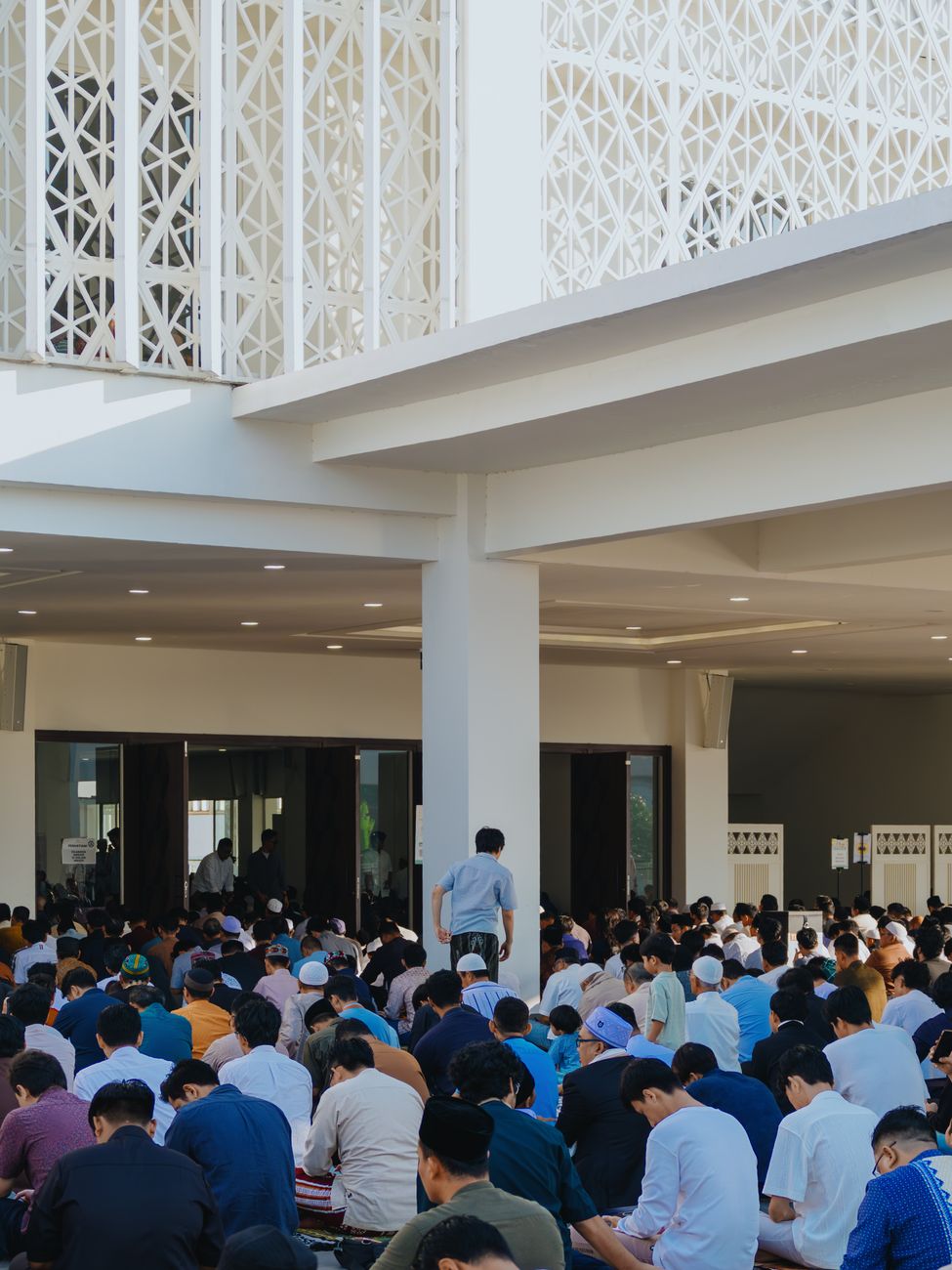
You see it before kickoff: a player drops to his knees, crosses himself, mutters a prayer. Minutes later, that same player is screaming at the ref, calling on a higher power to damn the opposition. Welcome to the World Cup 2026, where faith and football are tangled tighter than a last-minute tackle.
It's a strange cocktail, this mix of devotion and desperation. On one side, you've got the serene pre-game rituals — Muslims prostrating in supplication, Christians making the sign of the cross, Sikhs tying their turbans a little tighter. On the other, the raw, unfiltered passion of competition: players cursing, fans spitting venom, and everyone bargaining with the divine for a favorable bounce of the ball.
Prayers on the Pitch
This tournament has been a showcase for the spiritual side of the beautiful game. Take the Moroccan squad, for instance. Before every match, they form a huddle and recite verses from the Quran. It's not performative; it's genuine. "Football is a gift from Allah," midfielder Sofyan Amrabat told me after their group-stage win. "We play for Him."
Then there's the Brazilian team, known for their exuberant celebrations — but also for their quiet moments. Neymar, for all his flash, has a small chapel in his hotel room. He's not alone. A FIFA official confided that nearly every team requested a prayer room this year. The tournament organizers, to their credit, provided them — multi-faith spaces in every stadium, complete with prayer mats, Bibles, and even a Torah scroll.
"Football is a gift from Allah. We play for Him." — Sofyan Amrabat, Morocco midfielder
But here's the dirty little secret: the same players who pray for guidance are also the ones who, in the heat of the moment, curse their opponents. They'll whisper a prayer before a penalty kick, then scream "f---" when it misses. They'll thank God for a goal, then shove a rival in the back seconds later. It's not hypocrisy — it's humanity.
The God Gap
What's fascinating is how the media frames this. When a Muslim player prays, it's "devotion." When a Christian does it, it's "tradition." When a secular player just plays, he's "focused." We love to label faith based on the jersey color. But watch closely: the desperation is the same. Every player, regardless of belief, is begging for something — a win, a goal, a miracle.
And the fans? Don't get me started. In the stands, you've got religious banners mixed with national flags. "Jesus saves" next to "Vamos Argentina." It's a cacophony of belief and tribal loyalty. I saw a Mexican fan cross himself before every free kick, then immediately scream "hijo de puta" when the ball sailed wide. That's the World Cup in a nutshell: holy and profane, all at once.
Cursing the Opposition
Let's talk about the cursing. Because while prayer is quiet, the cursing is loud. Players have always sworn on the pitch — it's part of the game. But this World Cup, it feels more pointed. Maybe it's the pressure. Maybe it's the heat (temperatures in some host cities hit 38°C). Or maybe it's just that faith makes the stakes feel cosmic.
When a player curses the opposition, he's not just venting; he's asserting that his side is morally superior. "You're going to hell" is not just an insult — it's a theological statement. I heard a defender tell a striker, "God will judge you for that dive." The irony was lost on no one.
But here's the thing: faith in football is a double-edged sword. It can unite — like when the Senegalese team knelt in prayer after a win, their Muslim and Christian players shoulder to shoulder. And it can divide — like when a fan was ejected for shouting anti-Semitic slurs at an Israeli player.
"You're going to hell" is not just an insult — it's a theological statement.
This World Cup has forced us to confront the role of religion in sport. FIFA likes to pretend it's neutral — "football for all" and all that. But neutrality is a myth. Every decision, every gesture, every call is colored by belief. The referee who doesn't call a penalty might be subconsciously favoring a team from his own region. The player who uses a racial slur might be echoing the bigotry of his home country.
The Verdict
So where does this leave us? Staring at a pitch where prayer and profanity coexist. It's messy. It's human. And it's not going anywhere.
The next time you see a player cross himself before a shot, remember: he's not just asking for a goal. He's asking for meaning in a game that, ultimately, is just 22 men chasing a ball. Faith gives it weight. Cursing gives it edge.
And in the end, isn't that what we all want? A little faith, a little fire, and a good reason to scream at the television?