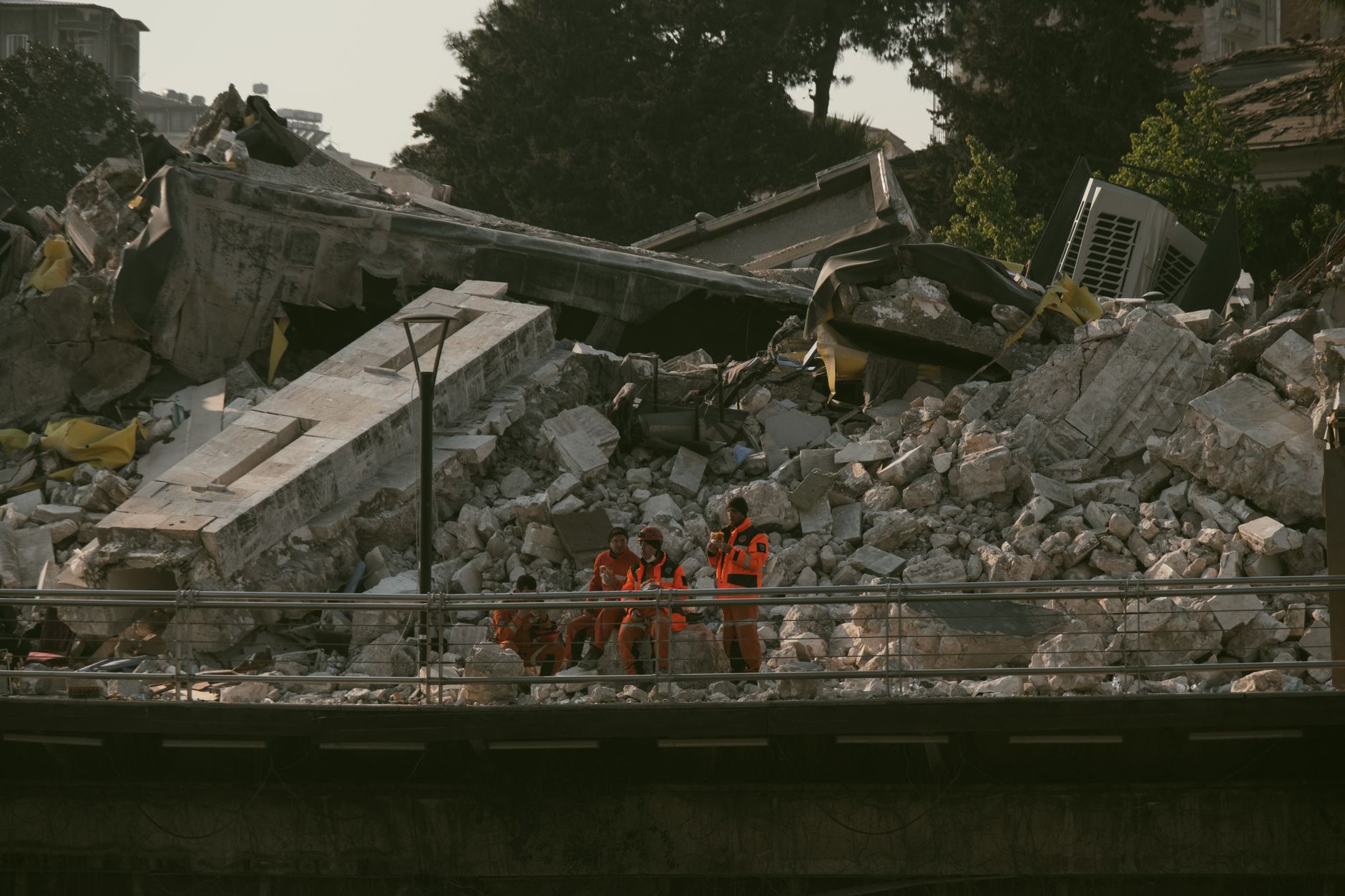
It was just after dawn when the sound hit. Not a crash, exactly — more like a giant taking a slow breath and then letting go. The four-story apartment building in the working-class neighborhood of Kypseli folded into itself, floor by floor, as if it had suddenly decided to give up.
Now, rescue crews are picking through the wreckage. They move carefully, listening for voices, for tapping, for anything that might mean someone is still alive. The dust still hangs in the air, coating everything in a fine gray powder. The smell of broken concrete and twisted metal mixes with something worse — the smell of gas, of ruptured pipes, of a building that should never have fallen.
What We Know So Far
The building went down at 6:47 AM local time. That much is clear. Twenty-four people lived there, according to municipal records. So far, twelve have been pulled out alive. Four are confirmed dead. Eight remain unaccounted for. The numbers come from emergency services, but they're fluid — they change every hour as more information trickles in.
Rescuers have been working in shifts since the collapse. They're using sniffer dogs, thermal cameras, and their own hands. Heavy machinery is standing by, but they're not using it yet. Too risky. One wrong move and any air pockets still left could close up forever.
“We are doing everything humanly possible,” said Fire Brigade spokesperson Ioannis Mavropoulos, his voice hoarse. “But we are racing against time.”
A City on Edge
Athens has seen worse — the fires, the floods, the riots of a decade ago. But this is different. This isn't a natural disaster or an act of political violence. This is a building that just gave out. And that scares people more. Because a fire you can flee. A flood you can watch coming. But a building that collapses without warning? That's the fear that gets under your skin.
Neighbors gathered at the cordon all day. Some wept. Others stared, silent. A woman in a floral housedress kept repeating a name — “Dimitris, Dimitris” — into her phone. I watched her for ten minutes. She never got an answer.
The building was built in 1968. That's the first thing everyone wants to know. It's the second thing, after “how many are inside?” Age matters in a city where thousands of buildings predate modern seismic codes. Greece is one of the most earthquake-prone countries in Europe, so the standards are strict. But enforcement has always been spotty. And retrofitting old buildings is expensive. Many landlords just don't do it.
The Blame Game Begins
Already, the questions are shifting from “what happened?” to “who is responsible?” The mayor of Athens, Haris Doukas, visited the site this afternoon and promised a full investigation. “We will get to the bottom of this,” he told reporters. But he didn't say when. And he didn't say what they'd do when they got there.
That's politics. But the anger on the streets is real. Residents are shouting about permits, about inspections that never happened, about buildings that should have been condemned years ago. They're not wrong.
Greece has a housing problem — not just in terms of affordability, but safety. An estimated 30% of residential buildings in Athens are over 50 years old. Many have never been properly reinforced. And in a country where corruption has long greased the wheels of construction, shortcuts are common. Concrete gets mixed a little thinner. Steel bars get left out. Inspectors get paid to look the other way.
“This is a tragedy waiting to happen,” said Maria K., a resident of a neighboring building, her face still smudged with dust. “We all knew it. We just didn't want to say it.”
The Human Toll
Names are starting to emerge. A young couple on the second floor, both teachers, both rescued with minor injuries. An elderly woman on the third floor who loved to sit by her window and watch the street — she's still missing. Her daughter arrived from Thessaloniki this afternoon, frantic, trying to get past the police line. She didn't make it.
At the hospital, the survivors are being treated for broken bones, cuts, and smoke inhalation. None of them are in critical condition, which is something. But something isn't nearly enough.
The hardest part for rescuers isn't the physical strain. It's the waiting. The silence. The moment when the dogs stop barking and the cameras stop showing heat signatures, and you know that somewhere under all that concrete, someone is running out of air.
Night is falling over Kypseli. The floodlights are on. The crews keep working. They'll keep working until there's no hope left — or until they've found everyone.
And when this is over, when the last body is pulled out and the cameras leave and the politicians move on, the real question will remain: how many more buildings in Athens are waiting to fall?