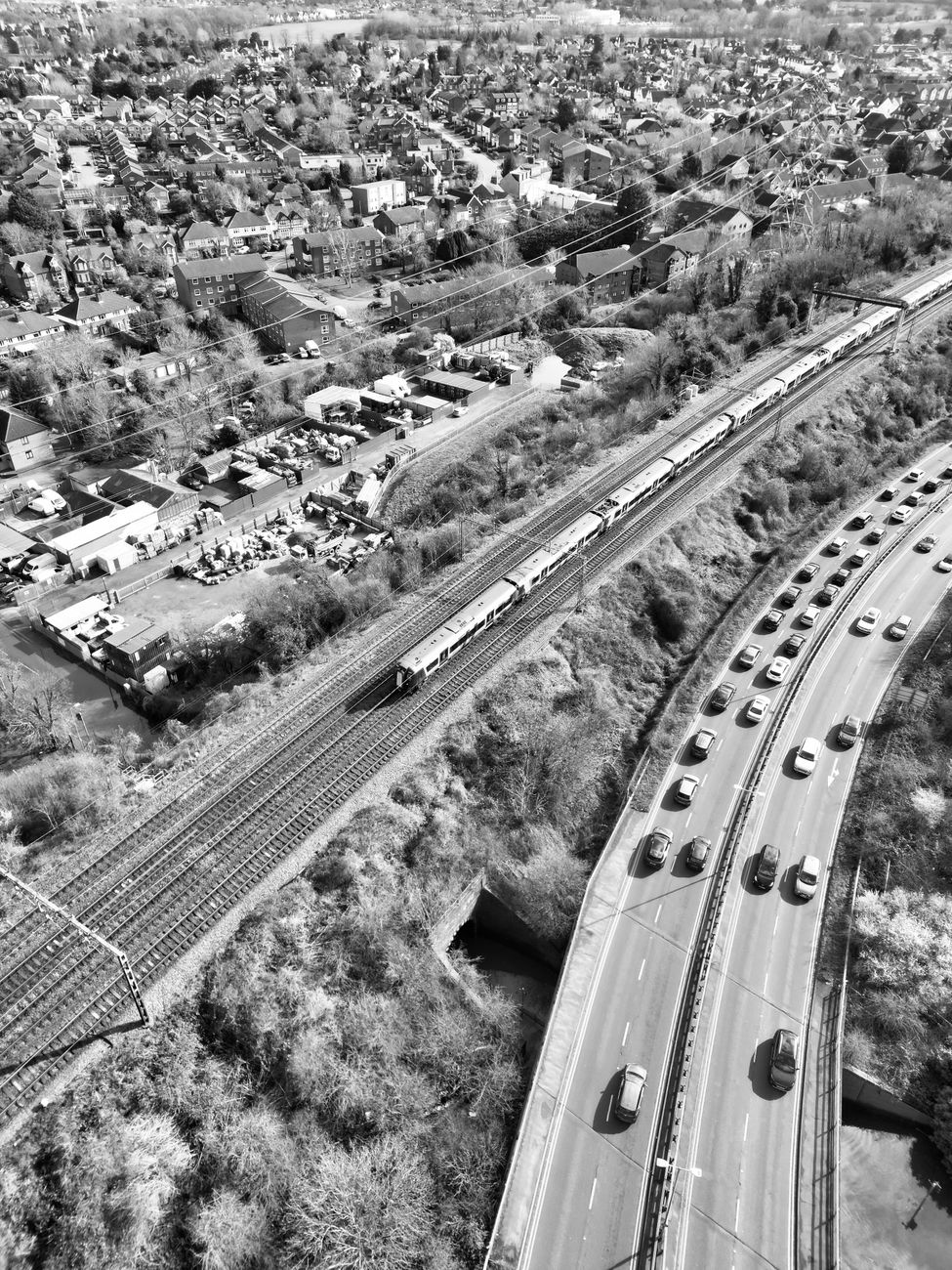
The screech of twisting metal. Shattered glass. Then silence—broken only by the wail of sirens. That was the scene Friday evening when two trains collided near Bedford, a town about 50 miles north of London. Emergency services rushed to the site, but what they found, and how many were hurt, remains a mystery. Officials have clammed up tighter than a politician caught in a lie.
Here's what we know: media reports put the injured count at 'multiple,' which is bureaucrat-speak for 'we're not telling you how bad it is.' Paramedics, fire crews, and police were on scene within minutes. Helicopters hovered overhead. But the official statement? A dry, two-sentence press release that told you nothing. ‘Emergency services are at the scene,’ it read. ‘We will provide updates when appropriate.’
The Silence Is Deafening
This isn't just sloppy public relations—it's a pattern. Every time British rail has a major incident, the same script plays out. 'Multiple injuries' means anywhere from three to 300. The public is left to piece together snippets from witnesses on social media. By the time the full story emerges, the news cycle has moved on.
And make no mistake—this is a major incident. A collision between two trains is not a fender-bender. It's a low-speed crash at worst, a derailment at best. The fact that they're not calling it a 'mass casualty event' suggests the injuries are non-life-threatening. But 'multiple'? That word has haunted families before.
I remember the 1999 Ladbroke Grove crash, where 31 people died. Officials were tight-lipped then, too. They talked about 'incidents' and 'investigations' while victims' families waited by the phone. Today feels like a sick echo of that day.
What the Witnesses Saw
One passenger, who asked not to be named, told local radio: 'There was a jolt, then a horrible grinding noise. People were thrown from their seats. I saw someone with a bloody head.' Another witness, a farmer who lives near the tracks, said he heard 'a crash like thunder' and ran to find 'carriages off the rails, smoke everywhere.'
These are the details the official statement omitted. The smell of burning diesel. The cries of children. The confusion of passengers wandering in a daze along the embankment. That's the real story—not the sanitized version from Network Rail's press office.
Britain's Aging Rail System Bites Again
Let's talk about the underlying issue. The Bedford line is part of the Thameslink route, one of the busiest in the country. It's also one of the oldest. The signaling system was upgraded in bits and pieces, leaving dangerous gaps where trains can end up on the same track. In 2023, a report by the Rail Accident Investigation Branch warned that 'inadequate track layout' was putting passengers at risk. Nobody listened.
Now, three years later, we have a collision. Coincidence? I don't think so.
This is what happens when you underinvest in infrastructure for decades. The politicians cut budgets, privatize profits, and nationalize losses. Meanwhile, the trains keep running on rails that were laid when Victoria was queen. Something's got to give—and on Friday, something did.
The Cover-Up Narrative
Why the stonewalling? Three possibilities. One: they don't know the full extent of the injuries yet. Fair enough. But that's what 'we're still assessing' means—not 'multiple injuries.'
Two: they're afraid of panic. If they say '50 injured,' people imagine mangled limbs. If they say '5 injured,' people shrug. By using 'multiple,' they avoid either reaction. It's a calculated PR move, not a humanitarian one.
Three: there's something worse they're hiding. Maybe a signal failure that could spark a national scandal. Maybe a driver error that could lead to criminal charges. The silence makes you wonder.
I've seen this before. In 2018, a train near Cambridge hit a tractor on the tracks. Officials said 'minor injuries'—then revealed two passengers had been airlifted to hospital with spinal fractures. The truth comes out eventually. But by then, the damage is done.
What We Need Now
First, full transparency. Names of the dead and injured, if there are any. The cause of the crash. The condition of the survivors. No more 'updates when appropriate'—the public has a right to know.
Second, an independent investigation. Not a railroad-insider whitewash. Not a political committee. A real probe with subpoena power, like the Air Accidents Investigation Branch does for plane crashes. Rail accidents are treated like traffic incidents—and it shows.
Third, accountability. Someone's career should be on the line. Either the operator, the regulator, or the government. Because 'multiple injuries' is not an acceptable outcome for a railway that charges commuters thousands of pounds a year.
'We will provide updates when appropriate.' — The same tired line we always get.
That quote should make you angry. It should make you demand better. It should make you question every official statement that comes out of an emergency.
The trains will run again tomorrow. Maybe by Bedford, maybe by you. And the passengers will climb aboard, clutching their tickets, trusting that someone, somewhere, is looking out for them. After Friday, that trust just got a little harder to hold.
I'll be watching for the next statement. So should you.