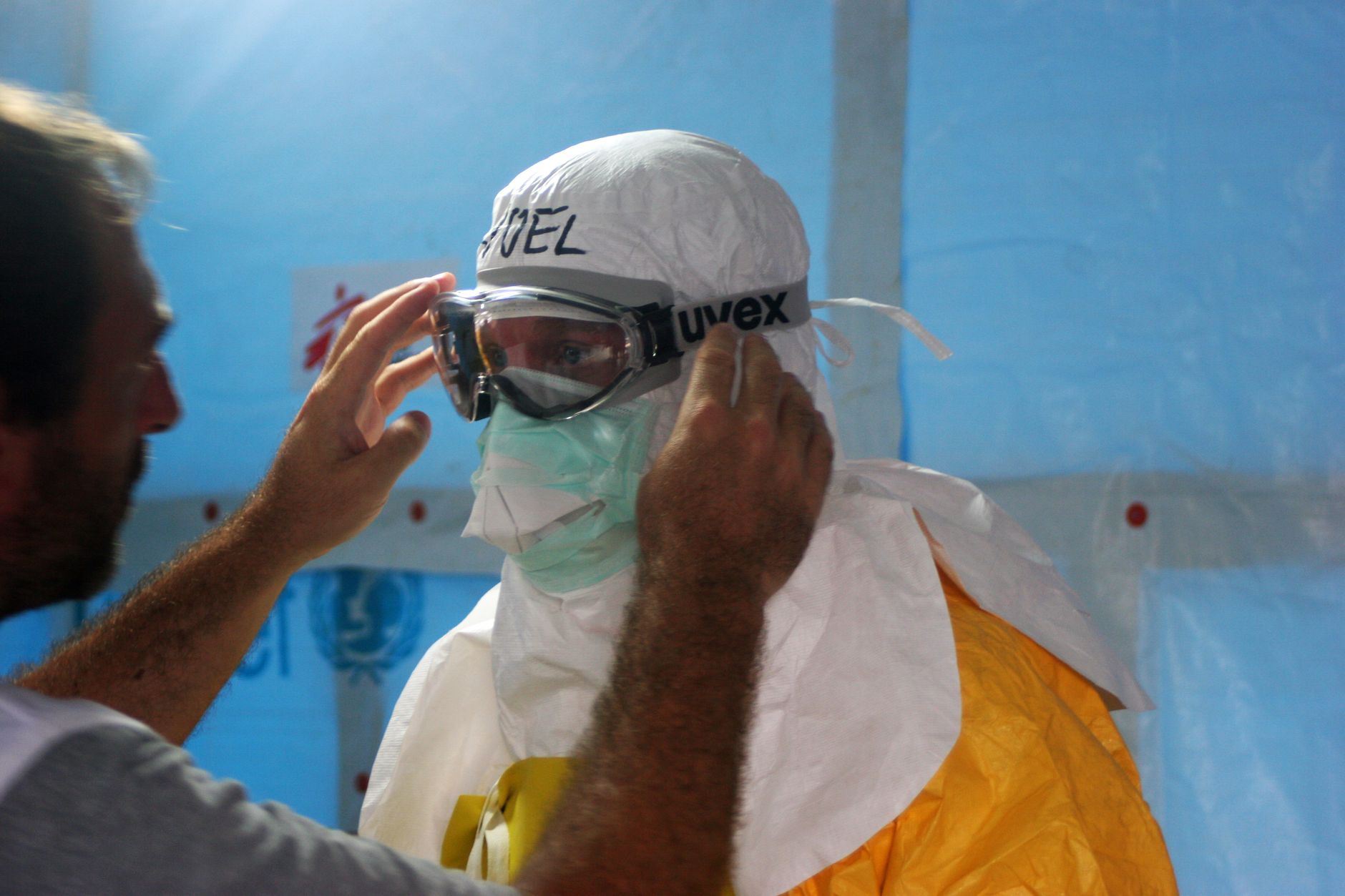
The main border crossing between Goma and Rwanda sits empty. On a normal Monday, thousands of traders, porters, and travelers would stream through. Now, a solitary health worker in a hazmat suit waves a thermal scanner at empty air.
The closure, imposed after a new Ebola outbreak was confirmed in the DRC, has cut off a lifeline that kept this volcanic city of two million alive. The official line from health authorities is clear: contain the virus before it spreads. But on the ground, the story is about empty stalls, rotting produce, and a creeping sense that the cure might be worse than the disease.
One border, two realities
For years, the Goma-Gisenye border was the busiest in the region. Between $40 and $50 million in goods crossed every month. Everything from palm oil to smartphones moved through this narrow gate. It was the economic pulse of eastern DRC.
That pulse has flatlined. Since the closure, trade volumes have dropped by 80%. The few trucks that still move are for basic food aid and medical supplies. Commercial cargo sits idled on both sides.
"I used to make $30 a day as a porter," says Mukunda Bauma, a 34-year-old father of three. "Now I'm lucky to find a day's work once a week. The children are hungry."
Mukunda is one of an estimated 10,000 people who depend directly on cross-border trade for their daily income. That number doesn't include the wholesalers, shopkeepers, and transport workers further up the chain. The economic multiplier is brutal: every dollar that stopped crossing the border means three or four dollars lost in the local economy.
Health vs. livelihood — a false choice?
Health officials defend the restrictions with data. The current outbreak has already infected 87 people and killed 29. The World Health Organization has declared it a high-risk event. Ebola, they argue, does not respect borders.
"We learned from the 2014 West Africa outbreak and the 2018 Kivu outbreak," says Dr. Adele Mukwege, a senior epidemiologist with the DRC's health ministry. "Early, aggressive travel restriction is the single most effective way to prevent urban spread. Goma is a tinderbox. If the virus establishes transmission here, it becomes a humanitarian disaster."
She's right, statistically. And yet, the same government that shuttered the border has offered no economic cushion for the people who depend on it. No cash transfers. No food relief. No bridge loans for small traders.
"They tell us to stay home and wash our hands," says Grace Ntabo, who runs a small cosmetics stall near the border. "Wash our hands with what? I have no money to buy soap. The government has abandoned us."
"They tell us to stay home and wash our hands. Wash our hands with what?" — Grace Ntabo, cosmetics trader, Goma
The politics of closure
There's a bitter irony in this closure. In 2018, when the last major outbreak hit, the border stayed largely open. Crossing times were doubled, but trucks still moved. The current health minister, installed after political pressure from international donors, is seen as more aggressive on containment.
Critics suggest a different motive: the closure allows the government to control what moves — and who profits. With the border open, Goma's market was a freewheeling, hard-to-tax zone. Now, all trade must go through official checkpoints where fees and bribes can be extracted.
"Every crisis is an opportunity for those with power," says Jean-Pierre Kahwa, an economist at the University of Goma. "The border closure gives the state leverage it didn't have before. They can pick winners and losers in the supply chain."
Whether that's true or just a conspiracy theory, the effect is the same: ordinary people pay the price while the well-connected find workarounds.
Rwanda's quiet calculation
Across the border, Rwanda has its own calculus. The Rwandan government has enforced strict quarantine measures on its side, including mandatory 14-day isolation for anyone who crossed from Goma in the past month. But Kigali has also kept lines of communication open with aid agencies. They know the virus is bad for business on both sides.
Before the closure, Rwanda exported vegetables, electronics, and processed goods to Goma. Now those goods pile up in warehouses. The loss for Rwandan exporters is estimated at $10 million per week.
"We are in this together," says Rwandan trade minister Donatille Mukabalisa, in a carefully worded statement. "A coordinated, regional approach is the only way to defeat both the virus and the economic damage."
Coordinated is the key word. So far, there's been little coordination. The DRC imposed the closure unilaterally. Rwanda responded with its own restrictions. No joint task force. No shared quarantine protocols. Just two sides of a border, both suffering, neither willing to blink.
What comes next?
The WHO estimates the outbreak will last at least another three months. Three months of a closed border means $150 million in lost trade. For a region where 70% of the population lives on less than $2 a day, that's catastrophic.
Some traders have already given up. Mukunda, the porter, now scrounges for informal construction work. Grace Ntabo has sold her stall's inventory at a loss. She's considering moving to Bukavu, where the border with Burundi is still open.
"I cannot feed my children on promises," she says, packing the last of her stock into a plastic crate. "Maybe the virus will come for me. Maybe hunger will. At least with hunger, it is slower."
The border stays closed. The virus waits. And between them, a city holds its breath.