The phone rang at 3 AM in a Paris clinic. The caller ID: Kinshasa. The voice on the other end: panicked. A French doctor working in the Democratic Republic of Congo had a fever, headaches, and muscle pain. By noon, a military medevac plane was wheels up, and by evening, the patient was in a high-security isolation unit in France.
Here we go again.
On Wednesday, French health authorities confirmed the country's first Ebola case in nearly a decade. The patient, a doctor returning from the DRC, is now isolated at a designated treatment center near Paris, following what officials are calling “strict biosafety protocols.” That's bureaucrat-speak for: we're trying to keep this thing contained. One case. One doctor. But in the age of global travel, one is more than enough to send shivers through public health systems across Europe.
Dr. Sylvie Martin, a senior official at Santé Publique France, was careful with her words during a hastily convened press conference. “The risk to the general population is extremely low,” she said, the strain in her voice belying the calm. “We are implementing all necessary measures.” Translation: we've got this. Probably. Don't panic. But also: maybe stock up on hand sanitizer.
Why This Isn't Your Grandfather's Ebola Scare
Ebola has a way of triggering collective amnesia. Every time it surfaces, the headlines scream, the markets dip, and then — if containment works — we forget. The 2014-2016 West Africa outbreak killed over 11,000 people. The 2019 outbreak in the DRC killed more than 2,000. But here's the thing: those were sprawling, under-resourced regions with porous borders and fragile health systems. France is not West Africa. France has universal healthcare, world-class labs, and a government that can lock down a city faster than you can say “baguette.”
But it also has something those regions didn't: a panicked, polarized public. Last week, a rumor on TikTok claimed a patient had died from Ebola in Marseille. It was fake. But the fact that it spread to 2 million views before being debunked tells you everything about the current climate. We are an anxious species, and nothing feeds anxiety like a virus with a 50% fatality rate.
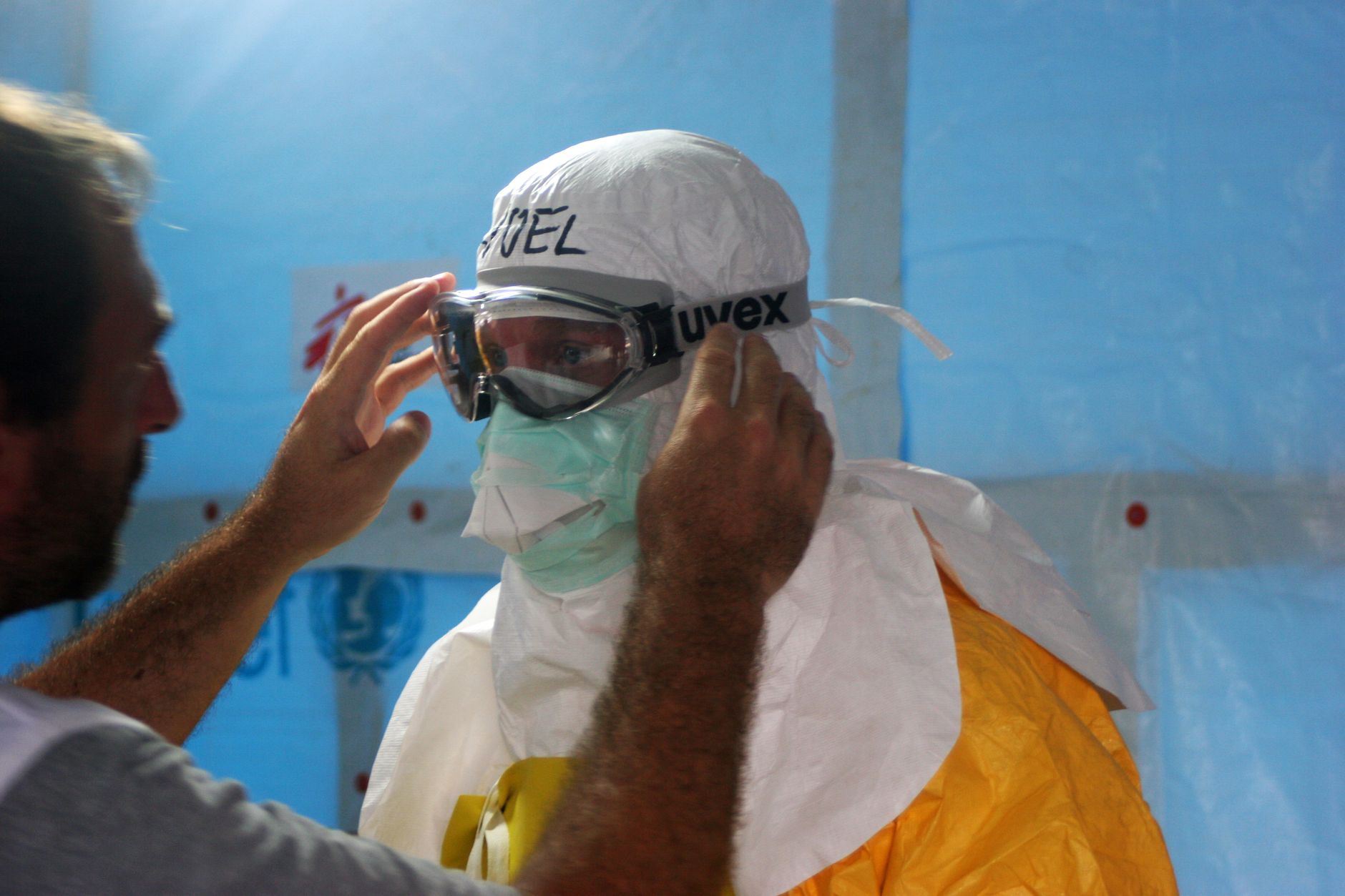
The doctor is reportedly stable. His symptoms are mild. He's in a negative pressure room, isolated from the rest of the hospital. The medical staff treating him wear full-body suits, respirators, and goggles. It looks like something out of a Steven Soderbergh film. But that's the point. Film is fiction. This is not.
“One case is not an outbreak. But one mistake is.” — Dr. Jean-Pierre Lacroix, infectious disease specialist, in an internal memo obtained by Le Monde
The Chilling Logistics of a Contained Panic
Let's talk about what “strict biosafety protocols” actually mean. The patient was flown in a specially equipped aircraft with a negative pressure isolation unit — essentially a plastic bubble on a plane. The medical crew wore hazmat suits. The flight path was cleared of commercial traffic. Upon landing, the patient was transferred via ambulance to a facility that has been preparing for this exact moment since the H1N1 scare in 2009.
France, like most wealthy nations, has an Ebola playbook. It's been dusted off and updated at every outbreak since 2014. The problem is, no one really wanted to test it. Until now. The French health ministry has already identified and contacted 15 people who had close contact with the doctor in the DRC. They're being monitored for 21 days. So far, no one else is sick. But this is where the math gets uncomfortable.
The doctor had symptoms before he left the DRC. He traveled on a commercial flight. He spent several hours in an airport. He coughed into his elbow. He did everything right, according to officials. But Ebola isn't polite. It doesn't care about your elbow. It spreads through direct contact with bodily fluids. A sneeze on a seat. A handrail. A shared bathroom. The odds of transmission in a setting like that are low — but not zero. And low odds are cold comfort when the stakes are this high.
Europe's Fragile Confidence
It's tempting to see this as a French problem. It's not. The doctor flew from Kinshasa to Paris Charles de Gaulle. One of the busiest airports in the world. From there, passengers scattered to London, Berlin, Rome, Madrid. Contact tracing is a nightmare when you're dealing with international flights. The World Health Organization has already been notified, and neighboring countries are on alert.
But here's the uncomfortable truth: Europe has been lucky. The 2014 outbreak didn't reach the continent in any meaningful way. A few isolated cases in Spain and the UK were quickly contained. The 2019 outbreak stayed in Africa. But luck runs out. This case is a reminder that the global health architecture is only as strong as its weakest link. And right now, the DRC's health system is buckling under multiple outbreaks — Ebola, mpox, and a resurgence of measles. The doctor who returned to France was working in a region where masks and gloves are luxury items.
I'm not saying we're on the brink of a pandemic. I am saying that the word “contained” is a promise health officials make but can't always keep.
The Fear That Doesn't Need a Virus
Here's what keeps me up at night: not the biology, but the sociology. Ebola is a terrible disease. But it's also a terrible story. It feeds narratives of contamination, of the foreign other bringing plague to the homeland. The far-right in France is already frothing at the mouth. Marine Le Pen's party issued a statement demanding an immediate halt to all flights from the DRC. Never mind that the doctor is French. Never mind that the virus doesn't care about borders.
This is the part we don't like to talk about: that the panic is sometimes more contagious than the virus itself. In 2014, the US saw no Ebola deaths on its soil, yet the public hysteria led to school closures, travel bans, and a surge in anti-immigrant rhetoric. The same thing is already brewing here. Yesterday, a pharmacy in the Paris suburb of Saint-Denis reported a run on surgical masks. A woman told a reporter she was “scared to take the Metro.”
I get it. Fear is rational. But so is skepticism. If you trust the science, you have to trust it when it says: one case is not an outbreak. If you don't trust the science, then we have a bigger problem than Ebola.
The doctor in that isolation room has a name. He's a real person who spent years working in some of the most dangerous places on earth, trying to keep people alive. He didn't ask to become a cautionary tale. He's not a vector. He's a victim — not of the virus, but of the system that couldn't keep him safe. The same system that pays us to write about this and you to read it.
So let's keep our heads. Watch the data. Wash your hands. And maybe, just this once, don't believe the TikTok.