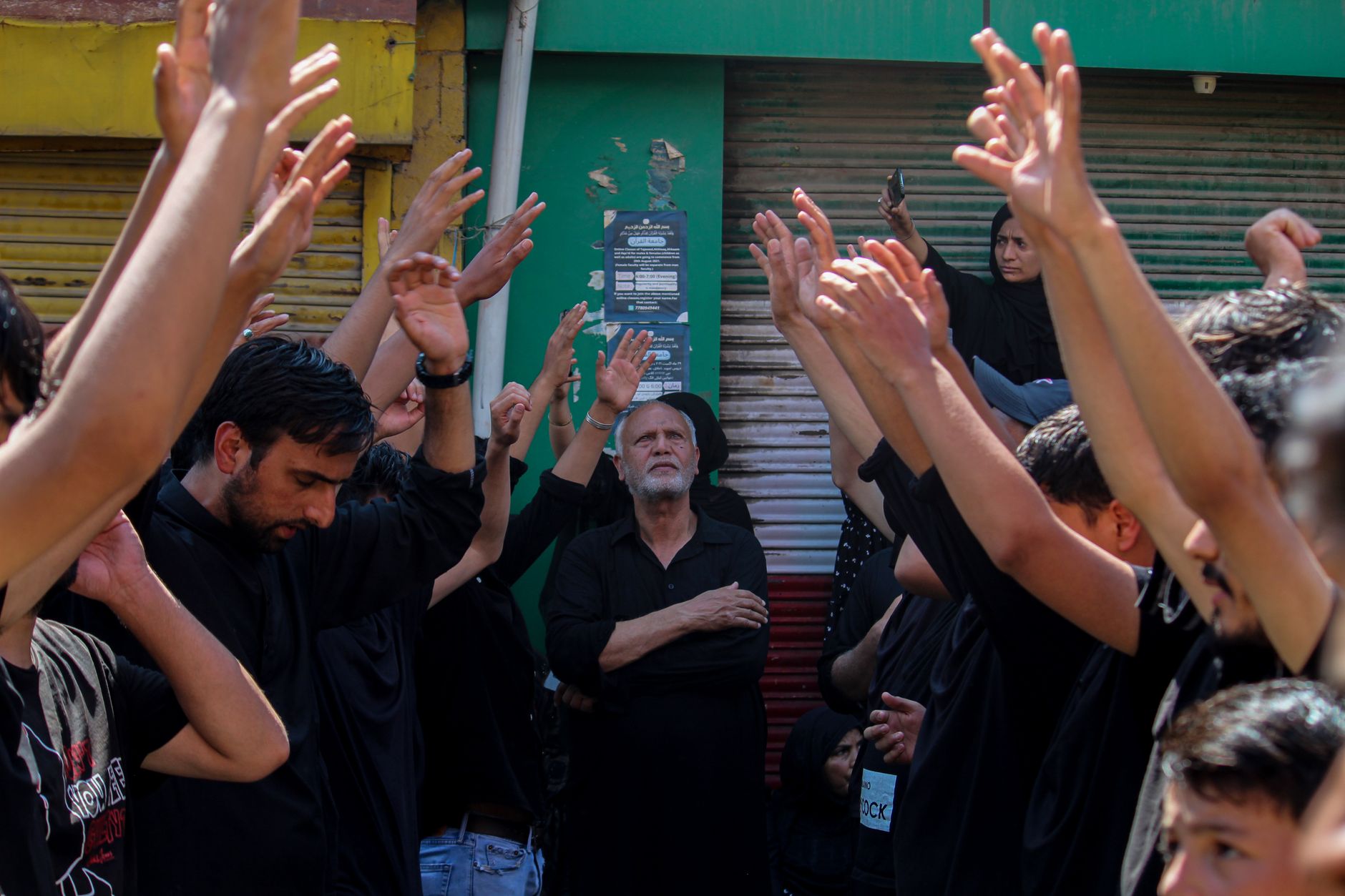
TEHRAN — The black flags are up. The chest-beating has begun. And in between the tears for Imam Hussein, there's a not-so-subtle political message: the state's fallen heroes are saints now too.
Ashura, the holiest mourning ritual for Shia Muslims, remembers the seventh-century death of Imam Hussein at Karbala. But in Iran, the ceremony has evolved. This year, the faces of General Qassem Soleimani and nuclear scientist Mohsen Fakhrizadeh — both killed by US or Israeli strikes — are plastered alongside traditional religious imagery. The message is clear: these men are modern-day Husseins, martyred by today's Yazids in Washington and Tel Aviv.
When Religion Meets the State
Iran has always blurred the line between faith and politics. But the Ashura ceremonies this week take it to another level. State-backed events don't just commemorate the past — they weaponize it. Speakers at official gatherings link President Ebrahim Raisi's crackdown on protests to Imam Ali's justice. They compare Soleimani's fight against ISIS to Hussein's stand against tyranny. It's clever. It's cynical. And it works.
I watched one such ceremony in downtown Tehran. Thousands of men, women, and children beat their chests in rhythm. Banners showed Soleimani's face beside the golden dome of the Imam Reza shrine. A speaker screamed about "American arrogance" and the crowd roared. An old man next to me whispered, "They are all Hussein now."
"They are all Hussein now." — Elderly mourner at a Tehran Ashura ceremony
The regime needs this. After the 2022 protests — the biggest challenge to its rule in decades — the government is desperate to regain religious legitimacy. Ashura is the perfect vehicle. It's emotional. It's unifying. And it allows the state to present itself as the defender of Shia Islam against foreign enemies.
The Martyr Mold: From Karbala to the Nuclear Program
The link between Imam Hussein and Iran's slain leaders is not accidental. Both are framed as victims of overwhelming odds, betrayed by those they trusted, and killed for standing up for justice. Soleimani, killed in a 2020 US drone strike, is portrayed as a heroic commander who fought terrorism and defended holy sites. Fakhrizadeh, assassinated in 2020 allegedly by Israel, is a scientist who sacrificed his life for Iran's technological independence.
Posters at the ceremonies show them with halos. Children sell keychains with their portraits. The Islamic Republic has turned them into icons. This is not just mourning — it's a recruitment drive. The message: join the fight, and you too could be a martyr.
But there's a tension here. Ashura is traditionally a time of sorrow, not political slogans. Some clerics complain that the state has hijacked the ritual. "Hussein's message was about standing against tyranny, not supporting a government," one seminary student told me, asking not to be named. "Now it's all about the regime."
The US and Israel as Modern Yazids
The comparison of America and Israel to the Umayyad caliph Yazid, who ordered Hussein's death, is a staple of Iranian rhetoric. During Ashura, it's amplified. Speeches denounce "global arrogance" and "Zionist aggression." Chants call for "Death to America" and "Death to Israel." For the audience, this isn't just politics — it's religious duty.
This narrative is powerful because it's simple. Good versus evil. The oppressed versus the oppressor. Iran casts itself as the eternal underdog, fighting against a superpower coalition. And for many Shia believers, that resonates. It's the story of Karbala replayed every year.
But it's also dangerous. By framing conflicts with the US and Israel as religious wars, Iran makes compromise impossible. You can't negotiate with Yazid. You can only resist. This is why the nuclear deal collapsed. This is why tensions remain high. The Ashura narrative doesn't allow for diplomacy.
What Ashura Reveals About Iran Today
The ceremonies are a window into Iran's soul — and its leadership's strategy. A country under sanctions, hit by protests, and isolated internationally uses religious fervor to maintain control. It's a gamble. It deepens the bond between the regime and its core supporters. But it also alienates those who want a less ideological state.
Young Iranians, especially in cities, are increasingly skeptical. Many skipped the ceremonies this year. "I don't need the government to tell me how to mourn," a college student in Shiraz told me over the phone. "Hussein is for everyone, not just their propaganda."
But the state doesn't care about the skeptics. It cares about the millions who march, cry, and chant. Those are the votes. Those are the soldiers. Those are the ones who will keep the Islamic Republic alive through the next crisis.
The Verdict
Ashura in Iran is no longer just a religious event. It's a political rally. It's a memorial for state martyrs. It's a tool of legitimacy. And it's a reminder that in the Islamic Republic, faith and power are never separated. The regime has taken a seven-century-old story of sacrifice and turned it into a weekly advertisement for its survival. Whether that's a perversion of religion or a natural evolution, one thing is clear: the tears shed this year are not just for Imam Hussein. They're for a state that needs them to keep flowing.
So the black flags will stay up. The chests will keep beating. And the faces of Soleimani and Fakhrizadeh will continue to stare down from banners, asking every mourner one question: Are you with us, or against us?