Kim Jong Un stood on the dock, watching his newest warship slide into the water. The vessel is just steel and paint today. But tomorrow, if he gets his way, it could carry a nuclear warhead.
North Korea commissioned a new naval warship on Wednesday, state media reported. Kim used the ceremony to double down on his vision: a nuclear-armed navy capable of striking from the sea.
This isn't just another weapons test. It's a strategy shift. For decades, Pyongyang's nuclear focus has been on land-based missiles and a growing arsenal of warheads. Now Kim wants to take that capability to sea — and that changes the calculus for the United States, South Korea, and Japan.
Why the navy matters
North Korea's navy has long been the poor cousin of its army and missile forces. Most of its ships are aging, outgunned, and rarely leave port. But that's starting to change.
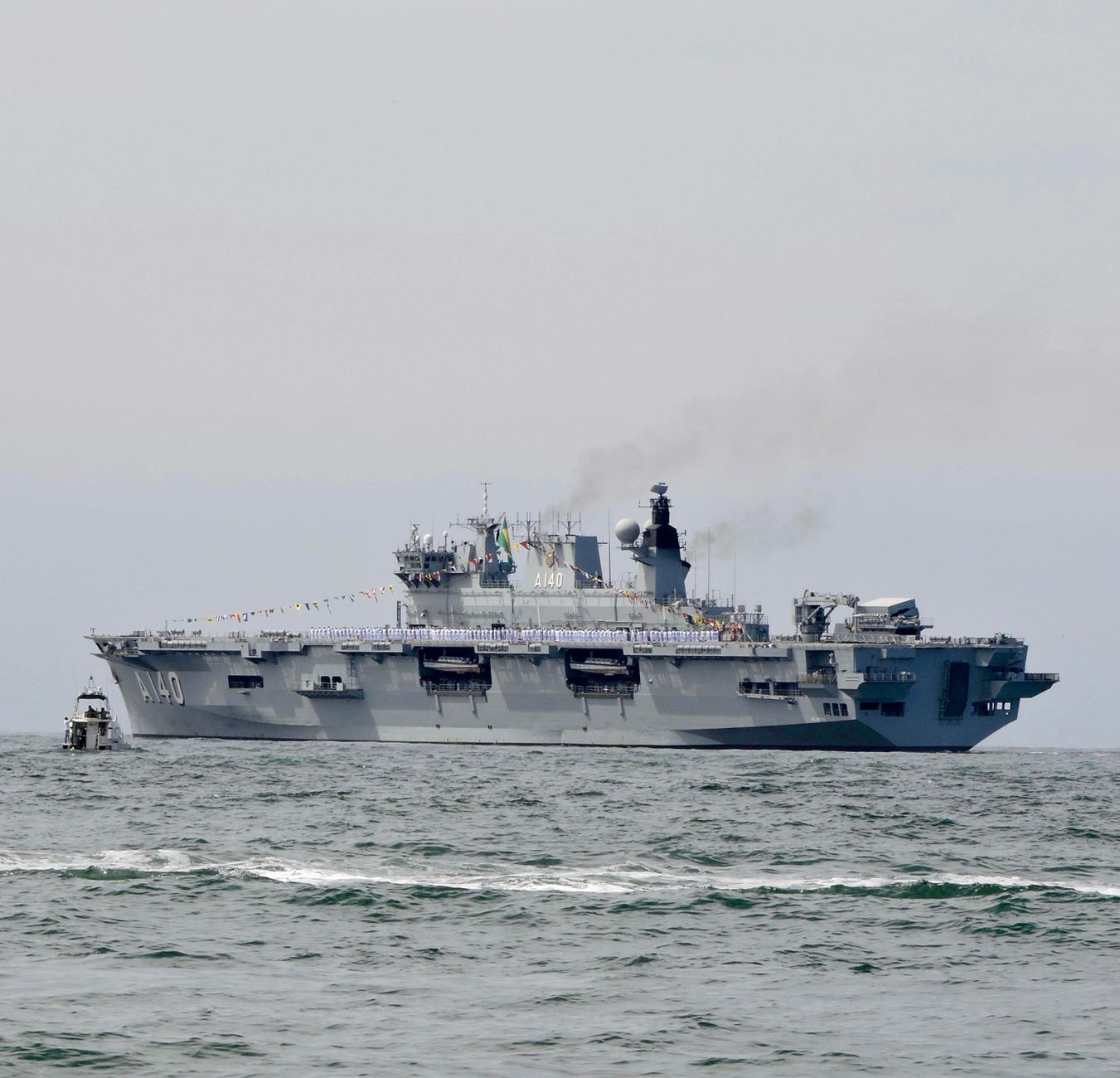
The newly commissioned vessel is a frigate — bigger than North Korea's usual patrol boats, capable of longer missions. State media called it a "powerful warship" designed for "multi-functional operations." Kim's message was blunt: the navy must be armed with nuclear weapons.
"The navy should become a nuclear-armed force capable of striking enemies from any direction," Kim said at the commissioning ceremony.
Analysts say the shift reflects a simple reality. Land-based missiles are vulnerable to preemptive strikes and missile defenses. Sea-based weapons — whether on submarines or surface ships — are harder to track and destroy.
"If North Korea can put a nuclear-capable missile on a ship that moves, it complicates every defensive plan," said Lee Sung-yoon, a North Korea expert at Tufts University. "You can't know where it is. You can't target it in advance. That's a game-changer."
The submarine problem
North Korea has long pursued a submarine-launched ballistic missile (SLBM) capability. It's tested the Pukguksong series from a submerged barge and, in 2023, claimed to have launched a missile from an actual submarine.
But experts remain skeptical. North Korea's submarine fleet is old and noisy. Most subs are diesel-electric, built in the 1960s and 1970s. They can launch a missile, but they might leak or be detected before they get into position.
The new frigate could be a stopgap — a surface ship that carries nuclear-tipped cruise missiles or shorter-range ballistic missiles. It's less stealthy than a sub, but it's operational now.
Kim's speech hinted at a broader plan: "We will steadily bolster the naval nuclear armament and continuously push forward with the development of various means of underwater and surface strike."
In other words, the frigate is just the beginning.
Regional reaction
South Korea's military condemned the launch. "Any attempt by North Korea to arm its navy with nuclear weapons will be met with an overwhelming response," a spokesperson said. The U.S. Indo-Pacific Command called it a "destabilizing development" and reiterated its commitment to defending allies.
Japan's government said it was analyzing the new ship's capabilities. "We are watching these developments with grave concern," Chief Cabinet Secretary Yoshida Hiroshi told reporters.
But the public statements mask a deeper worry. Neither South Korea nor Japan has a meaningful sea-based nuclear deterrent. The U.S. extended deterrent — nuclear-armed submarines and bombers — has guaranteed their security for decades. But if North Korea can pose a credible nuclear threat from the sea, that guarantee gets harder to maintain.
"The era of sea-based nuclear threats in Northeast Asia is upon us," said Park Jae-kyung, a security analyst at the Korea Institute for Defense Analyses. "The old assumptions about where the threat comes from — land — are obsolete."
Sanctions and shipbuilding
North Korea builds its ships under a blanket of international sanctions. The UN Security Council has banned the import of shipbuilding technology and materials. So how did Pyongyang build a new frigate?
Part of the answer is smuggling. U.N. investigators have documented North Korean efforts to acquire marine engines, steel alloys, and radar systems through third countries. China and Russia have also loosened sanctions enforcement in recent years, giving Pyongyang more room to maneuver.
Another factor: domestic production. North Korea has invested heavily in its shipyards, particularly the Nampo Shipbuilding Complex on the west coast. It can now build ships that are decades behind modern standards — but modern enough to carry a missile tube.
"This isn't a world-class navy," said Joseph Bermudez, a defense analyst with 38 North. "But it doesn't need to be. It just needs to be good enough to launch a weapon that nobody wants to see launched."
The nuclear navy vision
Kim Jong Un's speech was notable for its ambition. He didn't just talk about one ship. He talked about a fleet — a nuclear-armed navy that would "shatter the enemies' will to fight" and "defend the nation's sovereignty."
It's a vision that will take years, if not decades, to realize. Building nuclear-capable submarines is one of the hardest engineering challenges on the planet. Even China and Russia, with decades of experience, struggle to produce reliable boomers.
But Kim is patient. He has already defied expectations by developing intercontinental ballistic missiles and hydrogen bombs. A nuclear navy may seem far-fetched today. Five years ago, so did a missile that could reach New York.
The new frigate is a statement of intent. It says: North Korea is not content to be a land-based nuclear power. It wants to be a sea-based one.
And that means the waters around the Korean Peninsula just got a lot more dangerous.