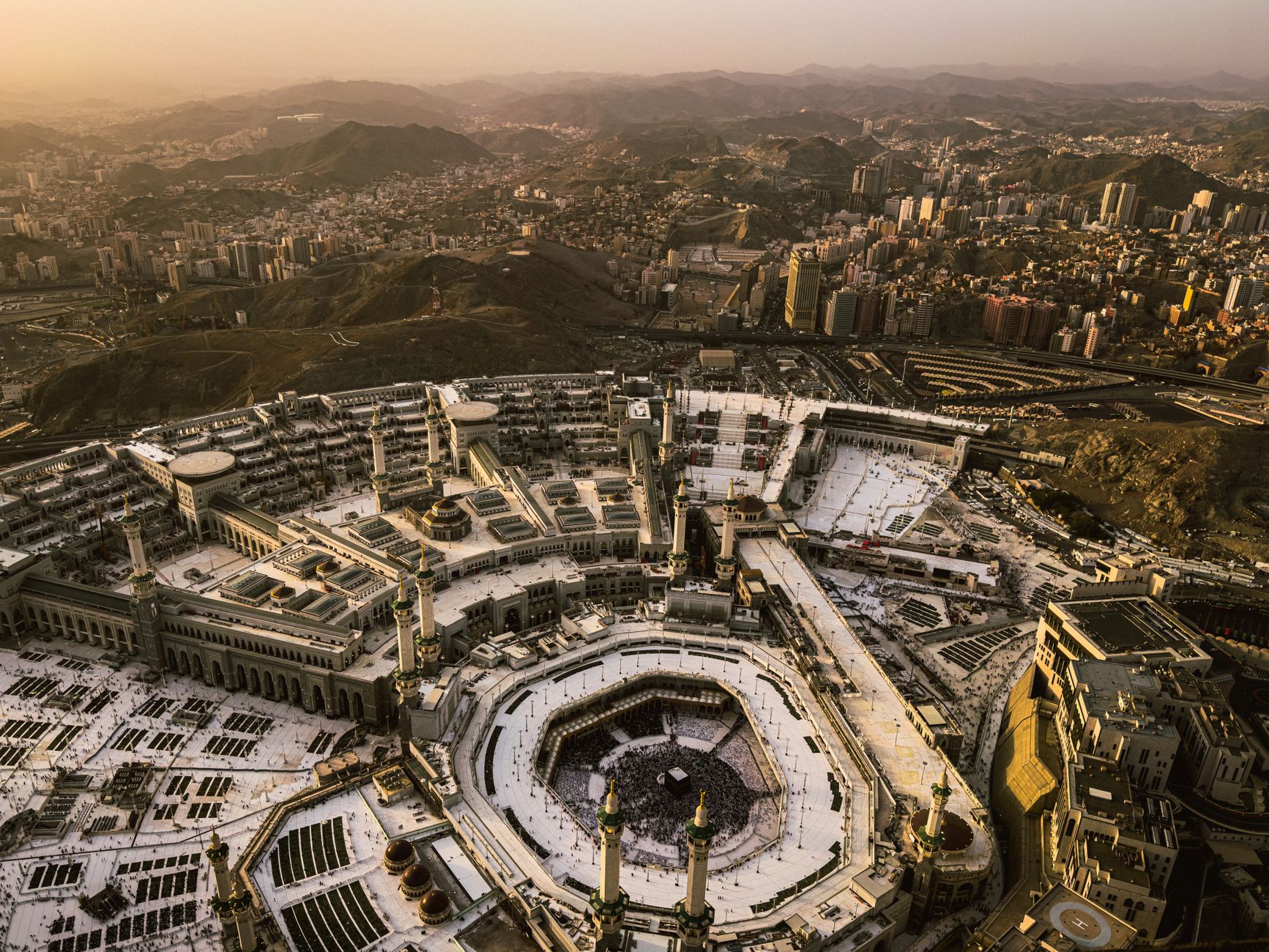
The ink had barely dried on the Mecca agreement before the cable news pundits started their usual dance. Another summit, another photo op, another piece of paper that's supposed to reshape the Middle East. Except this time, there's a wrinkle that should make Washington sit up and take notice. The defense pact signed in Mecca isn't just another regional talking shop. It's a direct challenge to the presumption that American security guarantees are the only game in town.
For decades, the US role in the Gulf has been simple: we protect you, you sell us oil at a reasonable price, and we all pretend the arrangement isn't as transactional as it looks. But the men in robes who gathered in Mecca have done something quietly revolutionary. They've started building a safety net that doesn't have a single strand of American rope in it. And that should scare the hell out of anyone who thinks the status quo can hold forever.
What Exactly Was Signed?
Let's be clear about something: the so-called Mecca defense pact isn't a NATO-style Article 5 commitment. There's no clause that says an attack on one is an attack on all, with American aircraft carriers magically appearing over the horizon. What it is, is a framework. A mechanism for intelligence sharing, joint military exercises, and — most importantly — a political signal that the Gulf states are tired of being treated like children who need a babysitter.
The details are still murky, as these things always are. But the subtext is unmistakable. Saudi Arabia, the UAE, and their partners are saying, explicitly, that they can handle their own security. They're saying it to Iran. They're saying it to the Houthis. And they're saying it to Washington, even if they're too polite to say it directly.
"The Americans talk a big game about their commitment to the region, but when the chips are down, they've shown time and again that they'll cut and run. The Gulf states have learned that lesson well."
This isn't paranoia. It's pragmatism. Every Gulf leader has watched the US withdrawal from Afghanistan — a betrayal that was broadcast live for the world to see. They've seen the Obama administration's pivot away from the region, the Trump administration's erratic love-hate relationship with allies, and the Biden administration's attempts to reset relations with Iran. None of it inspires confidence. So they're building their own insurance policy.
The American Dilemma
Here's where it gets uncomfortable for Washington. The US has spent seventy years building a security architecture in the Middle East that depends on its allies needing it. The Fifth Fleet is in Bahrain. Al Udeid Air Base is in Qatar. CENTCOM's whole forward posture is predicated on the idea that the Gulf states can't defend themselves without American help.
But the Mecca pact threatens to make that architecture obsolete. If the Gulf states can coordinate their own defense effectively, if they can share intelligence and pool resources, they become less dependent on Washington. And a less dependent ally is a harder ally to control. You can't threaten to withdraw security guarantees from someone who's already built their own umbrella.
The irony is that the US has been pushing its regional partners to take more responsibility for years. "Burden-sharing" has been the mantra from every administration since Eisenhower. Now that they're actually doing it, Washington doesn't like the results. Because burden-sharing isn't just about sharing costs — it's about sharing power. And power is the one thing Washington has never been willing to share.
What the Analysts Are Saying
I spoke with a retired intelligence officer who's spent thirty years watching this region. He put it bluntly: "The Americans have spent so long telling the Gulf states they can't trust each other that they forgot they might actually listen. The Mecca pact is a direct consequence of American policy, and it's a policy failure."
He's not wrong. The US has often played divide and conquer in the Gulf, keeping the smaller states in line by selling them weapons and security guarantees that are just generous enough to prevent them from seeking alternatives. But the games are getting old. The Gulf states are richer, more confident, and more capable than they've ever been. They've seen what happens when you rely on a great power that has its own interests at heart.
Consider the oil price war of 2020. The US threatened to pull troops out of Saudi Arabia over a production dispute. That moment was a wake-up call. If your protector can be swayed by a tweet or a quarterly earnings report, you need a new protector. Or better yet, you need to protect yourself.
The Iran Factor
You can't talk about Gulf security without talking about Iran. The Mecca pact is, at its core, a response to the Iranian threat. The Houthi missile attacks on Saudi oil facilities in 2019 exposed the limits of American air defense. The US didn't shoot down a single missile. It was the Gulf states' own systems, woefully inadequate as they were, that did the job.
Iran's nuclear program continues to advance. The JCPOA is dead, or at least in hospice care. And the Gulf states have realized that waiting for Washington to solve the Iran problem is like waiting for Godot. So they're talking to each other. They're sharing ballistic missile early warning data. They're conducting joint naval patrols. They're building the infrastructure for a security order that doesn't have an American flag on it.
This doesn't mean the US is going to be kicked out tomorrow. The Gulf states still need American weapons, American training, and American diplomatic cover. But they're hedging. They're buying insurance. They're making sure that if Washington's attention wanders — and it will, because it always does — they're not left holding the bag.
What Happens Next
The Mecca pact is a signal, not a settlement. It's a statement of intent that the Gulf states are no longer content to be passive consumers of security. They want to be producers. They want to have a say in their own defense. And they're willing to work with each other to get it.
For Washington, this is a moment of reckoning. The US can either adapt to the new reality, finding ways to cooperate with the Mecca pact rather than compete with it, or it can cling to the old model and watch its influence erode. The smart play would be to embrace it, to offer to help build the architecture, to act as a partner rather than a patron. But the US has never been good at sharing the spotlight in the Middle East.
The Mecca pact also raises uncomfortable questions about the future of the US military presence in the region. If the Gulf states can handle their own security, what's the point of 50,000 American troops and a dozen bases? Congress is already asking those questions, and they're not going away. The forces that supported withdrawal from Afghanistan are the same forces that will push for a drawdown in the Gulf.
But here's the thing — the Gulf states don't want the US to leave. They want the US to be a partner, not a guardian. They want to be treated as equals, not as vassals. The Mecca pact is a way of saying, "We'll do our part, but we expect you to do yours." It's a challenge, not a rejection.
What remains to be seen is whether Washington can rise to the occasion. The signs aren't good. The US has a habit of treating Middle Eastern allies as afterthoughts, as pawns in a larger global game. If it continues that approach, the Mecca pact will become the most significant development in Middle Eastern security since the Camp David Accords — and it will be a development that happened without American leadership.
The question isn't whether the Mecca pact will reshape the region. It already has. The question is whether Washington will be a part of that reshaping or just an observer. And based on the current trajectory, I wouldn't bet on the former.