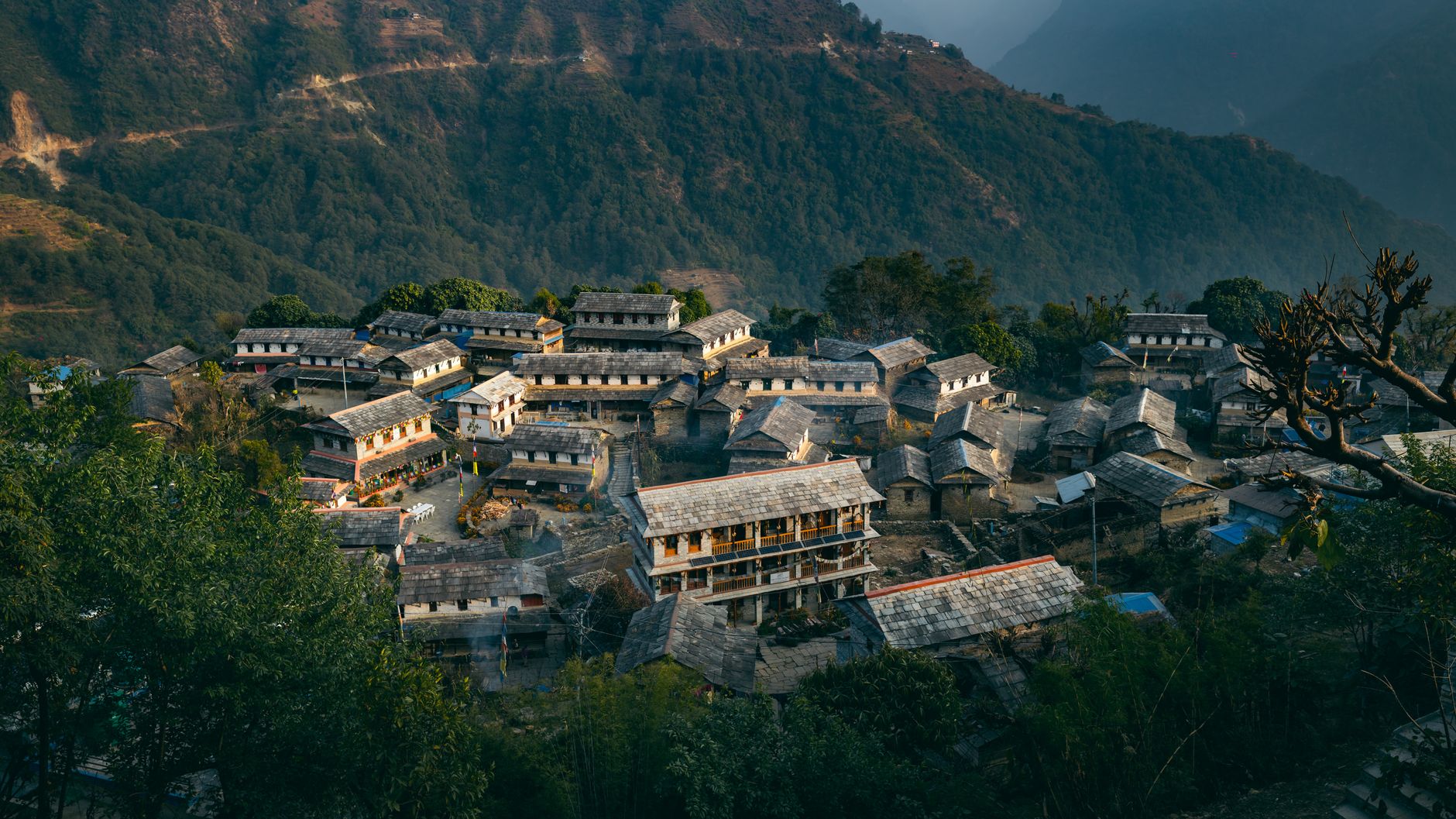
The mud-and-stone homes of Lubra cling to a mountainside in Nepal’s Mustang district, 12,000 feet above sea level. For centuries, this village has been the last stronghold of the Bon faith—a pre-Buddhist tradition that predates even Tibet’s ancient Zhangzhung kingdom. But now the land itself is turning against them.
In 2023, a glacial lake outburst flood—a gush of water, ice, and rock from the melting highlands—ripped through Lubra. It destroyed 16 homes, washed away a monastery, and buried farmland under meters of debris. Two more floods followed in 2024 and 2025. The villagers rebuild each time, but the earth they rebuild on is shrinking.
A Faith Rooted in the Landscape
Bon’s cosmology is woven into the geography of the Himalayas. Sacred mountains, lakes, and caves are not just landmarks—they are the dwelling places of gods and spirits. The Bonpo, as followers are called, perform rituals to appease these forces. But climate change is rewriting the script.
“When the river changes course, it’s not just a physical event,” says Nyima Dhondup, a Bon priest who has lived in Lubra for 67 years. “It means the spirits are angry. We must find new ways to pray, but the old places are gone.”
“When the river changes course, it’s not just a physical event. It means the spirits are angry.” — Nyima Dhondup, Bon priest
The village’s main monastery, which held scrolls and thangkas over 500 years old, was partially swept away. Some texts were recovered, soaked and mud-caked. They now dry in the sun, pages curling, ink bleeding.
Glacial Lakes Are Growing—Fast
Nepal’s glaciers are melting at rates that climate models didn’t predict for another three decades. The International Centre for Integrated Mountain Development (ICIMOD) reports that the number of glacial lakes in the Hindu Kush Himalaya has grown by 33% since 2000. Lubra sits below one of the most unstable: the Gyirong lake, which has expanded by 40% in the last decade.
“These lakes are ticking time bombs,” says Dr. Anju Sharma, a glaciologist at ICIMOD. “Their moraine dams are weak. A small earthquake—or even a heavy rain—can trigger a flood. And when that happens, villages like Lubra have no warning.”
The government has installed early warning sirens in the valley, but the system only covers the main river. Tributaries like the one that flooded Lubra remain unmonitored. “We hear the roar and we run,” says Tashi Dolma, a farmer who lost her entire barley crop in the 2024 flood. “But there’s nowhere to run anymore.”
The Bon Faith Is Already Fragile
Bon has survived centuries of suppression. After Tibet’s Yungdrung Bon sect was sidelined by Buddhism in the 8th century, its followers retreated to remote valleys like Mustang. Today, there are fewer than 400,000 Bonpo worldwide, half of them in Nepal. Most are in Lubra and a handful of other villages.
Young people are leaving. Without land to farm, they migrate to Kathmandu or abroad. They learn English, not Bon chants. The village school teaches Tibetan and Nepali, but not the old Zhangzhung script used in Bon rituals. When the last elder who can read it dies, a millennium of written tradition dies with him.
“I want to stay, but what is there?” asks 22-year-old Karma Wangchuk, who works at a trekking agency in Pokhara. “The land is gone. The rituals don’t stop the floods. Maybe the gods have left this place.”
What Can Be Done?
International climate funds have been slow to reach communities like Lubra. Nepal’s National Adaptation Plan includes glacial flood mitigation, but implementation is patchy. A proposed dam on the Gyirong lake is still in the study phase. Meanwhile, the village has built a crude diversion wall—stones piled by hand. It broke in the last monsoon.
Some Bonpo are reinterpreting their faith to fit the new reality. “We cannot rebuild the old mountains,” says Nyima Dhondup. “So we must carry the mountains in our hearts.” His son, a monk in Kathmandu, has started a digital archive of Bon texts. But digitization costs money that the community doesn’t have.
The erosion is not just physical. The Bon faith is a living tradition—its rituals are performed on specific land, at specific seasons. If the land disappears, the ritual becomes folklore. And folklore doesn’t survive when the people who remember it are gone.
A Culture on the Edge
Lubra is a microcosm of a global crisis: the world’s most vulnerable cultures are also the ones most exposed to climate change. The Bon faith has outlasted empires, invasions, and forced conversions. But it may not outlast a two-degree rise in global temperature.
As I left the village, I saw a group of children playing near the debris field. They were using broken prayer flags as skipping ropes. The wind carried the frayed cloth—once a symbol of connection between earth and sky—now just another piece of trash.
The Bon faith has outlasted empires, invasions, and forced conversions. But it may not outlast a two-degree rise in global temperature.
The question isn’t whether Lubra will be abandoned—it’s whether the Bon tradition will have anywhere else to go. If the cultural infrastructure crumbles, if the language dies, if the rituals become museum exhibits, then the flood didn’t just wash away homes. It washed away a worldview.
And that is a loss we can’t rebuild with stone.