On Tuesday afternoon, Paris hit 42.3°C. Mecca, the holy city in the Saudi desert, registered 41.1°C. Let that sink in: the French capital, famed for its temperate climate and sidewalk cafés, was hotter than the birthplace of Islam. This isn't a fluke. It's a pattern.
Across Europe, the mercury is shattering records. London, Berlin, Madrid—all are cooking under a heat dome that shows no mercy. And while headlines scream about the immediate misery—deaths, wildfires, melted train tracks—the real story is the global rearrangement of heat. The map of where it's hot is being redrawn, and the consequences are terrifying.
The heat is shifting north
For decades, the Middle East held the monopoly on extreme heat. Baghdad, Riyadh, Kuwait City—those were the places you expected to fry. Europe was supposed to be the temperate refuge. But the jet stream is behaving like a drunk driver, looping wildly and parking high-pressure systems over places they don't belong.
Climate scientist Dr. Hannah Cloke at the University of Reading calls it "the collapse of the mid-latitude buffer." In plain English, the atmospheric circulation that kept Europe cool is breaking down. Instead of bringing rain from the Atlantic, it's dragging heat from the Sahara. And it's staying put.
“We're seeing anomalies of 10 to 15 degrees above average across huge swaths of the continent,” Cloke told me. “That's not a heatwave. That's a regime shift.”
We're seeing anomalies of 10 to 15 degrees above average across huge swaths of the continent. That's not a heatwave. That's a regime shift.
The numbers don't lie. In 2023, Europe recorded its hottest summer in 2,000 years, according to tree-ring data. This year is on track to beat that. Meanwhile, parts of the Middle East have actually seen a slight cooling due to increased cloud cover and dust storms. The old rules are dead.
Infrastructure built for a world that no longer exists
Here's the kicker: Europe wasn't built for this. Air conditioning is rare in private homes. Train tracks buckle. Roads melt. Nuclear power plants have to shut down because the river water used for cooling is too warm. The death toll is mounting—over 70,000 across the continent in the past decade, with this year likely to add thousands more.
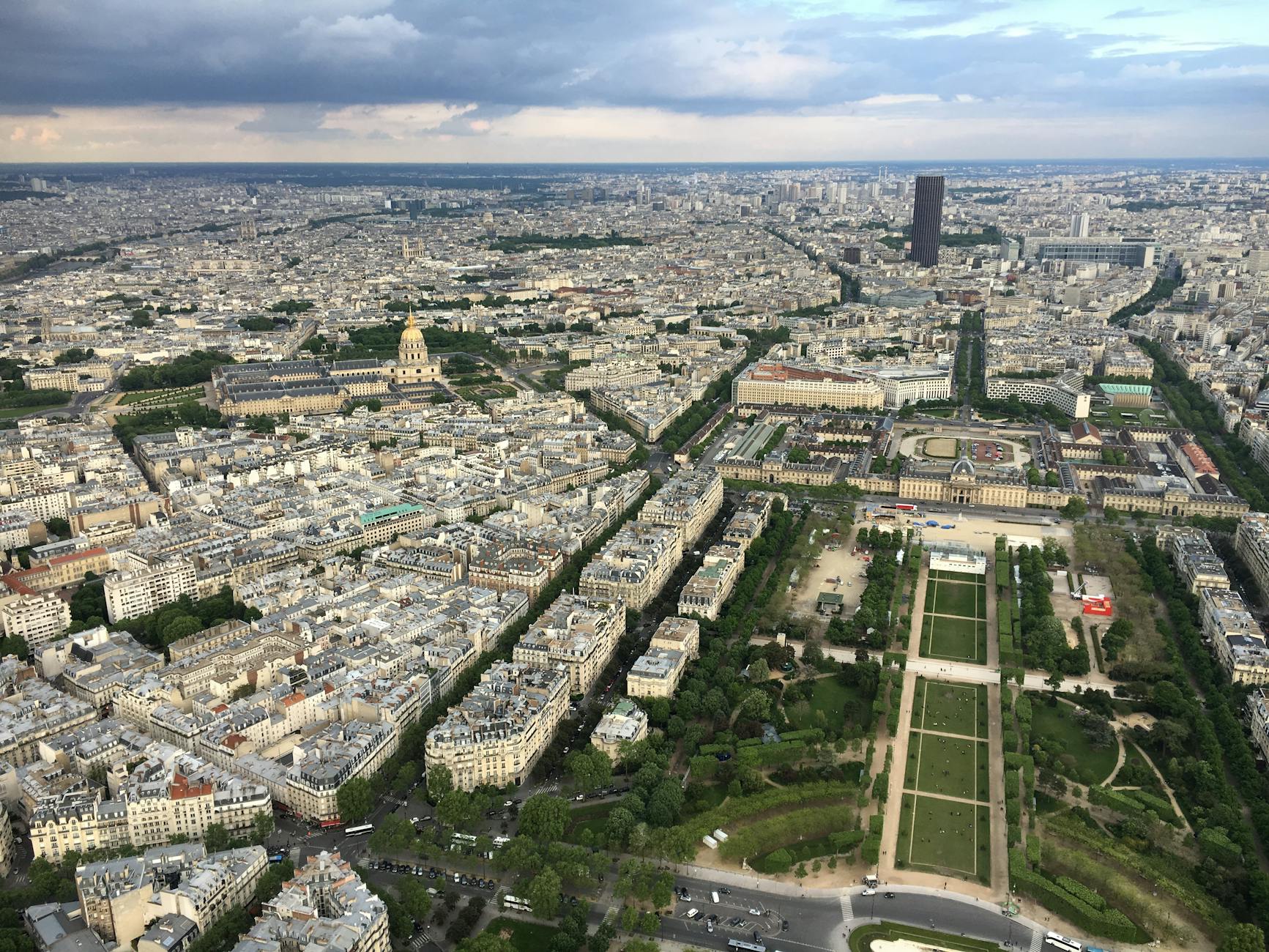
In Paris, the iconic zinc roofs are turning into ovens. The city's famed boulevards, designed to let in sunlight, now trap heat like a convection oven. Hospitals are overwhelmed with heatstroke cases. The elderly are dying in their apartments. And yet, the French government's response has been typical: a flurry of press conferences, a few cooling centers, and a lot of finger-pointing.
The contrast with the Middle East is stark. In Dubai, air-conditioned bus stops are the norm. In Doha, outdoor workers are banned during peak hours. These societies have adapted because they had to. Europe is still pretending this is a temporary nuisance.
It's not just about comfort—it's survival
The heat is hitting the most vulnerable hardest. In Paris, the poor live in cramped apartments under the eaves—the hottest part of any building. In London, social housing blocks are built with south-facing glass facades that turn into solar collectors. The rich can flee to the coast or crank up the AC. The rest suffer.
And let's talk about labor. Outdoor workers—construction, delivery drivers, farm laborers—are being told to "drink water and take breaks" while their bodies cook. Productivity collapses. The economy takes a hit. But the bosses are still demanding quotas. Something's gotta give.
The irony is that Europe's heatwave is, in part, a self-inflicted wound. The continent has been slow to decarbonize, even as it lectures the rest of the world. Germany is firing up coal plants to meet energy demand. France's nuclear fleet is aging and unreliable. The rhetoric is green, but the actions are still brown.
The continent has been slow to decarbonize, even as it lectures the rest of the world. The rhetoric is green, but the actions are still brown.
What the new world looks like
We're staring down the barrel of a future where Paris is routinely hotter than Riyadh. Where London swelters while Cairo enjoys a breeze. Where the word "temperate" becomes a historical curiosity. This isn't hyperbole; it's the trajectory of the climate models.
The only question is: will Europe adapt in time? Or will it keep building cities designed for a climate that no longer exists, while the heat closes in?
Mecca might be cooling down. But for Europe, the inferno is just beginning.
This isn't a travelogue. It's a warning. And if you're reading this in a Parisian apartment with no AC, I'm sorry. But you should start thinking about where you'll go when the next heatwave hits. Because there will be a next one. And it will be worse.