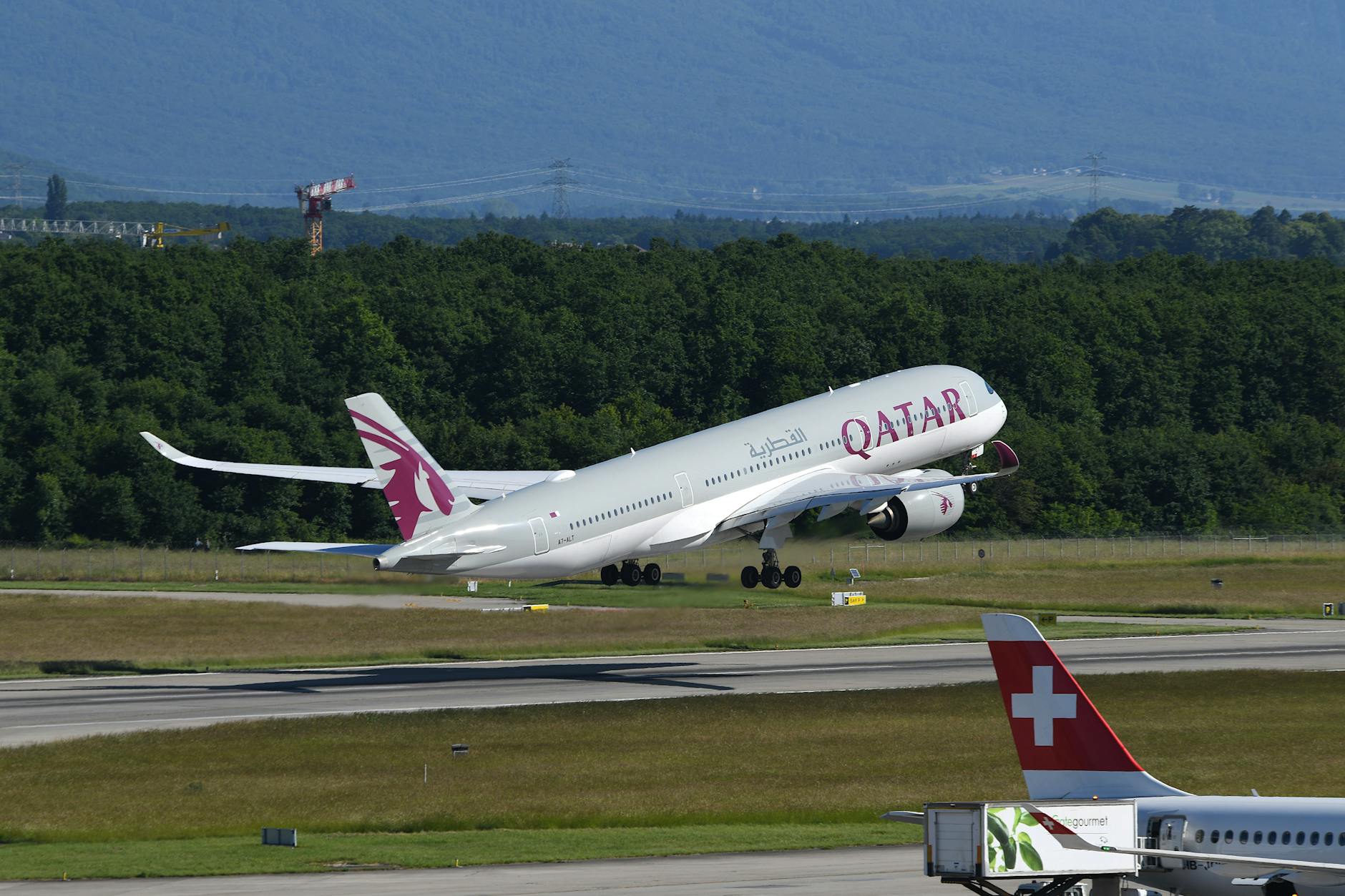
Europe’s already tight LNG market just got tighter. QatarEnergy, one of the world’s top producers, extended its force majeure on Wednesday, withholding four additional cargoes originally bound for Italy. The new shipments won’t flow until September at the earliest — extending a disruption that’s been squeezing buyers since early June.
This isn’t a glitch. It’s a strategy.
Force majeure is the nuclear option in contract law: when an unforeseeable event — war, disaster, pipeline sabotage — makes delivery impossible. But Qatar’s move looks less like an act of God and more like a business decision dressed in legal armor.
The gas giant has been rerouting cargoes to Asia, where spot prices are higher. In May, Asian LNG benchmark prices surged 18% above European benchmarks, a spread that makes it lucrative to break contracts — even if it means paying penalties. For Qatar, the math is simple: pay the fine, pocket the difference, and let European buyers scramble.
Italy is ground zero. The country relies on LNG for roughly 15% of its gas supply, and Qatar is its second-largest supplier after Algeria. The four frozen cargoes represent about 1.5 million cubic meters of gas — enough to power 500,000 homes for a month. Rome is already in emergency mode, tapping strategic reserves and begging Algeria for extra pipeline flows.
The ripple effect is brutal, and it’s spreading
Italian gas storage levels, which were supposed to hit 90% capacity by October, are now tracking 12% behind schedule. Benchmark European gas prices jumped 7% on the news. If you’re a German manufacturer or a Polish household, you’re about to pay more for everything — plastics, fertilizer, heating.
This isn’t just an Italian problem. Qatar’s force majeure covers nearly a dozen cargoes from its massive Ras Laffan facility, and traders say the company is signaling it may extend the freeze into October. The North Asian winter demand season starts then, and Qatar wants every molecule for its best-paying customers in Japan, South Korea, and China.
“The market is being held hostage by Qatar’s commercial calculus,” says Maria Santos, a senior analyst at Ryland Energy Advisors in London. “They’re exploiting a structural imbalance — Europe has storage mandates, Asia has money. Guess which one wins?”
She’s right. European utilities are contractually obligated to refill storage ahead of winter, which makes them desperate buyers. Desperate buyers don’t haggle. They pay.
“Europe has storage mandates, Asia has money. Guess which one wins?” — Maria Santos, Ryland Energy Advisors
Don’t expect a quick fix
Some optimists point to the bump in Norwegian pipeline flows this week — up 3% — and whisper that the worst is over. They’re wrong. Norwegian production is aging, and maintenance season is just starting. Another unplanned outage at Nyhamna or Kårstø could send prices spiking again.
Meanwhile, the global LNG market is operating on a knife’s edge. Total export capacity has barely grown in 2025-2026, as new projects in the U.S. and Qatar face construction delays. Demand, on the other hand, is climbing steadily — especially from Asia’s data centers and China’s resurgent industrial sector. Every cargo diverted is a wound that Europe feels instantly.
The International Energy Agency warned last week that “the market remains dangerously tight” and that “a single supply disruption could trigger price spikes reminiscent of 2022.” Back then, European gas prices hit €300 per megawatt-hour. They’re currently at €45. Don’t think it can’t happen again.
Politics makes it worse
Italy’s right-leaning government is caught in a trap. It can’t afford to antagonize Qatar — the two countries signed a $15 billion energy cooperation deal in 2024. But it also can’t afford to look weak as voters face higher bills. Prime Minister Giorgia Meloni’s approval rating is already slipping below 40%.
The European Commission is watching nervously. If Italy cracks and starts subsidizing energy costs, it will blow a hole in its budget and set a precedent that other member states might follow. That’s a nightmare for the EU’s fiscal hawks.
Some in Brussels are quietly pushing for a coordinated response: release emergency gas supply, fast-track renewables, and force companies to share LNG import capacity. But those measures take months. The cargoes are lost now.
Here’s the bottom line
Qatar’s extended force majeure is exposing a truth that Europe has tried to ignore: replacing Russian pipeline gas with LNG was never going to be easy, and it was never going to be cheap. The continent traded one dependency for another — and this one is run by a state-owned company with no political loyalty to Europe.
For the next three months, expect higher prices, lower storage levels, and a lot of finger-pointing. And when winter comes — if storage isn’t full — expect the real crisis to begin.
Qatar doesn’t have to stop the gas to break Europe. It just has to make it expensive enough.