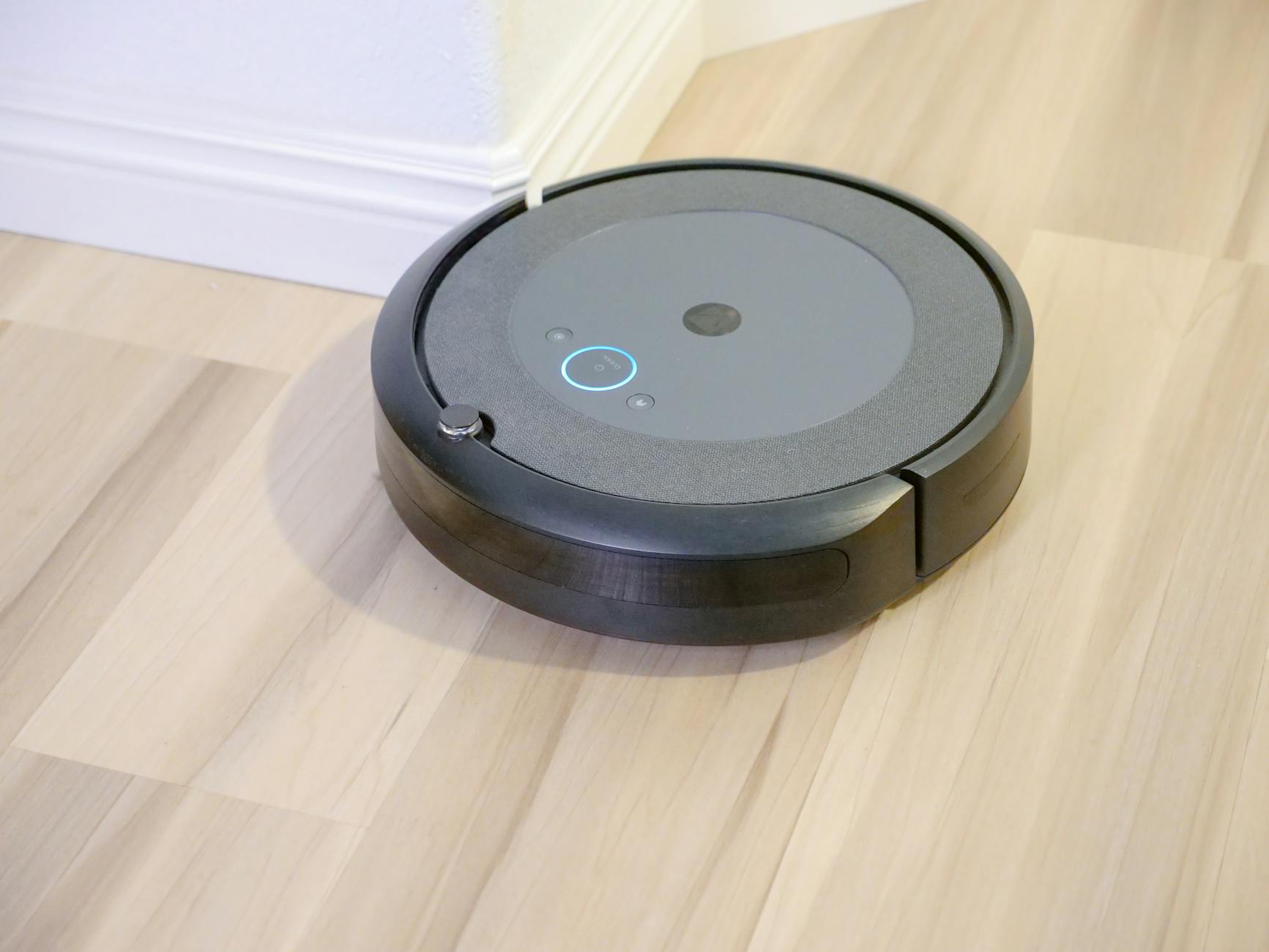
If you had a Roomba—especially one of those early models that looked like a flying saucer designed by someone who'd never seen a UFO—you know the truth. It was dumb. Not charmingly dumb, not artificially dumb. Just dumb. It bumped into your furniture, got stuck under your couch, and sucked up dust like a toddler with a straw. But here's the thing: it won. Not just the war on cat hair, but the war for the future of robotics.
We're 20 years past the first Roomba, and the robot revolution is here. But it doesn't look like the Terminator. It looks like a hockey puck that beeps when it's full.
The genius of being stupid
Early Roombas didn't map your house. They didn't learn. They didn't care. They used a simple algorithm: go straight until you hit something, turn, repeat. That's it. No SLAM, no LIDAR, no cloud computing. Just a bumper and a prayer. And that was the point.
iRobot understood something that Silicon Valley keeps forgetting: perfect is the enemy of shipped. While other companies were building robots that could navigate a minefield, iRobot built one that could navigate a living room. It didn't need to see. It just needed to move.
“The best robot is the one that actually works, not the one that works perfectly.” — Joe Durbin, former iRobot engineer
And work it did. Roomba became the best-selling robot vacuum in history. By 2024, iRobot had sold over 50 million units. That's more than the entire population of Spain. Think about that. A billion-dollar industry built on a machine that's too stupid to know it should be embarrassed.
The accidental ecosystem
But here's where it gets interesting. Roomba didn't just clean floors—it cleaned up the path for every other robot. Before Roomba, robots were either industrial arms in factories or toys that rolled around and beeped. Roomba proved that a robot could do something useful in a real home without breaking everything, including itself.
Suddenly, investors got interested. Engineers got ambitious. The Roomba didn't just vacuum; it democratized robotics. It showed that you didn't need a PhD to build a robot that mattered. You just needed to solve one problem, solve it cheaply, and get it into people's homes.
The ripple effects are everywhere. Robot mops, robot lawnmowers, robot pool cleaners, robot delivery carts—they all owe a debt to that first dumb Roomba. Even the more advanced robots—like the ones that map your house and remember where the dog bowl is—use the same basic principle: start simple, then iterate.
The data goldmine
There's a darker side, though. Every Roomba that bumps around your house is collecting data. Not just about dust, but about your floor plan, your furniture layout, your habits. iRobot, now owned by Amazon, has a map of millions of homes. That's worth more than all the vacuums they'll ever sell.
The company insists the data is anonymized and used only to improve products. But when Amazon gets a map of your living room, what's to stop them from delivering your packages directly to your couch? Or maybe that's the point.
“The Roomba was a Trojan horse. It gave us a view of the human home that no other device had ever captured.” — Dr. Kate Darling, MIT Media Lab
We traded our privacy for a cleaner floor. And honestly, most of us are okay with that. But as robots get smarter, that trade-off gets steeper. The next generation won't just vacuum; they'll see, hear, and maybe even know when you're having a bad day.
The real revolution
But let's step back. The Roomba's real achievement isn't technical. It's cultural. It normalized robots. Before Roomba, robots were sci-fi fantasies or factory tools. After Roomba, they became houseguests. Your grandmother had a Roomba. Your roommate's dog rode on it. It was mundane, which made it revolutionary.
Every robot that follows—from self-driving cars to robot nurses—will benefit from the path the Roomba blazed. People aren't afraid of robots anymore. They're annoyed when they get stuck under the sofa. That's progress.
The Roomba taught us that a robot doesn't need to be smart to be useful. It just needs to show up, do its job, and not break the furniture. In a world obsessed with AI and sentience, that's a humbling lesson.
So the next time your Roomba bumps into your foot, don't curse it. Thank it. It's a pioneer, even if it doesn't know where it's going.


