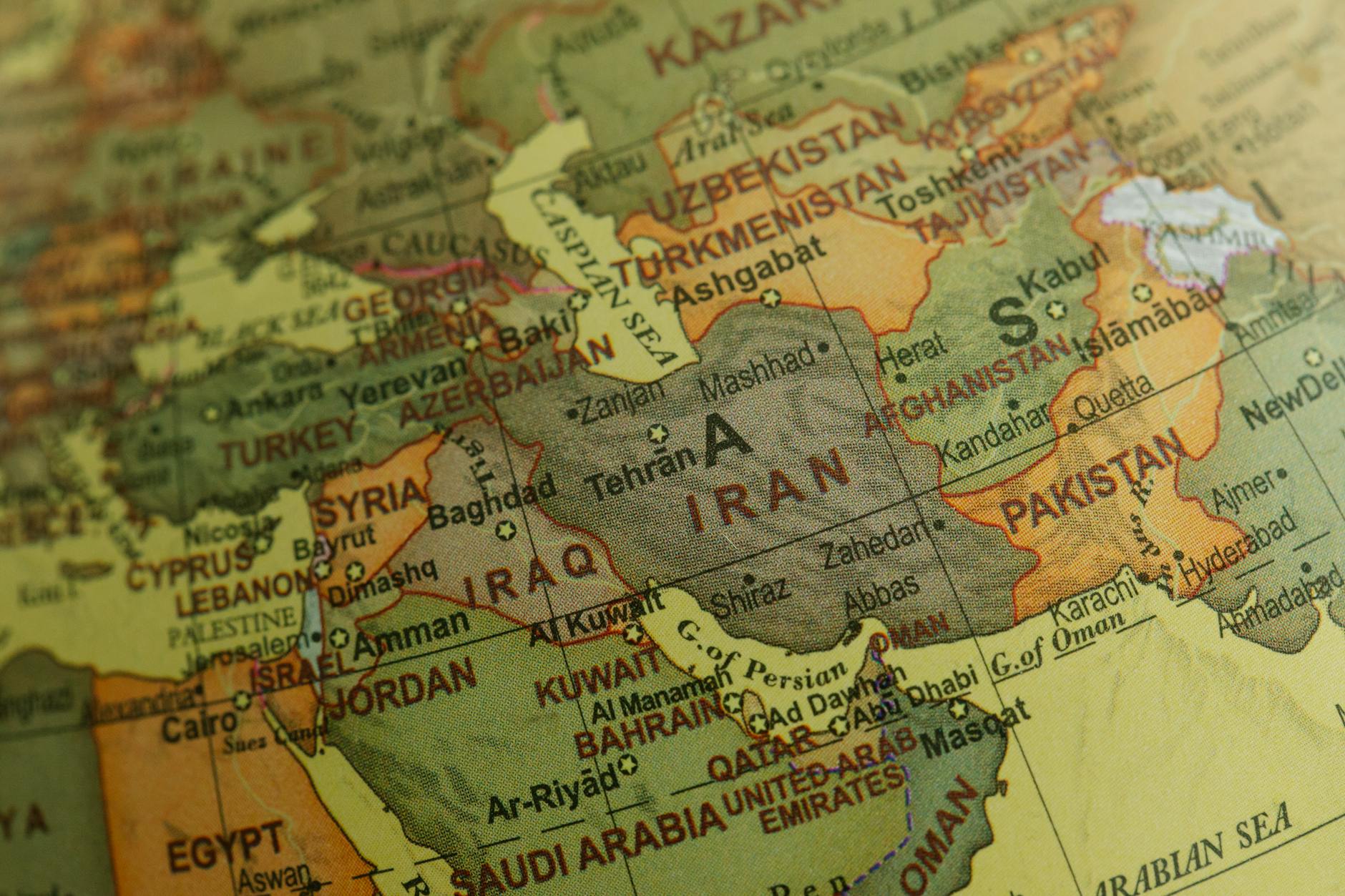
It was 2018 when Donald Trump tore up the JCPOA and called it a “horrible one-sided deal.” Eight years later, his own masterpiece—the so-called Memorandum of Understanding—lies in tatters. Tehran pulled out last week. Israel is on a hair trigger. And the White House is pretending this is all fine.
Let’s be very clear about what died when Iran walked away from the MOU. It wasn’t just a piece of paper. It was the last fig leaf covering the region’s nuclear reality. For months, IAEA inspectors had been quietly noting that Iran’s uranium enrichment was creeping toward weapon-grade. The MOU had a cap. Iran just blew past it.
How We Got Here
The MOU was always a Frankenstein—stitched together in 2023 after Trump realized that “maximum pressure” had produced exactly nothing. It gave Iran limited sanctions relief in exchange for a freeze on enrichment above 60%. No inspections of military sites. No limits on ballistic missiles. It was a Band-Aid on a bullet wound.
And now the Band-Aid is gone. The question isn’t whether Iran will build a bomb. It’s when.
“The MOU was not a deal. It was a delay,” said Karim Sadjadpour, an Iran analyst at the Carnegie Endowment. “And delays don’t last forever.”
Israel’s government, already in meltdown mode over judicial reforms and protests that have paralyzed the country for months, sees a window closing. Prime Minister Benjamin Netanyahu, fighting for his political survival, has made one thing clear: he won’t let Iran go nuclear. Airstrikes on Natanz and Fordow are no longer hypothetical. Israeli jets have been flying simulated attack runs over the Mediterranean for weeks.
The Israel Factor
This is where it gets dangerous. Israel’s military is battle-ready but its political leadership is a mess. The Knesset can barely function. The streets are filled with reservists refusing to serve. In any normal country, you wouldn’t launch a war while your own army is threatening mutiny.
But Israel has never been normal. And Netanyahu, facing corruption trials and a public that’s turned on him, might calculate that a strike on Iran is his only way out. He’s done it before—bombing the Osirak reactor in 1981, the Syrian reactor in 2007. He knows the playbook. The difference this time? Iran is not Iraq or Syria. It’s a country with air defenses bought from Russia, proxies in four capitals, and a population that remembers the assassination of its nuclear scientists.
Washington’s Bluff
The Biden administration—well, Trump’s still president until January 2027, but let’s be honest, the White House has been rudderless on Iran for years—has offered only vague warnings. “We reserve the right to use all options,” said a State Department spokesperson. That’s diplomat-speak for “we have no idea what to do.”
The U.S. has 40,000 troops in the Gulf. The Fifth Fleet sits in Bahrain. But after two decades of war in Afghanistan and Iraq, the American public has zero appetite for another Middle Eastern quagmire. And Iran knows it. They’ve watched Washington withdraw from Syria, fumble the Afghan exit, and dither over Ukraine. They don’t believe the red lines anymore.
The Clock Is Ticking
So where does this end? Best case: Iran stays at the threshold, never tests a device, and negotiates a new deal under a new U.S. president in 2028. That’s the hope. But hope is not a strategy.
Worst case: Israel strikes, Iran retaliates through Hezbollah and the Houthis, the Strait of Hormuz gets mined, oil hits $200 a barrel, and the U.S. gets dragged into a war it didn’t want and can’t win.
There’s a middle case, too—the one where Iran quietly builds a bomb, announces it as a fait accompli, and dares the world to act. That’s the scenario that keeps intelligence chiefs awake at night. Because once Iran has the bomb, Saudi Arabia, Turkey, and Egypt will all want one. The non-proliferation treaty becomes toilet paper.
I covered the Iran nuclear talks in Vienna in 2015. I watched diplomats shake hands and call it a victory. I remember thinking: this is fragile. I was right. But the MOU was even more fragile—a deal built on mistrust, enforced by nothing, and now dead.
The region is holding its breath. So should you.