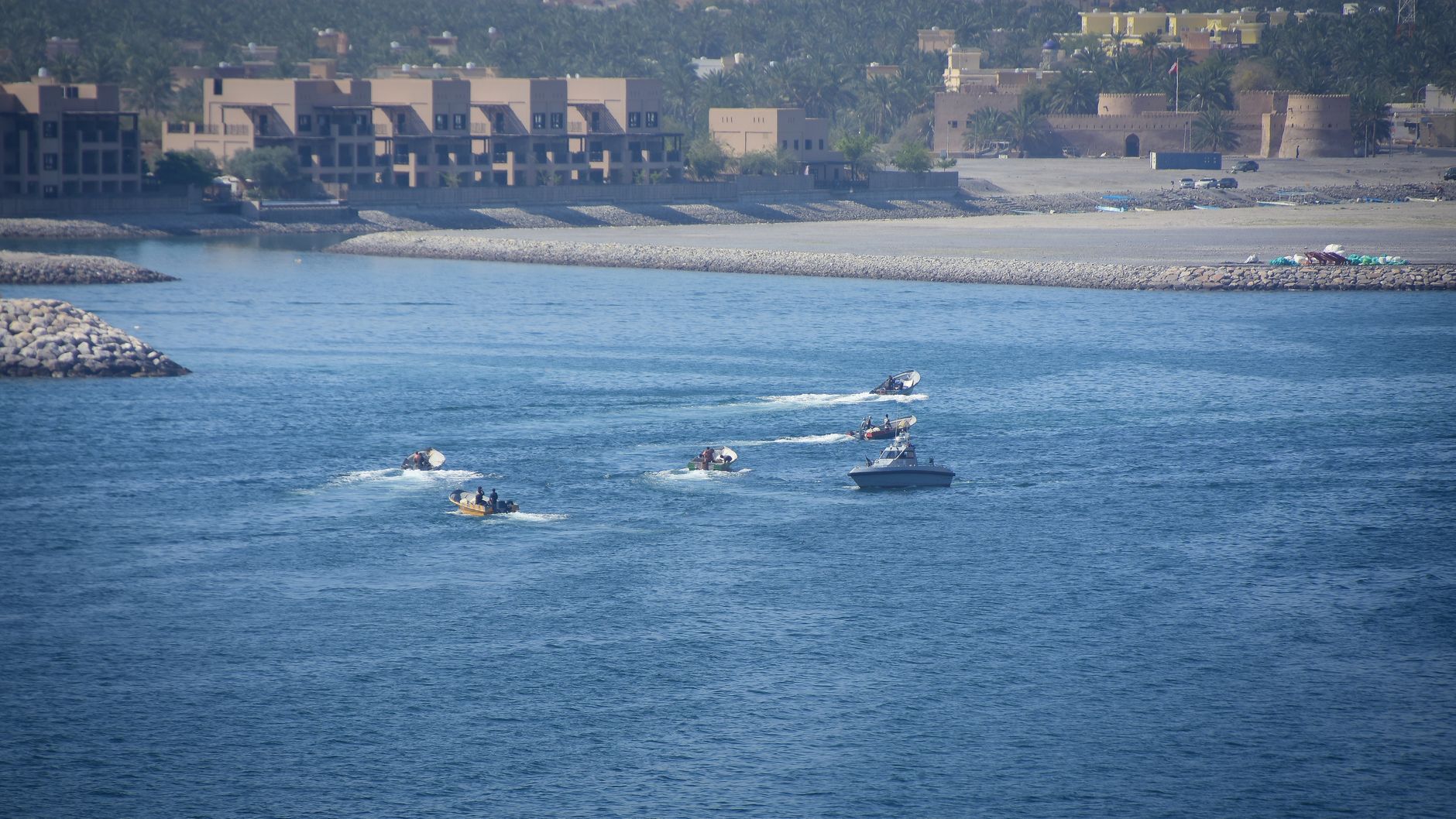
The United States military bombed Iranian patrol boats in the Strait of Hormuz late Tuesday, retaliating for a series of attacks on three oil tankers that left two sailors dead and threatened to choke off one of the world's most critical energy chokepoints.
The strikes, which the Pentagon says targeted Islamic Revolutionary Guard Corps (IRGC) naval vessels, mark a sharp escalation in the shadow war that has simmered between Washington and Tehran for years. After months of warnings, this is the first time the US has directly bombed Iranian military assets since the 1988 Operation Praying Mantis. And it shows—the region is on edge, and the oil markets are screaming.
Hours after the news broke, crude prices shot up 8%. The Strait of Hormuz carries about 20% of the world's petroleum. When America starts dropping bombs there, everyone feels it—at the pump, on the stock market, in the security of global supply chains.
The tankers that lit the fuse
It started just before dawn on Monday. Three oil tankers—the British-flagged *Mercator* under the Marshall Islands flag, the Liberian-flagged *Ocean Pride*, and the *Gulf Star*, sailing under a Panamanian flag—were transiting the strait when fast attack craft swarmed them. The vessels, carrying millions of barrels of crude, were struck by shaped charges and small-arms fire that ripped through hulls, ignited cargo holds, and killed two crew members.
Witnesses reported seeing Iranian patrol boats fleeing the scene. The US Navy's Fifth Command confirmed that its reconnaissance drones tracked the assailants back to an IRGC base on Qeshm Island. Within 24 hours, the White House authorized a reprisal.
“This was not a warning. This was a measured, proportional response to acts of maritime terrorism,” a senior Pentagon official told me, speaking on condition of anonymity. “We hit the boats that did this. We know we hit them. And we know they won't do it again.”
But will they? Iran's foreign ministry denounced the strikes as “an act of war” and vowed revenge. Hossein Salami, the commander of the IRGC, said in a televised address that Iran would “not allow the enemies to disrupt our security.” The rhetoric is boiling over.
A pattern of provocation
This isn't the first time Iran has been accused of targeting oil tankers. Over the past three years, there have been dozens of incidents—limpet mines attached to hulls, drones buzzing commercial ships, speedboats buzzing naval escorts. But the sheer scale of Monday's attack—three tankers hit in a coordinated assault—crossed a line that the US had drawn in the sand.
Critics argue that the US response, while forceful, is dangerously short-sighted. “What happens next?” asks retired Rear Admiral John Kirby, now a fellow at the Council on Foreign Relations. “We bombed their boats. They'll mine the strait. Or they'll launch a missile at a US destroyer. And then we're in a war nobody wants.”
That war might already be here, even if nobody has declared it. The US has deployed an additional carrier strike group to the Arabian Sea. Iran has moved short-range ballistic missiles to its southern coast. And the tankers? They're staying put. Lloyd's of London has jacked war risk premiums for ships transiting the strait to levels not seen since the Iran-Iraq War.
“Every ship captain I know is terrified. This isn't a game—people are dying, and the world just keeps buying oil like nothing's happening.” — James Clark, captain of a chemical tanker docked in Fujairah
Oil markets in turmoil
The economic fallout is immediate. Brent crude surged past $95 a barrel on Wednesday, and analysts are predicting $110 if the strait remains volatile. Saudi Arabia and the UAE have announced they'll ramp up production to stabilize prices, but that's like using a garden hose on a forest fire. If the strait closes, even briefly, the global economy could be in for a shock worse than 1973.
“The Strait of Hormuz is the world's most important oil transit artery,” says Dr. Sarah M. Khan, an energy security expert at Georgetown University. “If Iran decides to mine it or target more ships, we could see a supply crisis that sends gas prices above $6 a gallon in the US and triggers recessions in Europe and Asia.”
The White House is betting that the strikes will deter further attacks. But history suggests otherwise. In 2019, when Iran shot down a US drone, Trump responded with a cyberattack. That didn't stop the tanker attacks. In 2020, the US killed Qasem Soleimani. Iran retaliated by bombing an Iraqi base. The cycle continues.
This time, the Pentagon says it has more targets ready if needed. “We're not looking for a war,” the official told me. “But if they want one, they're going to get it.”
What happens to the sailors?
Back in the strait, the three damaged tankers are being towed to safe harbors. Two of them are still leaking oil. The families of the dead sailors—a Filipino chief engineer and an Indian able seaman—are waiting for news. Their bodies remain aboard the *Mercator*, just below the waterline where the shaped charge ripped open the engine room.
It's easy to talk about deterrence and retaliation when you're in an air-conditioned office in Washington. But out there, on the water, men are dying. The US strikes may have killed Iranian fighters too. The IRGC hasn't released casualty figures, but locals on Qeshm Island reported explosions and smoke rising from the naval base.
The real question isn't whether the US response was proportional. It's whether either side has the will to stop before this spirals into a war that no one wants—but everyone seems to be sleepwalking toward.
For now, the world holds its breath. The tankers keep sailing, but slower. The oil keeps flowing, but at a higher price. And the guns stay loaded.