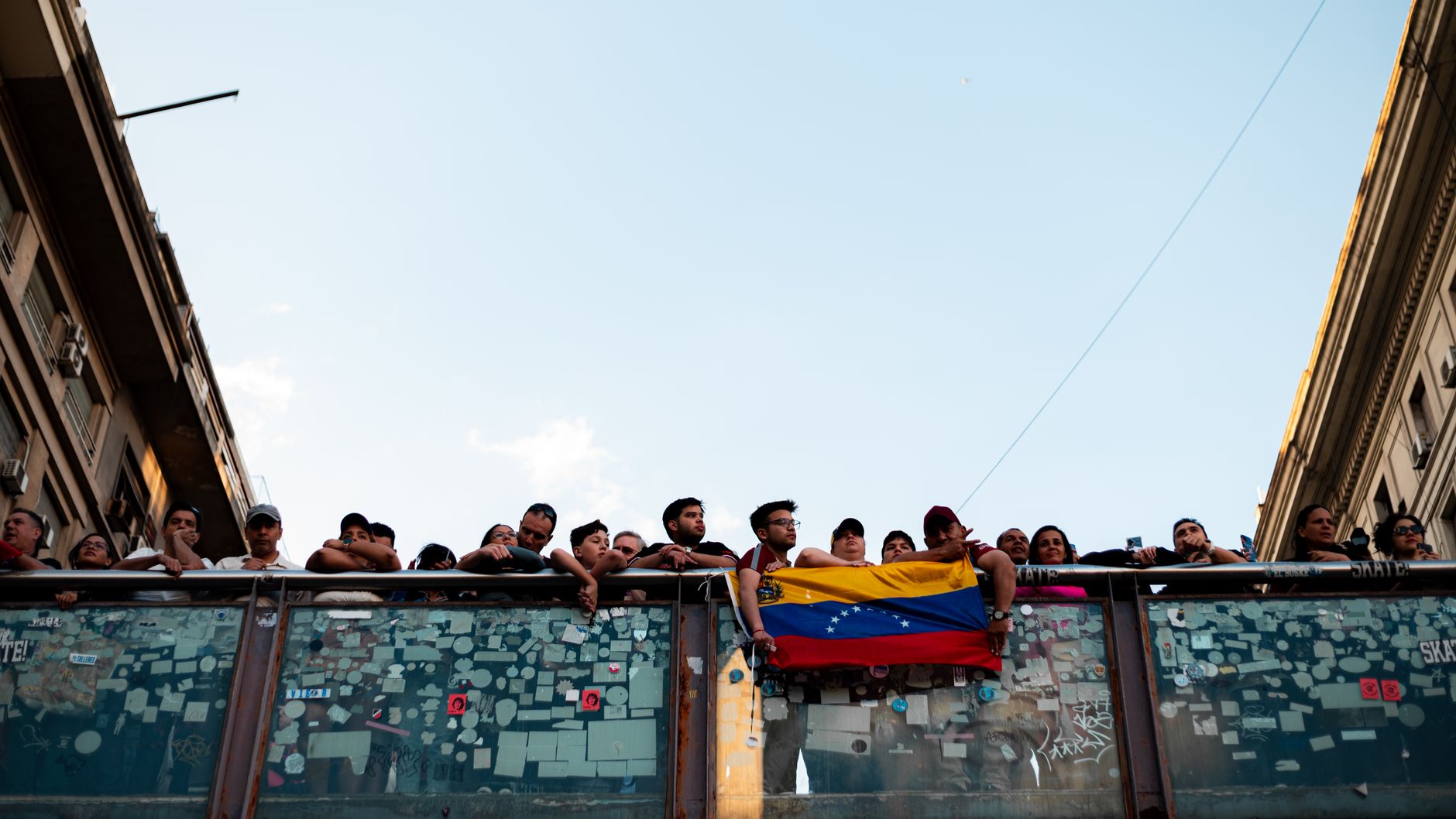
CARACAS – The ground had barely stopped shaking when Mariana Rojas grabbed her backpack and headed for the street. No one told her to. No official called. She just knew her neighbors would need water, bandages, and someone to dig through rubble.
That was 48 hours ago. She hasn't slept since.
The 7.2 magnitude earthquake that hit Venezuela's northern coast Monday has left at least 150 dead and thousands homeless. But as the death toll climbs, a different story is emerging on the ground: the government is barely present, and ordinary Venezuelans have taken over.
Where Is the State?
President Nicolás Maduro appeared on national television within hours of the quake. He promised swift action. He deployed the military. He vowed to coordinate aid.
But in the coastal towns of Vargas and Miranda, where entire blocks have collapsed, residents tell a different story. Military trucks sit idle. Aid warehouses remain locked. Neighborhood leaders say they've seen no official distribution of food or water.
“The army is here, but they're just standing around,” said José Alvarez, a 54-year-old fisherman who helped pull five people from a collapsed apartment building. “We're the ones doing the work.”
It's a pattern that has become painfully familiar in Venezuela. During the 2020 pandemic, doctors went unpaid. During the 2023 blackouts, citizens organized generators. Now, in the face of a natural disaster, the same script is playing out.
“We're the ones doing the work.” – José Alvarez, volunteer rescuer
Good Samaritans, No Coordination
Volunteer groups have sprung up organically across the affected zone. Some are neighborhood associations that existed before. Others formed spontaneously on WhatsApp and Telegram.
They're doing everything: triaging the injured, distributing bottled water, clearing debris. In the town of Maiquetía, a group of mothers has turned a schoolyard into a makeshift shelter for 200 families.
“We have no official support,” said 32-year-old community organizer Luisa Fernández. “The mayor's office sent one truck of rice yesterday, but it wasn't enough for even half the people here.”
The volunteers are resourceful. They're using social media to request supplies, coordinating drop-offs at corner stores, and relying on private donations from Venezuelans abroad. But they're also exhausted. Many have been working nonstop, fueled by caffeine and adrenaline.
The problem is scale. Without government coordination, aid is patchy. Some neighborhoods get plenty. Others get nothing.
A History of Failure
Venezuela's disaster response has been criticized for years. The country's civil protection agency is underfunded and politicized. Emergency protocols exist on paper but rarely translate into action.
This time, the failure is particularly glaring. The earthquake struck a region already reeling from economic collapse. Hospitals lack medicine. Water systems are broken. Roads are crumbling.
“The government's capacity to respond has been deteriorating for a decade,” said Carlos Méndez, a disaster management expert at the Central University of Venezuela. “Now we see the result: a state that can't protect its own citizens.”
The Maduro administration blames U.S. sanctions for hampering its response. Officials claim that international aid has been blocked by the embargo, making it impossible to import heavy equipment or medical supplies.
It's a convenient excuse, but one that few on the ground buy. “Sanctions didn't stop them from fixing the potholes or paying the doctors,” said Fernández. “They've been failing us long before this.”
The International Community Watches
Help is arriving from abroad, but through unusual channels. The United Nations has pledged $10 million in emergency aid. The Red Cross is mobilizing. But the government has been slow to approve visas for foreign aid workers, and customs clearance for shipments is taking days.
Meanwhile, private initiatives are outpacing official ones. Venezuelan diaspora groups in Miami, Madrid, and Buenos Aires have raised hundreds of thousands of dollars in days. They're sending supplies directly to local contacts, bypassing the state entirely.
“We can't trust the government to distribute anything,” said Alejandro Campos, a Venezuelan engineer living in Florida who organized a shipment of water filters. “So we send it to the people we know — the pastors, the teachers, the mothers.”
This is humanitarianism without borders — and without governments. It's efficient. It's also unsustainable.
What Comes Next?
The immediate crisis will pass. The rebuilding will not. And here, the limits of volunteerism become clear.
Citizens can dig bodies from rubble. They can hand out bottles of water. But they can't rebuild hospitals. They can't repair power grids. They can't restructure a broken economy.
“We're doing what we can,” said Rojas, her voice cracking. “But we need a government that acts like a government. We're not asking for miracles. Just show up.”
The earthquake exposed more than weak foundations. It exposed a nation held together by its people — because its institutions have crumbled.
And that's a disaster no amount of volunteer effort can fix.