BETHEL, West Bank — They came with bulldozers and rifles on a hot Tuesday morning, but the old olive grove wasn’t going anywhere. Neither were the families who tend it.
This is not the Gaza border. This is the occupied West Bank, where Israeli settlers and the military are waging a quieter but no less brutal campaign to push Palestinians off their land. On Indigenous Peoples’ Day, residents here are holding firm — and telling the world to stop looking away.
“They think we’ll leave if they make life impossible. They’re wrong,” says Umm Khalil, a 58-year-old grandmother who has watched her village’s land shrink year by year. She stands in a patch of dry earth, her hand shielding her eyes from the sun. Behind her, a handful of Israeli flags flutter atop new settlement outposts on the ridge.
This is a story of attrition, played out in courtrooms, at checkpoints, and in the dead of night. The tools change; the goal doesn’t: empty the hills of their Palestinian inhabitants, then claim they were never there.
The Slow-Motion Land Grab
Let’s be clear about what’s happening. According to the United Nations, more than 1,000 Palestinians have been displaced in the West Bank since the beginning of the year — the highest rate in a decade. Settler violence has surged by 40% compared to the same period last year, according to the Israeli human rights group B’Tselem.
But the numbers don’t capture the daily grind. The checkpoints that turn a 20-minute drive into a two-hour ordeal. The army demolitions of homes and water tanks, designated as “unauthorized” — even when the owners have papers dating back to the Ottoman Empire. The settlers who burn fields and uproot saplings, then call the army when the farmers fight back.
“It’s like being strangled slowly,” says Ahmad, a 34-year-old shepherd who lives in a village south of Nablus. He asked me to use only his first name, fearing reprisals. “Every week, we lose something. A piece of land. A water line. A neighbor who gives up and moves to the city.”
That’s the point, activists say. The strategy isn’t just to grab land — it’s to make life so unbearable that people leave “voluntarily.” The Israeli NGO Peace Now has documented more than 200 settlement outposts established since 2020, many of them in the heart of Palestinian agricultural areas.
Israel’s government defends the settlements, calling them legal and necessary for security. But international law is unambiguous: under the Fourth Geneva Convention, transferring civilians into occupied territory is a war crime. Even the United States, Israel’s closest ally, has called the expansion of settlements an obstacle to peace — on paper, anyway.
Indigenous Peoples’ Day: A Sharper Lens
Why does this matter on Indigenous Peoples’ Day? Because it’s the perfect moment to recognize the Palestinians for what they are: an indigenous people fighting displacement — just like the Maasai in Kenya, the Uyghurs in China, or the Native Americans whose land this holiday honors in the United States.
Their connection to this land isn’t a political claim; it’s a physical one. Their ancestors are buried in these hills. Their olive trees are centuries old. Their villages carry names that predate the state of Israel by a millennium.
“We are the living stones of this land,” says Rula, a 26-year-old activist in Ramallah. “They want to erase that. But you can’t erase people who refuse to leave.”
Rula was part of a group that erected a banner on a confiscated plot near Bethlehem on Monday. It read, in Arabic and English: “The land remembers. So do we.” Israeli soldiers took it down within hours, but the photos spread on social media.
This is the new front line: not just bulldozers, but a battle for global consciousness. Palestinians are using the language of indigenous rights to reframe their struggle — and it’s working. In June, the UN Human Rights Office released a report explicitly comparing settlement expansion to forced displacement “of a magnitude that constitutes a war crime.”
“We are the living stones of this land. They want to erase that. But you can’t erase people who refuse to leave.”
What the World Isn’t Seeing
For all the talk about a “two-state solution,” the reality on the ground is a one-state nightmare. The West Bank is a mosaic of islands — Palestinian towns surrounded by settlements, bypass roads, and military zones. Every time Israel expands a settlement, it cements a new fact: that a viable Palestinian state is slipping further away.
Take the village of Al-Mughayyir, population 3,000. It sits at the crossroads of two major settlement blocs. The army has declared 60% of the village’s land a “firing zone,” which means residents can’t farm it without risk of being shot. In July, settlers from a nearby outpost burned 20 dunams (about 5 acres) of wheat. The army did nothing.
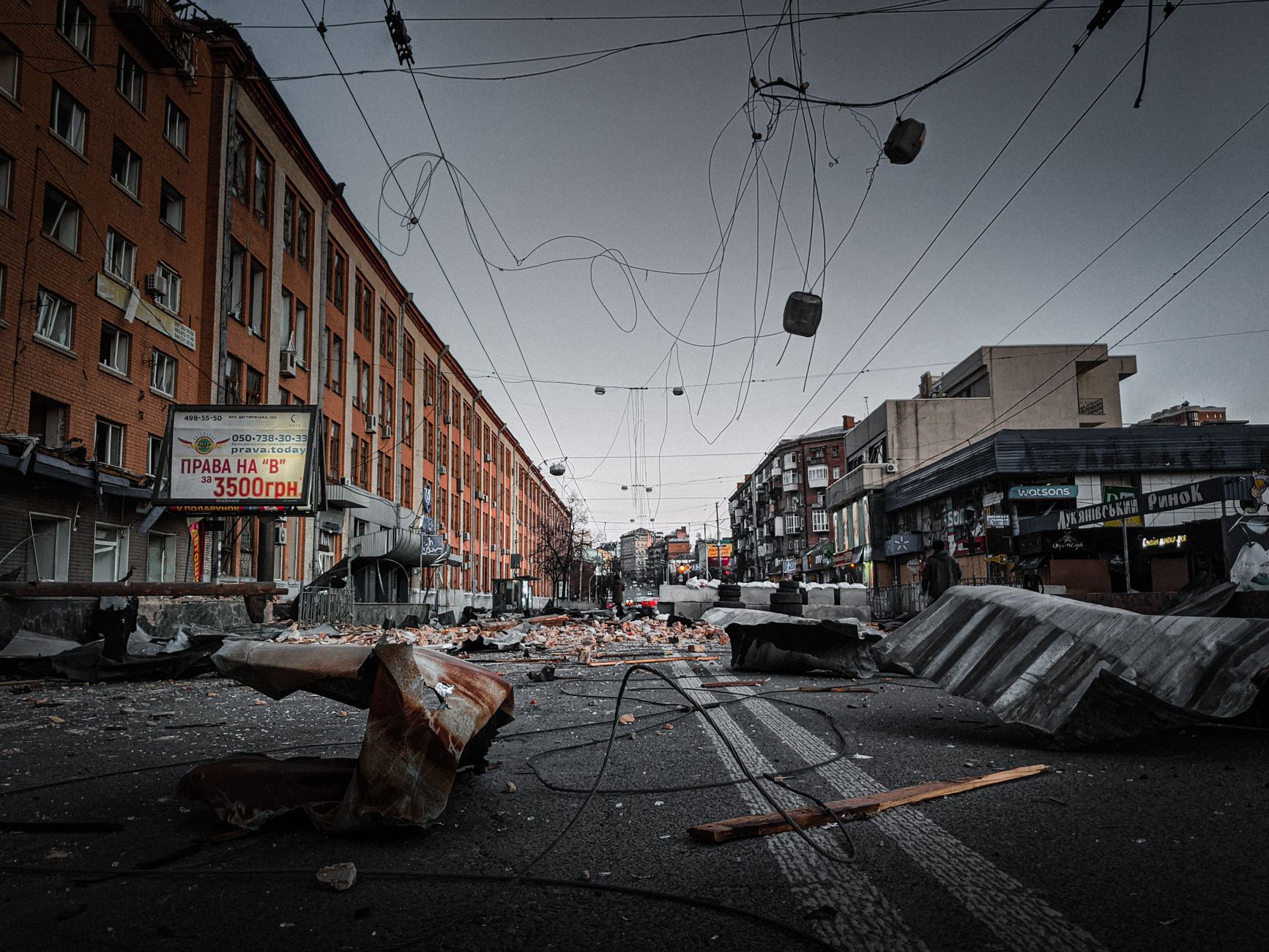
The pattern repeats in Jesseh, in Humsa, in Ras al-Tin. The names change, but the stories don’t. Bulldozers arrive at dawn, guarded by soldiers. Women and children throw stones. Men are arrested. Homes are crushed. The international community issues statements of concern.
“The world sees us on TV for five seconds, then changes the channel,” says Umm Khalil, spitting into the dirt. “They don’t see us picking up the pieces of our house, rebuilding, picking up again. They don’t see our children crying at night.”
She has a point. The images that do emerge are shocking — but they’re static, frozen frames without context. You see a bulldozer smashing a cinderblock home, but not the family that slept in it the night before, nor the grandfather who planted the olive trees that now stand in the shadow of a settlement.
The Resistance of Daily Life
But here’s the thing: Palestinians aren’t just victims. They’re actors. They hold steadfast despite the pressure, and they’ve developed a toolkit of resistance that goes beyond throwing stones.
There are the protests, of course, like the weekly ones in the villages at the bottom of settlement blocs. But there are also the quiet acts: planting trees on land whose ownership is contested, building playgrounds in areas the military has designated as “closed,” using GPS mapping to document encroachment.
And there’s the legal fight. A new generation of Palestinian lawyers is taking settlement expansion to international courts. In June, the International Criminal Court issued arrest warrants for two former Israeli officials for crimes against humanity — a symbol, even if unenforced.
But perhaps the most powerful act is simply staying. In a region where forced displacement is a constant threat, choosing to stay is an act of defiance. It says: this land is mine, and I will not be moved.
“They think we’ll get tired,” says Ahmad the shepherd, as he guides his flock along a dusty path that, just a year ago, was a public road. “But we’ve been here for thousands of years. We’re not going anywhere.”
Memory as Resistance
On the day the bulldozers came to Umm Khalil’s grove, she stood in front of the oldest olive tree — the one her great-grandfather planted. She had her grandsons with her, aged 7 and 9. “This is your history,” she told them. “They can cut down the trees, but they can’t cut down your memory.”
The soldiers didn’t cut the tree that day. They left, as they often do, with a warning. But the threat remains. And next time, they may return.
Yet Umm Khalil is not afraid. Or rather, she is afraid, but she refuses to let fear make her decision for her. “If I leave, they win. If I stay, I lose my land, my house, maybe my life. Which loss is worse?” she asks, not expecting an answer.
She pauses, then answers herself: “The loss of dignity is worse. And that, I will never give them.”
As Indigenous Peoples’ Day fades into evening, the Palestinians of the West Bank are still here. Their villages are smaller, their land more fragmented, but they remain — a people rooted in a land that refuses to forget. The question isn’t whether they’ll survive. It’s whether the world will finally open its eyes.
Don’t hold your breath.