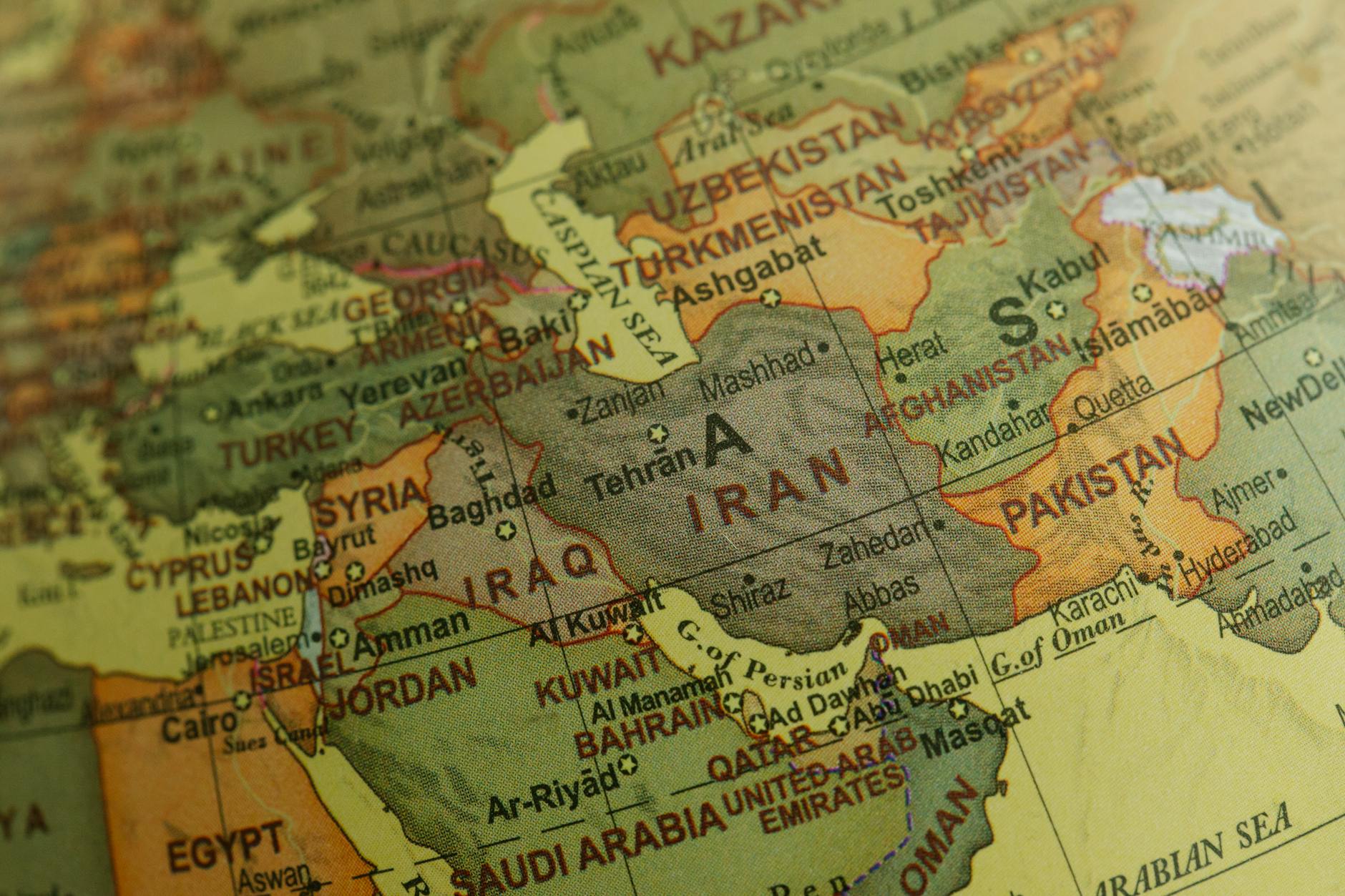
The Strait of Hormuz is closed. Not threatened. Not at risk. Closed. Iran's Revolutionary Guard Corps announced the shutdown at 4:17 p.m. local time, and within minutes, oil futures went ballistic. Brent crude jumped 12% in a single hour. This isn't a drill. This is the opening move of a crisis that could reshape the Middle East — and the global economy — for years.
What triggered it? Israel's latest strikes on Lebanon, which tested the limits of a shaky Memorandum of Understanding (MOU) with Hezbollah. The MOU, signed in March after months of UN mediation, was supposed to be a ceasefire framework. Instead, Israel used it as a cover to bomb what it called ‘Hezbollah missile sites’ in the Bekaa Valley. Iran, Hezbollah's patron, decided that the Strait — through which 20% of the world's oil passes — was its only real bargaining chip.
Let's be clear: this is not a spontaneous outburst. Iran has been preparing for this moment for years. They've deployed anti-ship missiles, sea mines, and fast attack boats. They've drilled the closure in war games. The only question was when they'd pull the trigger. Israel just gave them a reason.
The MOU That Wasn't Worth the Paper It Was Written On
The Israel-Lebanon MOU was always a fragile thing. It was supposed to de-escalate tensions along the Blue Line, but it lacked enforcement mechanisms. There was no neutral force monitoring compliance, no binding arbitration. It was, in essence, a gentleman's agreement between states that don't trust each other.
Israel's strikes on June 19 — which killed at least 11 people, according to Lebanese officials — were the first major test of the MOU. And Israel failed it. Rather than using the diplomatic channel to address alleged violations, they went straight to bombs. Hezbollah responded with a barrage of rockets into northern Israel. And then Iran, watching from the sidelines, made its move.
You can argue that Iran was looking for an excuse to close the Strait. You'd probably be right. But that doesn't matter now. What matters is that the world's most important oil chokepoint is shut, and nobody knows when it will reopen.
The Price of Oil Just Became a National Security Issue
Before the closure, Brent crude was trading around $78 a barrel. As I write this, it's pushing $90. If the Strait remains closed for a week, analysts predict $120. A month? $150 or higher. The last time oil hit those levels, it was 2008, and the global economy was already in freefall.
But here's the thing: the 2008 crisis was financial. This is physical. There's no amount of financial engineering that can replace 17 million barrels of oil a day that transit through Hormuz. The U.S. Strategic Petroleum Reserve holds about 700 million barrels. Sounds like a lot, right? At current global consumption, that's about 7 days of supply — if we could move it fast enough. We can't.
Asian economies — Japan, South Korea, India — are particularly vulnerable. They rely on the Strait for more than 60% of their oil imports. Their refineries will start running dry in weeks. And when they do, the ripple effects will hit everything from plastic production to transportation to food prices.
Remember the supply chain chaos of 2021-2022? This makes that look like a hiccup.
America's Choice: War or Retreat
The United States has repeatedly said it will keep the Strait of Hormuz open. That's not just rhetoric — it's policy codified in national security documents. President Biden's administration has already sent the USS Dwight D. Eisenhower carrier group to the region. But a carrier group can't stop a minefield or a swarm of missile boats without escalating to open conflict.
So here's the question: will the U.S. attack Iranian naval assets to clear the Strait? If yes, we're looking at a war that could engulf the entire Gulf. If no, the U.S. loses credibility as the guarantor of global oil flows, and Iran gains a nuclear bargaining chip — because the one thing Tehran wants more than Hormuz reopened is a deal that lets it enrich uranium without restrictions.
Either way, the loser is the global economy. And ordinary people who just want to fill their gas tanks without taking out a second mortgage.
What Happens Next? Three Scenarios
Scenario 1: Diplomatic Off-Ramp (Low Probability) — The UN Security Council convenes an emergency session. Saudi Arabia and Russia broker a deal: Iran reopens the Strait in exchange for sanctions relief and a guarantee that Israel won't strike Lebanon again. This requires everyone to act in good faith. That's a tall order, given that Iran just demonstrated that it can shut down global oil trade at will.
Scenario 2: Limited Military Action (Medium Probability) — The U.S. and its allies conduct a mine-clearing operation and strike Iranian anti-ship missile batteries in the Strait. Iran retaliates by attacking U.S. bases in Iraq and targeting oil tankers in the Gulf. Oil prices spike, but the Strait reopens within two weeks. Damage is contained, but the region remains on a hair trigger.
Scenario 3: Full-Blown Crisis (High Probability) — The closure lasts more than a month. Global recession begins. Iran uses the chaos to accelerate its nuclear program. Israel strikes Iranian nuclear facilities. Hezbollah and Hamas join the fight. The Strait becomes a war zone, and oil prices go parabolic. This is the worst-case scenario, and it's the one we're hurtling toward.
The Bottom Line: This Was Avoidable
Israel's strikes on Lebanon were reckless. The MOU was a fig leaf, not a peace agreement. And Iran has been itching to test its chokepoint power. But the real failure belongs to the entire international community that allowed the Strait of Hormuz to become a single point of failure for the global energy system.
We've known for decades that a closure was possible. We did nothing. We built strategic reserves, sure — but not enough. We talked about energy independence, but we never achieved it. And now the bill is due.
The Strait of Hormuz is closed. The world just got a lot smaller, a lot poorer, and a lot more dangerous. And the only question that matters now is: what are you going to do about it?