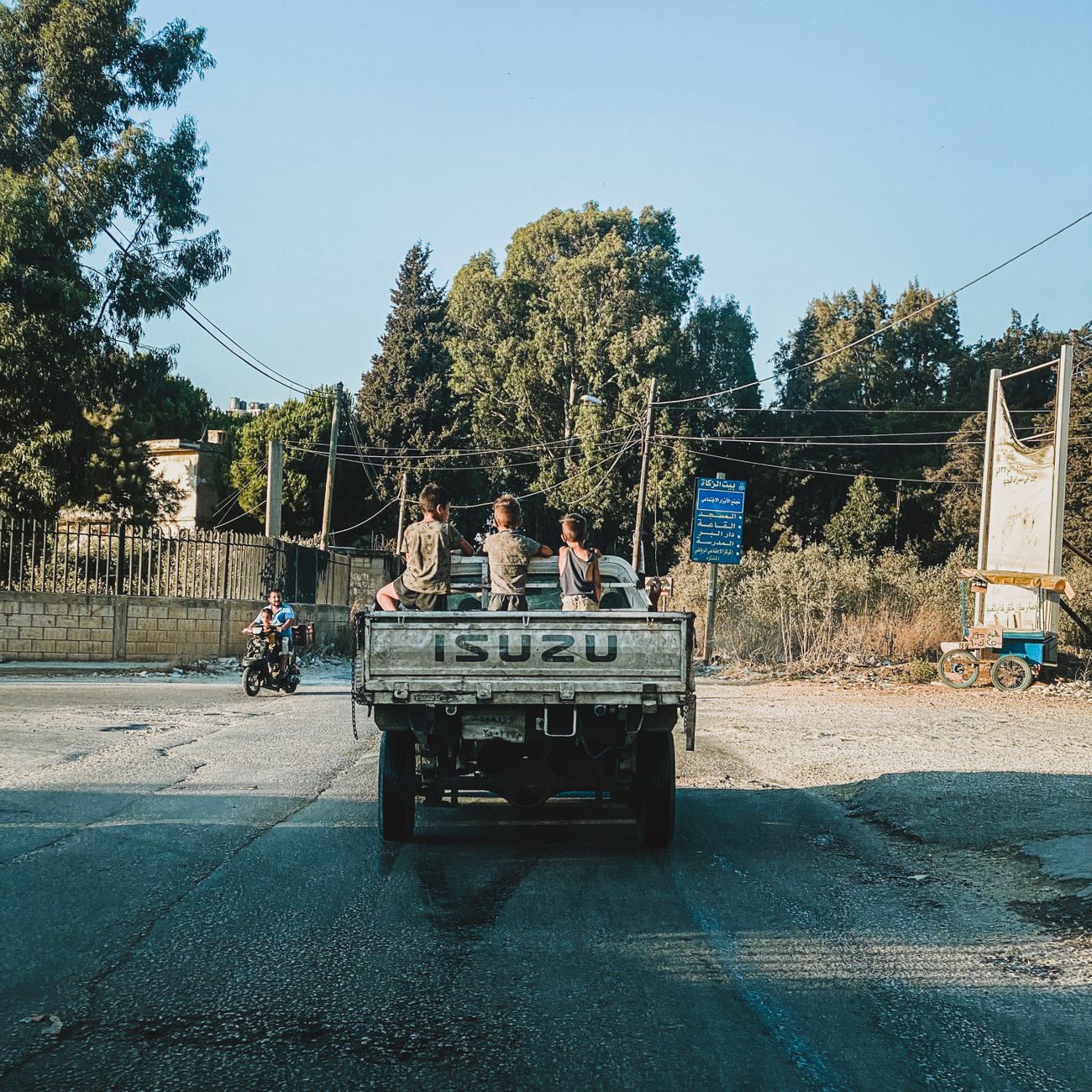
The first cars rolled south before dawn. Buses packed with mattresses and children. Pickups loaded with whatever could be salvaged. For three months, they'd lived in schools, gyms, relatives' spare rooms — anywhere but home. Now, under a ceasefire cobbled together by Washington and Tehran, the displaced are heading back to southern Lebanon.
It's not a victory parade. It's a gamble. The deal is barely 48 hours old, and already there are cracks. Israeli drones still buzz overhead. Hezbollah flags flutter from passing trucks. No one is cheering. But after months of Israeli bombardment that flattened entire neighborhoods, people are desperate enough to try.
A Corridor of Cars
Highway 5, the main artery south from Beirut, became a river of headlights Tuesday. At the wheel of a dented Hyundai, 43-year-old Rami Jaber told me he'd been waiting for this moment since his village, Kfar Kila, was shelled in April. "I don't trust the ceasefire," he said flatly. "But I trust staying in that damp gym even less."
His wife, Noura, clutched a bag of bread and cheese. Their kids, ages 5 and 8, had never seen their home. "They think we're going on a picnic," she whispered. The Jaber family was among thousands streaming south. By midday, the UN estimated 40,000 had made the trip. Aid workers set up makeshift checkpoints, handing out water and — oddly — sunscreen. "The displaced have been through hell. Now they face sunburn and dust," said a Red Cross volunteer, shrugging.
"I don't trust the ceasefire. But I trust staying in that damp gym even less."
The ceasefire, announced late Sunday, is supposed to halt all hostilities and create a buffer zone south of the Litani River. But the details are as fragile as the peace. Israeli forces are to withdraw within 10 days. Hezbollah is to pull back its heavy weapons. The Lebanese army — weak and underfunded — is to take control of the border. It sounds good on paper. In practice, it's a house of cards.
The Deal's Wobbly Legs
The agreement was brokered by US envoy Amos Hochstein and Iranian diplomats meeting in Geneva — an unlikely partnership. Both sides claim victory. Israel says it achieved its goal of pushing Hezbollah away from the border. Iran says it protected its proxy, which battered Israel's northern towns with rockets. The truth is messier.
Some 1,200 Lebanese civilians died in the strikes, along with 300 Hezbollah fighters, per UN estimates. On the Israeli side, 70 civilians and 40 soldiers were killed. The bombing of Beirut's southern suburbs in May left craters the size of swimming pools. Schools, hospitals, and a UN warehouse were hit. The international outcry was loud, but lasted exactly as long as the news cycle.
Now the real test begins: Can the Lebanese army fill the vacuum? "We are preparing to deploy 10,000 troops south of the Litani," a Lebanese military source told me. "But we don't have the equipment. We don't have the money. We have the will, but will is not a bullet."
Hezbollah, meanwhile, hasn't disarmed — it's just moved its heavy rockets north. "We are respecting the ceasefire," a Hezbollah official said, speaking on condition of anonymity. "But our resistance is not a matter of geography." In other words: we'll be back.
The Human Wreckage
In the village of Bint Jbeil, where many returning families headed, the stench of rotting fruit mixed with rubble dust. A man stood where his grocery store used to be — a pile of concrete and twisted metal. He bent down, picked up a single can of tomatoes that somehow survived, and placed it in his pocket. His eyes said everything.
Aid groups have warned that winter is coming. "We need shelter, heating, food, medicine — everything," said a World Food Programme coordinator. The UN says it needs $400 million to cover the next three months. So far, it's raised $80 million.
Back on Highway 5, a young man pulled over his motorcycle, lit a cigarette, and stared at the line of cars. "My whole family is dead," he said. "Where am I going?" He didn't wait for an answer. He just got back on the bike and drove south.
The ceasefire is holding. For now. But so is the silence of the international community. The question isn't whether the peace will last. It's whether anyone cares enough to make it.