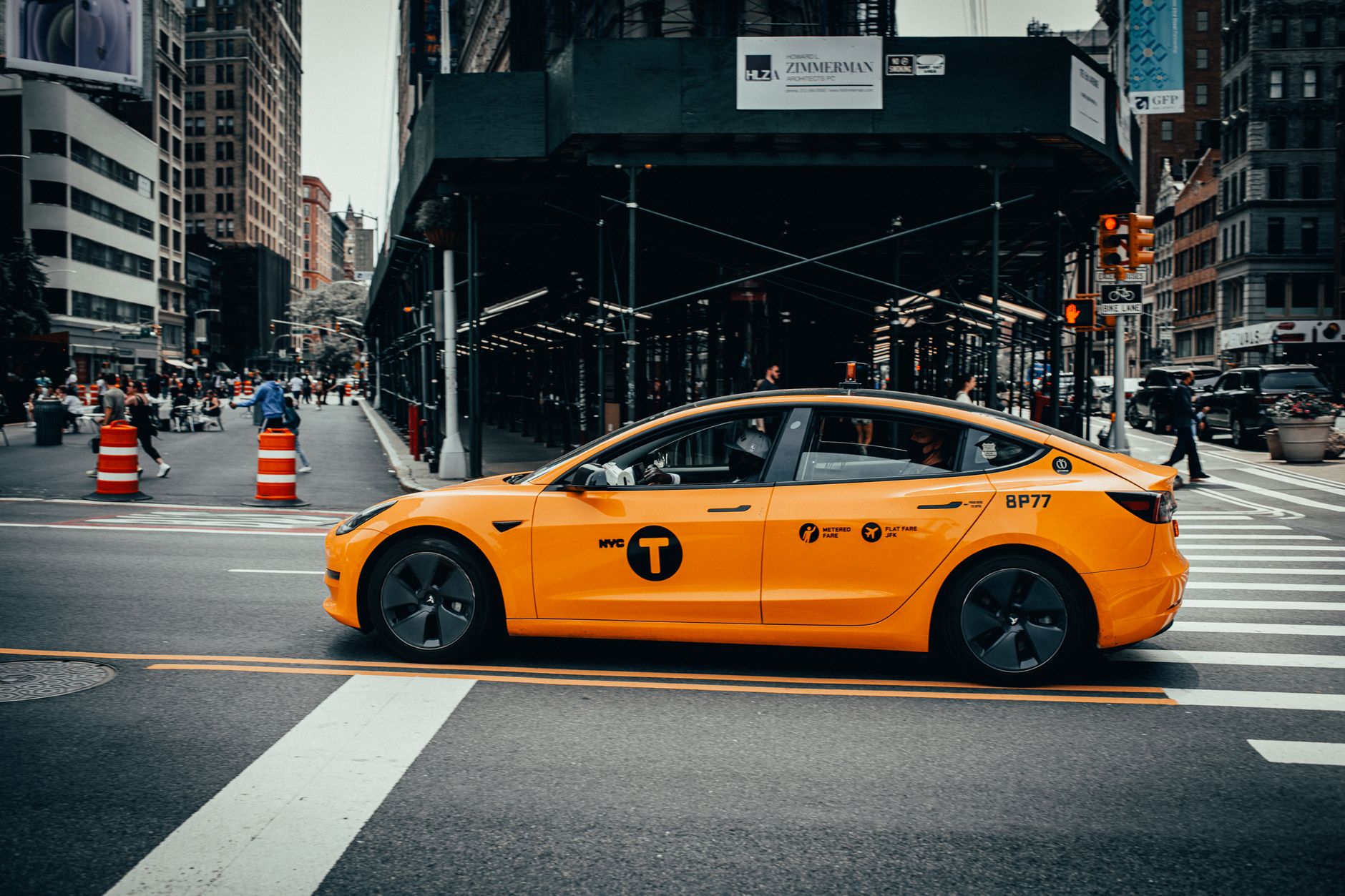
It took Tesla less than a day to get its Cybercabs rolling in Austin. It took the feds about as long to start asking questions. That's not a coincidence. That's the new reality of robotaxis.
The National Highway Traffic Safety Administration (NHTSA) confirmed Friday it has opened a formal investigation into Tesla's deployment of its purpose-built Cybercab, just hours after the company unleashed the first production units on Austin's streets. No specific incident has been cited. No crash reports have surfaced. What has the feds' knickers in a twist is the sheer, unvarnished audacity of the rollout.
What Exactly Is the Feds' Beef?
Here's the thing about Tesla: it doesn't do beta testing quietly. When Musk says a car is ready, it's ready — until it's not. The Cybercab is a vehicle with no steering wheel, no pedals, and a design so polarizing it makes the Cybertruck look like a Corolla. And Tesla, in its infinite wisdom, decided to skip the whole "slow, cautious pilot program" phase that every other self-driving outfit on the planet has embraced.
Waymo spent years stuck in a 40-square-mile sandbox in Phoenix, mapping every curb and pothole to death before letting the public in. Cruise had its license suspended after a pedestrian was dragged 20 feet. Zoox, Motional, Argo AI — they all treated robotaxis like a life-and-death game. Tesla treats it like a software update. Push it live, see what breaks.
The NHTSA investigation, per its terse public notice, will examine "the operational safety of the Cybercab's autonomous driving system, including its response to edge cases and unexpected road conditions." Translated from bureaucrat: we want to know if this thing is going to mow down a family crossing the street because Musk needed to hit a production milestone.
Musk Plays Ramp, Feds Play Whack-a-Mole
Tesla's response was as predictable as a Musk tweet at 2 a.m. "The Cybercab has undergone extensive validation," the company said in a statement, "and we are confident in its safety record." Safety record? The fleet has been on public roads for less than 48 hours. The only "record" is a startup screen.
But here's the rub: Tesla has done this dance before. The FSD beta testing program has been under NHTSA scrutiny for years, with at least a dozen recalls and investigations piling up. Each time, Tesla settles, tweaks a software line, and moves on. The Cybercab is different, though. There's no steering wheel. There's no driver to blame. If it fails, it fails spectacularly — and on a scale that makes a Cybertruck recall look like a lemon law case.
"This isn't a voluntary safety campaign. This is a subpoena with a badge," said one former NHTSA official who asked not to be named because he still does consulting work in the self-driving space. "The fact that they launched on public streets without a human fallback is the kind of thing that keeps my old colleagues up at night."
The Town of Austin: Guinea Pig or Test Bed?
Austin has become Musk's personal sandbox. The Boring Company dug a tunnel under the city — useless, but a great PR stunt. Tesla's Gigafactory sits on the outskirts, pumping out cars and batteries. And now, the Cybercab is roaming downtown streets, picking up riders through the Tesla app with no one in the front seat.
City officials have been suspiciously mum. They've issued the standard "we welcome innovation" press releases, but you can bet the city attorney is drafting a strongly worded letter to NHTSA asking for guidance — or at least asking who pays when a Cybercab plows into a fire hydrant.
"We're in a wait-and-see mode," said a city staffer who spoke on condition of anonymity because she's not authorized to talk to the press. "We've had Waymo and Cruise ask for permits. Tesla didn't even ask. They just showed up."
That's the Tesla way. Ask for forgiveness, not permission. And when the feds come knocking, Musk doesn't grovel. He goes on X and posts a meme about how regulators are "the new oil."
What Happens Next?
Let's be clear: an NHTSA investigation is not a recall. It's not even a finding of fault. It's the bureaucratic equivalent of a raised eyebrow. But for Tesla, it's a headache that could derail the entire Cybercab timeline. The company has promised a fleet of 10,000 by early 2027, with expansion to other Texas cities and maybe California. If NHTSA finds even a hint of a safety defect, that timeline goes up in smoke faster than a lithium-ion battery in thermal runaway.
The bigger question is whether the investigation signals a shift in how Washington handles Tesla. For years, the feds have treated Musk with kid gloves, mostly because his cars sold like gangbusters and his fans vote. But the Cybercab is not a car. It's a robot. And robots don't have lobbyists.
"This is the moment where the rubber meets the road, literally," said Raj Rajkumar, a Carnegie Mellon professor who has studied autonomous vehicles for two decades. "Tesla has been allowed to self-certify its driver assist systems. The Cybercab is a fully autonomous vehicle. That's a different ballgame. NHTSA is going to want to see blood — or at least data."
Of course, there's a world where this investigation goes nowhere. NHTSA opens probes all the time and closes them without action. Tesla's FSD software has survived multiple investigations with only minor recalls. And Musk, for all his bluster, has a knack for bending regulatory will to his own. But this time, the stakes are higher. This isn't a feature. It's a whole product line. And the feds know that if they let Tesla get away with skipping the rulebook on robotaxis, every other manufacturer will do the same.
The Bottom Line
I've covered this beat long enough to know that investigations like this usually end one of two ways: a quiet settlement or a dramatic recall. Tesla's history suggests a quiet settlement. But the Cybercab is a different beast. It's not a car with a software glitch; it's a car with no driver. If NHTSA finds a flaw, there's no one to blame but the algorithm. And algorithms can be fixed — or they can be fatal.
You want my honest take? Tesla jumped the gun. Not because the technology isn't ready — maybe it is, maybe it isn't. But because the rollout reeks of a PR stunt designed to beat competitors and boost stock prices. Austin is not a test track. It's a city with real people, real jaywalkers, and real deer that wander into traffic at dusk.
The feds are right to ask questions. The only question left is whether Musk will answer them, or just keep driving.