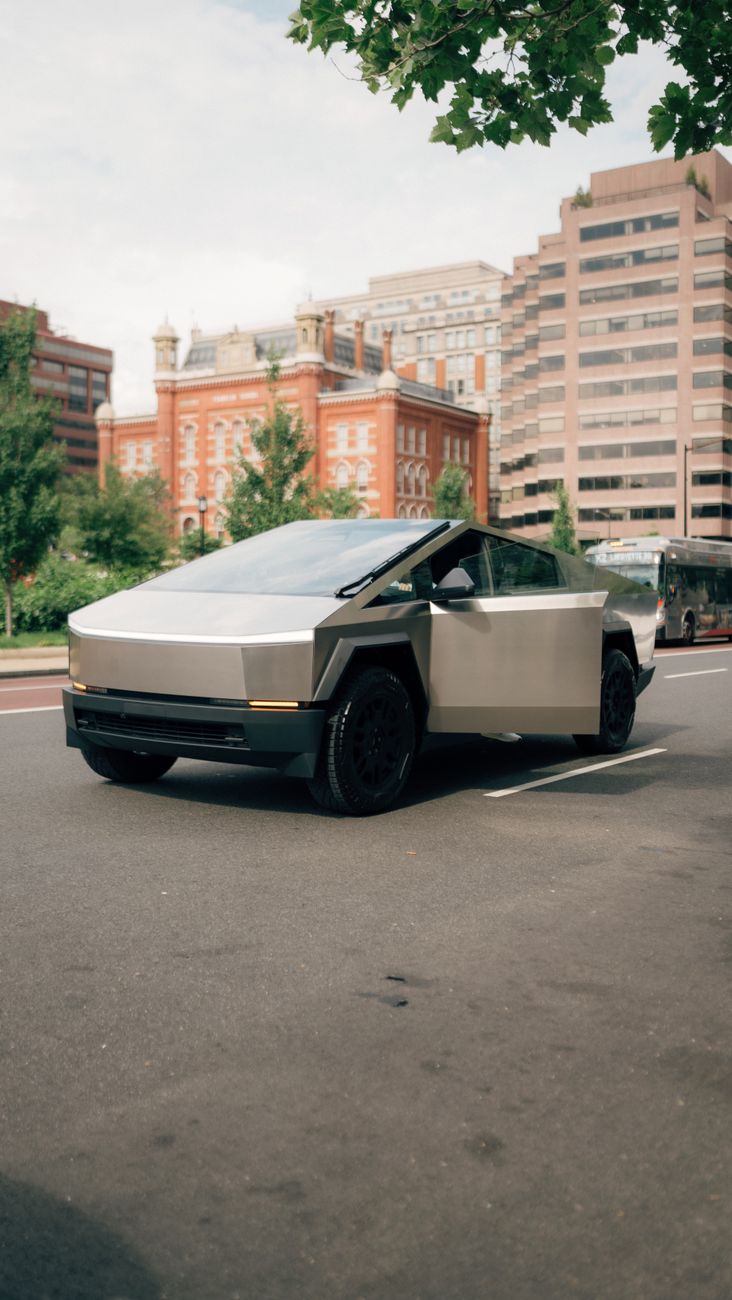
Tesla fans have been waiting. Two years, to be exact. Two years since Elon Musk rolled the Cybercab out in a flash of stainless steel and promises, and two years of near-total silence since. Then, on Thursday, the company teased again: "No steering wheel, no pedals." That's it. That's the update.
Let's not kid ourselves. This is Musk doing what Musk does best—dangling a shiny object in front of a crowd that's already salivating. But beneath the hype, there's a question that actually matters: can Tesla deliver a car that drives itself, without a steering wheel, without pedals, and do it safely?
The Two-Year Itch
When the Cybercab was unveiled in 2024, it looked like a concept from a future that was just around the corner. Sleek, compact, no driver controls. The promise: a robotaxi that would ferry you around while you nap or scroll your phone. The timeline: production by 2026, or maybe 2027, or whenever Musk feels like it.
But here's the thing about promises from Tesla—they tend to stretch. The Cybertruck took years. The Full Self-Driving software has been "beta" for what feels like a decade. And now the Cybercab, which was supposed to be the crown jewel, has gone quiet. Until now.
Thursday's tease wasn't an announcement. It was a pulse check. A reminder that the Cybercab still exists, still matters, and still has a shot at changing the game. But it also raises the obvious concern: if the car is ready, why not show it? Why not give us a date, a price, a spec sheet?
The silence speaks louder than the tease. Tesla has been here before, and the pattern is wearing thin.
What's Really Going On?
There are a few ways to read this. One: the Cybercab is genuinely close, and Tesla is building anticipation for a big reveal. Two: the project is stuck in regulatory hell, and Tesla is trying to buy time. Three: Musk is using the Cybercab to distract from other problems—like the ongoing investigations into Autopilot, or the recent drop in EV sales.
Let's be honest: it's probably a mix of all three. The regulatory hurdles alone are staggering. The National Highway Traffic Safety Administration has no framework for approving a car without a steering wheel. And even if Tesla gets approval, there's the question of insurance, liability, and public trust. A robotaxi that crashes—even once—could set the industry back years.
But Tesla has an advantage. It's not just building a car; it's building a system. The Cybercab is designed to work with Tesla's AI, which has been learning from millions of miles of real-world driving data. That's a massive head start over competitors like Waymo, which has been testing in limited geofenced areas. Tesla's approach is more ambitious—it wants the car to work anywhere, anytime.
The Human Factor
Here's the thing that gets lost in all the tech talk: driving is more than just getting from point A to point B. It's about control. It's about the feel of the road, the decision to take the scenic route, the instinct to brake when a kid runs into the street. Removing the steering wheel isn't just an engineering challenge—it's a psychological one.
Are we ready to trust a machine with our lives? Not just in a controlled test, but in every situation: rain, snow, construction zones, a drunk driver swerving into your lane. The Cybercab's promise is that the AI will be better than any human. Maybe it will. But the burden of proof is enormous, and every accident will be scrutinized.
There's also the question of why we drive in the first place. Cars are freedom. They're independence. They're a place to sing badly and think big thoughts. If the Cybercab takes that away, what do we lose?
The Bottom Line
Tesla's tease is a reminder that the future is coming, whether we're ready or not. The Cybercab could be a revolution—a world where car ownership is obsolete, and traffic jams are a thing of the past. Or it could be another over-promised, under-delivered project that fades into the background.
My gut says the Cybercab will get here, eventually. But it won't be the seamless utopia Musk envisions. There will be glitches, crashes, and lawsuits. There will be a backlash from people who just want to drive their own damn car. And in the end, it might not be the robotaxi that changes the world—it might be the ripple effects: new laws, new jobs, new ways of thinking about time and space.
So go ahead, Tesla. Show us your robocar. But don't expect us to hand over the keys just yet. We've been burned before.