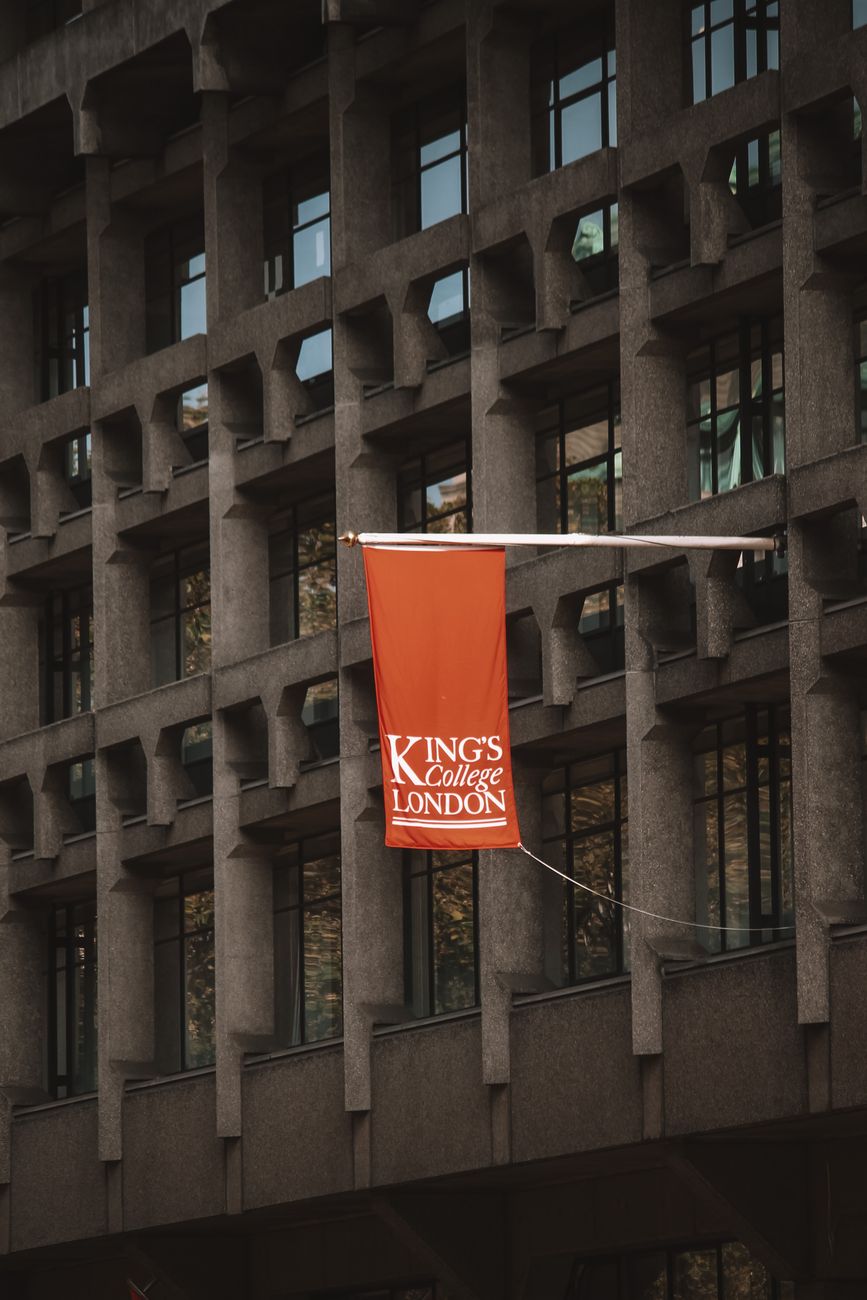
She walked back onto the Strand campus on a Thursday morning with her backpack on one shoulder and a suspension letter in the other. Same glass doors. Same security guard who used to nod at her. Same institution that decided, for a few weeks, that her presence was a problem.
King's College London lifted the suspension of a pro-Palestine student this week. The university didn't shout about it. No press release, no triumphant statement about free expression. Just a quiet reversal — the kind institutions make when the cost of holding the line gets higher than the cost of letting go.
And that's the story. Not that a student got suspended. That's routine now. The story is that she came back, and the people who suspended her had to eat it.
What Actually Happened
Here's the timeline, stripped of the euphemisms. The student — whose name is being withheld in some reports, which tells you how much heat is still on her — was suspended over pro-Palestine activity on campus. The university cited conduct rules. Student groups called it a crackdown. Al Jazeera picked it up. Then the petitions, then the open letters, then the inevitable alumni op-eds asking what happened to the King's they remembered.
The suspension got lifted. The college framed it as a routine review. Student organizers framed it as a win. Both are lying a little.
What's true is simpler and uglier: universities across the UK have spent two years trying to figure out where the line is between protest and discipline. King's drew that line. Then it erased it. Then it drew it again somewhere else. Nobody's sure where it is now, least of all the administration.
The University as Coward
Let's be honest about what a suspension like this actually is. It's not justice. It's not safety. It's a hedge. Administrators suspend students when they're scared of donors, scared of politicians, scared of the Daily Mail, and scared of their own students — all at once. The suspension is the institution trying to be everything to everyone and ending up a punchline.
King's has a specific problem. It's an old, prestigious, London institution with a student body that is politically awake and a donor class that is not. Those two things don't coexist comfortably. So the administration does what administrations do: it suspends someone, waits for the backlash, then quietly unsuspends them and hopes everyone forgets the middle part.
Universities keep pretending they're neutral referees in a fight they've already picked a side in.
You can't suspend a student for expressing a political view and then claim you're protecting academic freedom. Pick one. You either believe the campus is a place where unpopular opinions get aired, or you believe it's a place where unpopular opinions get punished. King's tried to believe both. It failed at both.
The Students Won. Sort Of.
Give credit where it's due: the student groups that organized around this case did what organizers are supposed to do. They made noise. They made the suspension expensive. They forced the college to calculate that keeping her out cost more than letting her in.
But winning a suspension reversal isn't the same as winning the argument. The rules that allowed the suspension in the first place are still on the books. The administrator who signed the letter is still employed. The next student who crosses a line — real or imagined — will get the same treatment, and the same groups will have to fight the same fight.
This is the treadmill UK campuses have been on since 2023. Suspend. Protest. Unsuspend. Repeat. It's exhausting, and it's designed to be exhausting. Institutions wear down movements by making every victory a temporary one.
The Real Question Nobody's Asking
Why does a university in central London — with a £300 million annual budget and a reputation built over two centuries — feel so threatened by one student with a sign?
Because the sign works. Because campus protest is one of the few forms of political speech that still gets noticed. Because a suspended student is a story, and a story is a headache, and a headache is the only thing administrators actually respond to.
The reversal isn't a concession to justice. It's a concession to logistics. King's didn't have a change of heart. It had a change of calculation. The student's back on campus because keeping her off campus became more trouble than it was worth.
That's not a win for free speech. That's a win for free speech's inconvenience.
What Happens Next
She'll go to class. She'll keep organizing. The university will keep a file on her. Some professor will quietly suggest she tone it down. Some other students will quietly admire her for not doing that. The machinery grinds on.
And the rest of us will watch another UK university prove that it doesn't actually have principles — it has a public relations strategy. The strategy worked this time. It won't next time. It never does.
The only thing King's College London proved this week is that it can be moved. Not by argument. Not by principle. By pressure. Which means the next suspension gets lifted the same way — not because it was wrong, but because it was loud.