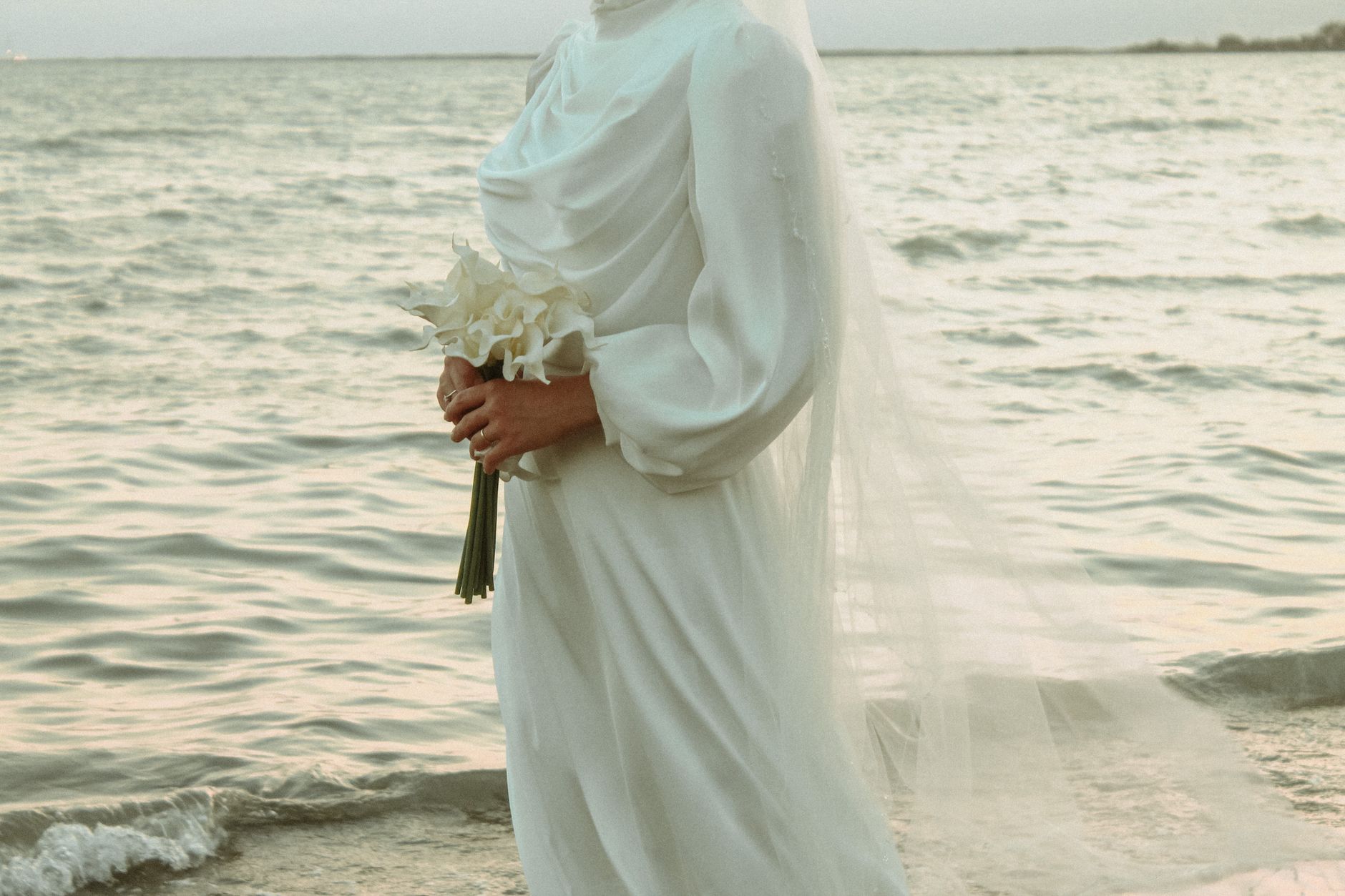
The first thing you notice in the photographs isn't the tent. It's the dress. White, borrowed, sometimes a little too big or a little too tight, but white. In a landscape of grey rubble, that flash of fabric lands like a slap. A deliberate, beautiful slap.
In Gaza, weddings have become acts of defiance. That's not a poetic flourish. It's a literal description of what it means to drape a bride in satin when the world around her is falling apart. Couples are marrying in tents, in half-standing houses, in courtyards cleared of debris. They're dancing on ground that shook yesterday and might shake again tomorrow. And they're doing it on purpose.
When Forever Gets Compressed Into Tonight
Here's what's happening beneath the surface: when you don't know if tomorrow will come, the future collapses into a single point. The long arc of a life together — the apartment you'll buy, the kids you'll raise, the retirement you'll bicker about — all of that becomes a luxury you can't afford to imagine. So you take what's left. You take tonight.
That compression is brutal. It's also, in its way, holy. A wedding is normally a promise about the future. In Gaza, it's a promise about the present. I am here. You are here. We are here, together, right now, and that is enough.
"We didn't plan for a tent," one groom told reporters. "We planned for a life. The tent is just where we're starting it."
There's a version of this story that gets told as tragedy porn — the suffering, the deprivation, the heartbreak. That version is true, but it's incomplete. Because what's actually happening is something stranger and more powerful. People are refusing to let catastrophe have the last word on their inner lives.
The Tyranny of the Guest List
Think about what a wedding looks like in peacetime. The seating charts. The impossible task of trimming the guest list without offending your mother's cousin. The arguments about the band versus the DJ. The three-hour debate over whether to serve chicken or fish.
All of that is a kind of luxury, too. Not just the money — the certainty. The certainty that there will be a venue, a date, a cake that arrives on time. The certainty that the people you invite will be able to come, that the roads will be open, that the power will stay on long enough for the first dance.
Strip that away, and you discover what a wedding actually is underneath all the planning. Two people, a witness or two, and a decision. That's it. That's the whole thing. The rest is decoration.
Gaza is teaching the world a lesson we didn't ask to learn: that the wedding industrial complex — the $70 billion global industry, the destination bachelorette parties, the bespoke calligraphy — is a beautiful distraction from a simpler truth. You don't need any of it. You need someone willing to stand next to you when the ground is shaking.
Rebuilding as a Ritual
The couples marrying in Gaza aren't just celebrating. They're rebuilding. Every wedding is a small act of infrastructure. A tent goes up, and suddenly there's a place for the community to gather. Food gets cooked, and suddenly there's a reason to share it. Music plays, and suddenly the silence of destruction is broken.
That's what makes these weddings so subversive. They're not escapes from reality. They're confrontations with it. A bride walking through rubble to her groom isn't pretending the rubble isn't there. She's walking through it anyway. She's saying: I see what's been done to us. I'm getting married regardless.
There's a word for that in every language. In Arabic, it's sumud — steadfastness. The quiet, stubborn refusal to be moved. To stay. To keep living even when living is the hardest thing you could possibly do.
What the Rest of Us Get Wrong
We watch these stories from a distance, and we feel something. Sadness, maybe. Admiration. A vague sense of gratitude that our own lives aren't that hard. And then we go back to arguing about the centerpieces.
But there's a harder question buried in this. What are we so afraid of? Why do we need so much certainty before we'll commit to anything? Why does the guest list have to be perfect, the venue have to be booked a year in advance, the future have to be guaranteed before we'll say yes to love?
The couples in Gaza don't have the luxury of guarantees. And yet they're saying yes. They're saying yes in tents, in ruins, in the middle of a war that has no end in sight. They're saying yes because the alternative — waiting for the world to become safe before you allow yourself to be happy — is a kind of death.
That's the thing about tomorrow. It never comes with a warranty. Not in Gaza, not in London, not anywhere. The only difference is that in Gaza, the uncertainty is visible. It's written in the rubble. For the rest of us, it's hidden behind the illusion of normalcy. But it's there. It's always been there.
The Dress in the Photograph
Go back to the photograph. The white dress in the middle of the grey. That image will outlast the buildings that fell. It will outlast the headlines, the analysts, the peace processes that never quite get there. It will outlast all of it because it captures something no amount of destruction can touch.
Two people decided to love each other. They did it out loud. They did it in public. They did it in the worst possible circumstances, knowing that the future was a question mark, and they did it anyway.
Call it naivety if you want. I call it the bravest thing I've ever seen. Not because it ignores the reality of suffering, but because it stares directly at it and says: Not today. Today, I'm dancing.
That's not a wedding. That's a verdict. That's a declaration of war against despair itself. And it's being waged in a tent, in a place the world has mostly stopped watching, by people the world has mostly stopped counting.
They're counting themselves. One white dress at a time.