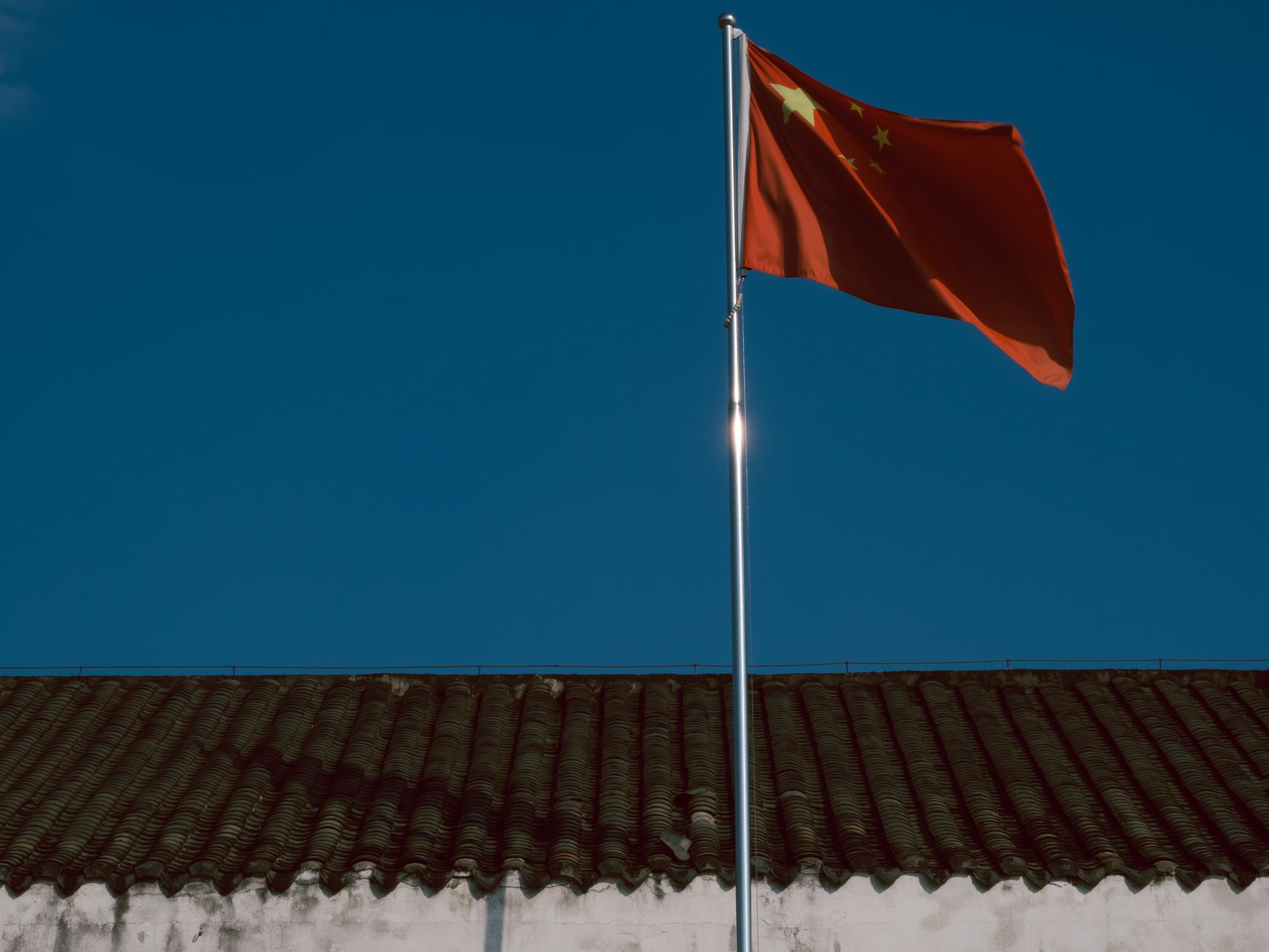
The announcement came wrapped in the usual diplomatic gauze. President Xi Jinping, speaking to a room full of BRICS leaders, said China would "take the lead" in fostering artificial intelligence cooperation among developing economies. No dollar figures. No timeline. No list of participating countries. Just a promise, delivered with the quiet confidence of a man who knows exactly what he's doing.
Don't let the bland phrasing fool you. This is a chess move, not a press release.
China isn't offering to share AI research out of charity. It's offering to become the technology stack for half the planet. And if you're sitting in Washington or Brussels right now, that should terrify you.
The Real Battle Isn't Chips. It's Standards.
For the past three years, the West has obsessed over semiconductor export controls. Cut off Nvidia's advanced chips. Starve Huawei. Choke SMIC. The thinking went like this: if China can't get the hardware, it can't build the future.
That thinking was always half-right at best. Because AI isn't just about who has the fastest GPU. It's about who writes the rules. Who trains the models. Who owns the data. Who sets the safety standards, the ethical guidelines, the interoperability protocols that every country eventually adopts.
When Xi says "take the lead" on AI cooperation among developing economies, he's saying: China will write those rules for the Global South. And the Global South — 6.5 billion people across Africa, Latin America, Southeast Asia, the Middle East — has been waiting for someone to offer them a seat at the table.
"The West spent a decade telling developing countries to adopt its AI ethics frameworks. China is now saying: we'll build the infrastructure, and you can help set the terms."
That's a hell of a sales pitch. And it's working.
What Beijing Actually Gets
Let's be transactional for a moment. What does China get out of this?
First, data. Massive, diverse, real-world data sets from countries that don't have Europe's GDPR or California's privacy laws. Training AI models on African medical records or Southeast Asian financial transactions gives Chinese firms an edge they can't get at home. Call it data colonialism if you want. Beijing calls it "cooperation."
Second, market lock-in. Once a country builds its digital infrastructure on Chinese AI platforms — facial recognition for smart cities, language models for government services, cloud computing for banks — switching costs become astronomical. Ask any country that built its 5G network on Huawei gear how easy it was to rip it out.
Third, diplomatic leverage. Every BRICS member that signs on to China's AI framework owes Beijing a favor. And in a world where the UN Security Council still matters, those favors add up.
Fourth — and this is the big one — China gets to define what "responsible AI" means for most of humanity. The West has been trying to sell its version: transparency, human oversight, democratic accountability. China's version is simpler: stability, sovereignty, state control. For plenty of governments, that's not a bug. It's a feature.
The West's Strategic Blind Spot
Here's what makes this announcement so maddening. The United States and Europe had a two-year head start on AI governance. They had the models, the money, the moral authority. They had every opportunity to build a coalition of developing countries around shared principles.
Instead, they spent that time arguing with each other. The EU passed the AI Act, then spent eighteen months fighting over implementation. The US Congress held hearings, published frameworks, and passed exactly nothing. Meanwhile, American tech giants hoarded their models like dragons sitting on gold.
China watched. China waited. And now China is moving.
The irony is thick enough to cut. The same Western governments that lecture developing countries about "digital sovereignty" just watched Beijing offer them a path to get it — on Chinese terms.
What Happens Next
Watch three things in the coming months.
One: which countries sign on first. If South Africa, Brazil, and Indonesia — the three biggest BRICS economies after China and India — formally join Xi's initiative, the momentum becomes unstoppable. If India stays aloof, the whole thing looks less like a bloc and more like a China-plus-friends club.
Two: whether the money follows the rhetoric. China's track record on development finance is mixed. The Belt and Road Initiative promised trillions and delivered a lot of debt traps. If Xi's AI push comes with real funding — scholarships, research grants, infrastructure investments — it'll be taken seriously. If it's just a communiqué, it won't.
Three: how the US responds. The Biden administration tried to rally allies around a "democratic AI" agenda. The next administration — whoever wins in November — will face a stark choice: double down on export controls and hope China's tech stack collapses under its own weight, or actually compete on the ground in Africa, Asia, and Latin America. So far, no one in Washington has shown much appetite for the second option.
That's a mistake. Because while America debates, China builds.
The Uncomfortable Truth
Here's what nobody in the West wants to admit: Xi's pitch is good. Not because China has better AI — it doesn't, not yet. But because China understands something the West keeps forgetting. Most of the world doesn't care about your values. They care about their own development. They care about electricity, connectivity, jobs, and a government that can deliver them.
If China offers those things through AI cooperation, and the West offers only lectures about human rights and algorithmic transparency, we all know which one wins.
The race for AI dominance isn't a sprint. It's a marathon, run across a hundred countries, measured in data centers and fiber optic cables and trained engineers. China just laced up its shoes and started running. The West is still stretching.
Xi's announcement isn't a threat. It's an invitation — to the rest of the world to pick a side in the century's most important technology rivalry. And right now, the guest list is filling up fast.
What happens when the world's most populous countries all standardize on Chinese AI? When their hospitals, schools, and militaries run on Beijing's models? When the "responsible AI" framework that governs half the planet was written in Chinese, not English?
We're about to find out. And we won't have to wait long.